



Newsfeed

The Operator Behind the Brand
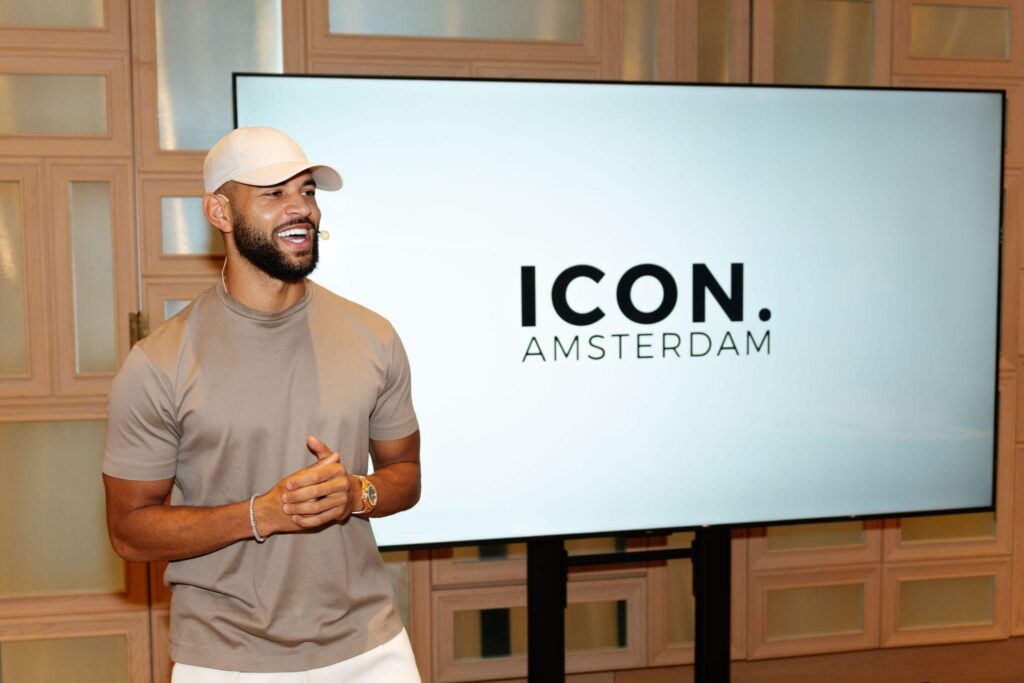
When a brand experiences explosive growth, its foundations are often tested. For Ruben Onuha, the Dutch entrepreneur and co-owner of ICON Amsterdam, the lesson was clear: creativity may ignite momentum, but structure sustains it. Operating between Amsterdam and Dubai, Onuha has helped transform ICON from a start-up built in a living room into an international menswear label with global traction. His focus on systems, discipline, and clarity has become the silent engine behind the company’s success.
“People usually see the campaigns, not the coordination,” he notes. “Behind every strong brand is structure, the invisible framework that keeps everything moving in sync.”
Lessons from Failure
That framework was hard-won. Before joining his brother Samuel in 2018, Onuha had launched his own e-commerce venture in the furniture niche. The business scaled rapidly within its first year but ultimately collapsed under operational pressure. Products arrived damaged, payments froze, and profits disappeared. The setback reshaped his perspective. “I learned that success isn’t about finding the next trend; it’s about building systems that can handle it,” he says.
Those lessons proved decisive when ICON itself faced near-bankruptcy in 2022. The founders had expanded too quickly and lost focus on fundamentals. Onuha led the restructuring process, returning to what he calls “the basics that built the brand.” Departments were reorganized, processes rewritten, and accountability reintroduced at every level. “When you go through a tough phase, you have to strip things down and rebuild from the fundamentals,” he explains. “We rebuilt ICON Amsterdam from the inside out, realigning the people, the product, and the purpose.”
Rebuilding from the Inside Out
The turnaround began with alignment. “Internal alignment, without question, was the most critical part,” Onuha says. “Everyone needed to understand exactly where we were heading and how their role connected to it.” He implemented tighter feedback loops between marketing, creative, and product teams, replacing scattered communication with structured channels. Weekly kick-offs, daily stand-ups, and monthly reviews created rhythm and transparency.
The company even built what they call the Command Center, a shared workspace in Amsterdam where all key metrics are visible to the entire team. “There’s no mystery inside ICON,” he adds. “Everything is visible, and everyone is accountable.”
Structure That Strengthens Culture
That transparency reshaped company culture. In an age dominated by remote work, Onuha believes physical proximity still matters. “The office is our heartbeat; it keeps everyone connected and responsible toward shared goals.” Trust, he argues, is built through clarity, not distance. By ensuring that every employee could see progress in real time, ICON moved from operating in silos to becoming a fully aligned organization.
Structure also freed creativity rather than restricting it. The brand’s creative and product teams now collaborate through open frameworks that invite contribution while preserving a unified vision. “When multiple brains work on the same product, ideas flow faster and stronger,” he says. “Structure doesn’t kill creativity; it gives it direction.” Most of ICON’s operations are now self-sufficient, with clear leadership layers that allow decisions to be made without constant approval. “When you trust your teams, you reduce friction and increase precision,” he adds. “Everyone knows what the end goal looks like and how their piece fits into it.”
Leadership Through Action
For Onuha, leadership begins with action. “Clarity comes from doing, not from overthinking,” he often reminds younger founders. His approach is fast but measured: make decisions quickly, review outcomes honestly, and refine constantly. It is a philosophy shaped more by experience than by theory. “I didn’t follow a traditional route,” he says. “Discipline and mindset took me further than credentials ever could.”

Building for Legacy
That mindset extends beyond business. Onuha and his brother are investing in community initiatives, from supporting education programs, to organizing youth-focused football events. “We want to show another side of success,” he says. “It’s not just what you build but also what you give back.”
Looking ahead, Onuha envisions ICON evolving toward a 100 million dollar valuation, with physical stores, technology integrations, and global collaborations on the horizon. Yet his emphasis remains the same: sustainable systems before scale. “Growth without structure is chaos,” he says. “The stronger your foundation, the more freedom you have to innovate.”
If there is one principle that defines his journey, it is ownership of decisions, of discipline, and of outcomes. “You can’t outsource responsibility,” he concludes. “A brand becomes unstoppable when everyone inside it feels like a founder.”
Boilerplate
Ruben Onuha is a Dutch entrepreneur and co-owner of ICON Amsterdam, the contemporary menswear label he built with his brother Samuel. Based between Amsterdam and Dubai, he oversees operations and international expansion while pursuing philanthropic and youth-focused initiatives. ICON Amsterdam is recognized for its modern design, disciplined culture, and commitment to continuous growth.
ITP Media Group newsroom and editorial staff were not involved in the creation of this content.