










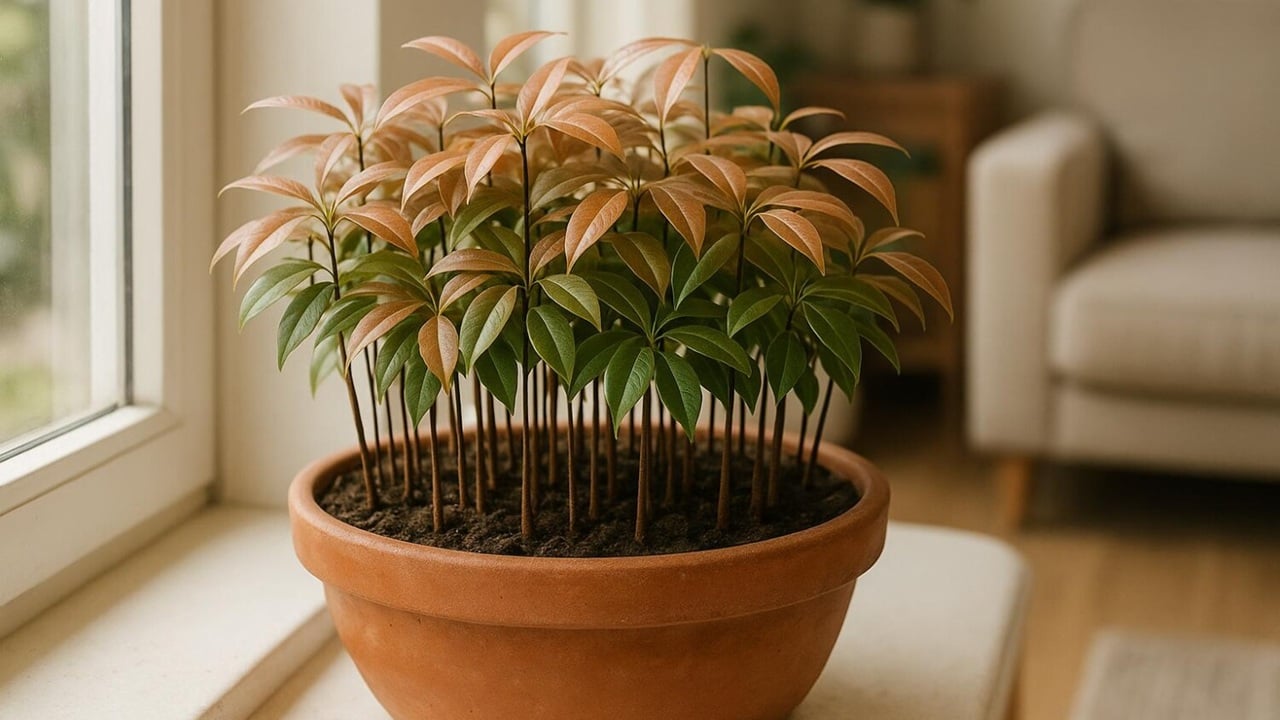
What if dessert leftovers could become home décor? Instead of ending up in the trash, lychee pits can produce a dense pot of young pink stems in just a few weeks—almost a mini forest on your windowsill. Without complicated equipment or botanical expertise, it’s possible to recycle your holiday fruits into a genuine plant curiosity.
One amateur gardener transformed a lychee pit, destined for the garbage, into a spectacular pink forest in just one month. The idea is appealing: a fun activity with kids, a zero-waste gesture, and ultimately a decorative plant that rivals many store-bought bouquets. And it all happens the moment you bite into the fruit.
Potted Lychee: From Exotic Fruit to Mini Pink Forest
The lychee, also spelled litchi or lychee, is a tropical tree native to southern China that reaches up to 15 meters in its natural environment. As a houseplant grown from a pit, it remains a small indoor shrub with evergreen foliage, highly prized for its young bronze-red leaves. Grouped together in the same pot, these seedlings create the pink forest effect, making for a truly free houseplant.
In temperate climates, this member of the Sapindaceae family is grown primarily as a houseplant. It loves warmth around 20°C, good light without harsh sun, and humid air, but it fears frost below 8°C. Fruiting remains rare in pots, often occurring after 10 to 20 years, so the main appeal comes from the graphic silhouette and colors of the young shoots.
Steps to Germinate a Lychee Pit at Home
To germinate a lychee pit and quickly obtain a dense cluster, the process is simple. The ideal approach involves using several pits to increase your chances of success and thicken the mini undergrowth effect.
Choose ripe, rather large lychees, remove all the flesh around the pit, then rinse thoroughly with clear water.
Soak the pits in a bowl of room-temperature water for about ten days, changing the water daily; if they sink, they’re generally viable.
As soon as a small white tip or green bud appears, prepare a pot about 15 cm wide with clay pellets or gravel at the bottom and a mixture of 2/3 potting soil and 1/3 sand.
Plant several germinated pits in this pot, 3 to 4 cm deep, in a light, airy, and simply moist substrate.
Place the pot in a warm, bright room, near a window but without direct sunlight, keeping the soil moist without standing water in the saucer.
After planting, germination continues: depending on temperature, the first stems often break through the soil surface between two and five weeks. The young leaves emerge first in bronze, red, or pink before turning green, which gives that famous entirely pink pot look, especially when several plants sprout simultaneously. Within about twenty days of growth in the pot, the ensemble already forms a small, highly photogenic decorative forest.
Keeping Your Pink Lychee Forest Beautiful Long-Term
Once the mini forest is established, maintenance remains fairly simple. Watering should keep the substrate slightly moist, allowing the surface to dry between waterings to limit root rot. A saucer filled with wet clay pellets or occasional misting helps maintain good air humidity, especially in winter near radiators. After about six months, repot into a slightly larger pot, always with good drainage.
Once warm days exceed 8 to 10°C, the pot can move to a balcony sheltered from wind, first in partial shade then in filtered sunlight. The growth of this tropical tree remains slow, and it will likely never produce fruit indoors, but its fine leaves, initially tinged with red, make it an excellent decorative plant. To enjoy this pink forest spectacle often, simply keep the habit of growing a lychee pit whenever the fruit appears in your fruit bowl.
This article first appeared on maison-travaux.fr – Author: Editorial Team


