










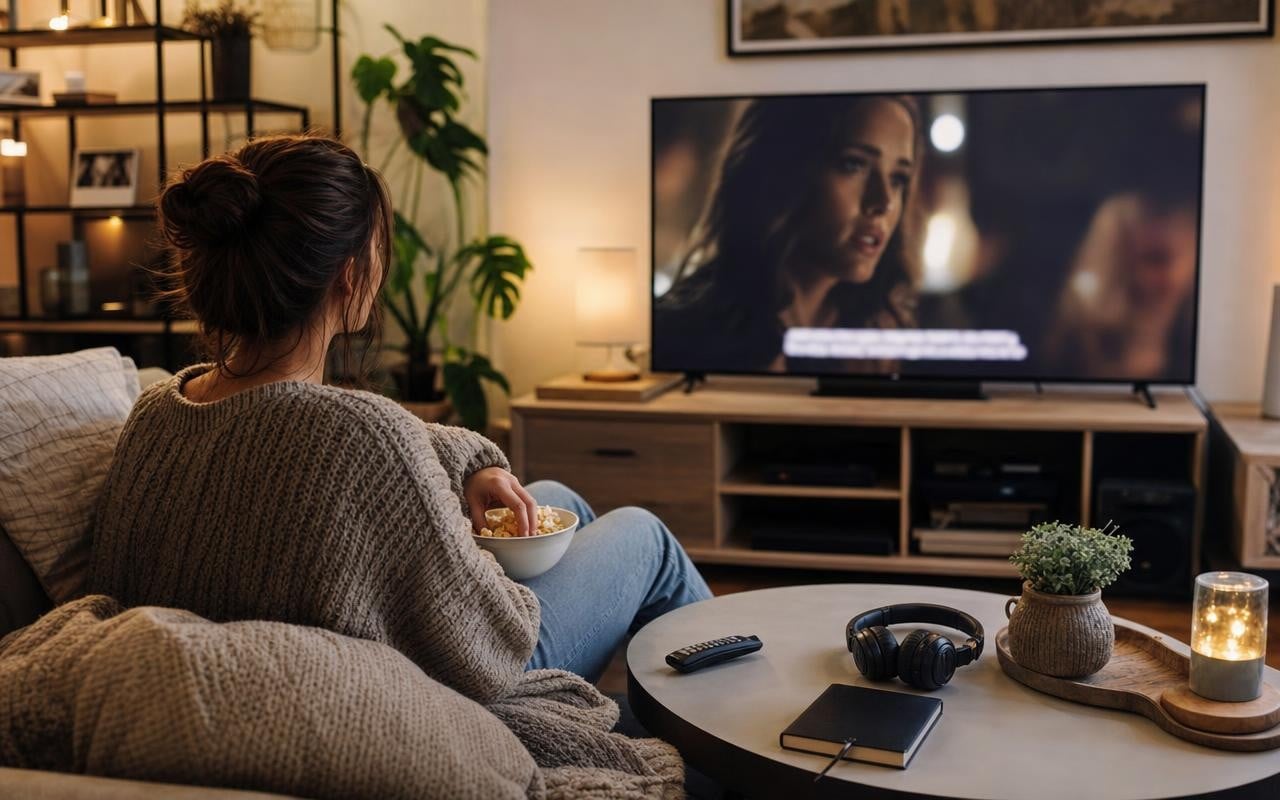
You are watching the latest season of The Gilded Age on your laptop, the dialogue is in crisp, familiar English, and yet the first thing you do is stab at the settings icon and flick subtitles on. Someone next to you suggests turning them off. Absolutely not. The yellow words at the bottom of the screen feel as essential as the wine in your hand.
Most Young Adults Now Watch TV With Subtitles
In a 2023 YouGov poll of 1,000 US adults, 38% said they actually prefer watching TV with subtitles on when the show is in a language they know. Just over half preferred a clean screen. But there is a generational split in the numbers: 63% of adults under 30 would rather keep subtitles on. Among that group, nearly one in four said subtitles are on all the time, and another chunk said they are on most nights.
A separate survey of 1,265 Americans by language app Preply tells the same story. Nearly nine in ten respondents had used subtitles at least once, and about half said they watch with them for reasons that have nothing to do with hearing loss or foreign languages. Gen Z is leading the way, reporting subtitles on about 70% of the time, with Millennials not far behind.
Why Your Brain Likes Hearing And Reading At Once
Psychologists describe subtitle people as using a kind of dual channel for information: they want to both hear and see the words. Spoken dialogue is slippery. You cannot rewind a mumble in real time, the way you can reread a sentence. Subtitles act like a safety net, confirming what you heard and unknowingly supplying anything your ears skipped.
Recent eye tracking studies back that up. In a 2024 experiment, 168 people watched English videos with English subtitles, once with sound and once silently. When the sound was off, viewers had to work harder and understood less, staring almost constantly at the caption area. With sound on, they split attention between the images and the text, using both streams together. A 2026 study with Hindi English bilinguals found that changing the subtitle language shifted where people looked, but comprehension barely moved. Subtitles changed strategy, not intelligence.
The Real-Life Reasons We Keep Subtitles On
The more boring explanation is also the most brutal one for prestige TV: people are turning subtitles on because the sound mix is a mess. In the Preply survey, 78% of respondents who use subtitles blamed loud background music and effects drowning out dialogue. More than half felt that speech simply sounds harder to hear than it used to. Small laptop speakers, watching at low volume to avoid waking a roommate, or half listening on a phone while cooking all push you toward that little CC button.
There is also the accent issue. Around 40% of YouGov subtitle users said accents make shows harder to follow, and a similar share said captions just help them understand more. Think Peaky Blinders, Game of Thrones, half the British crime shows on Netflix. At the same time, TikTok, Instagram and YouTube have trained us to expect words on video. Our feeds are full of auto captions, so reading while watching no longer feels like extra work.


