










A kiss, a quick bob and a rule most Americans have never needed to know. Few royal gestures get dissected like a curtsy. Who did it, who skipped it, how low it went: every state visit and family occasion turns into a body-language quiz. But the real rules are simpler, and far more relaxed, than most people think.
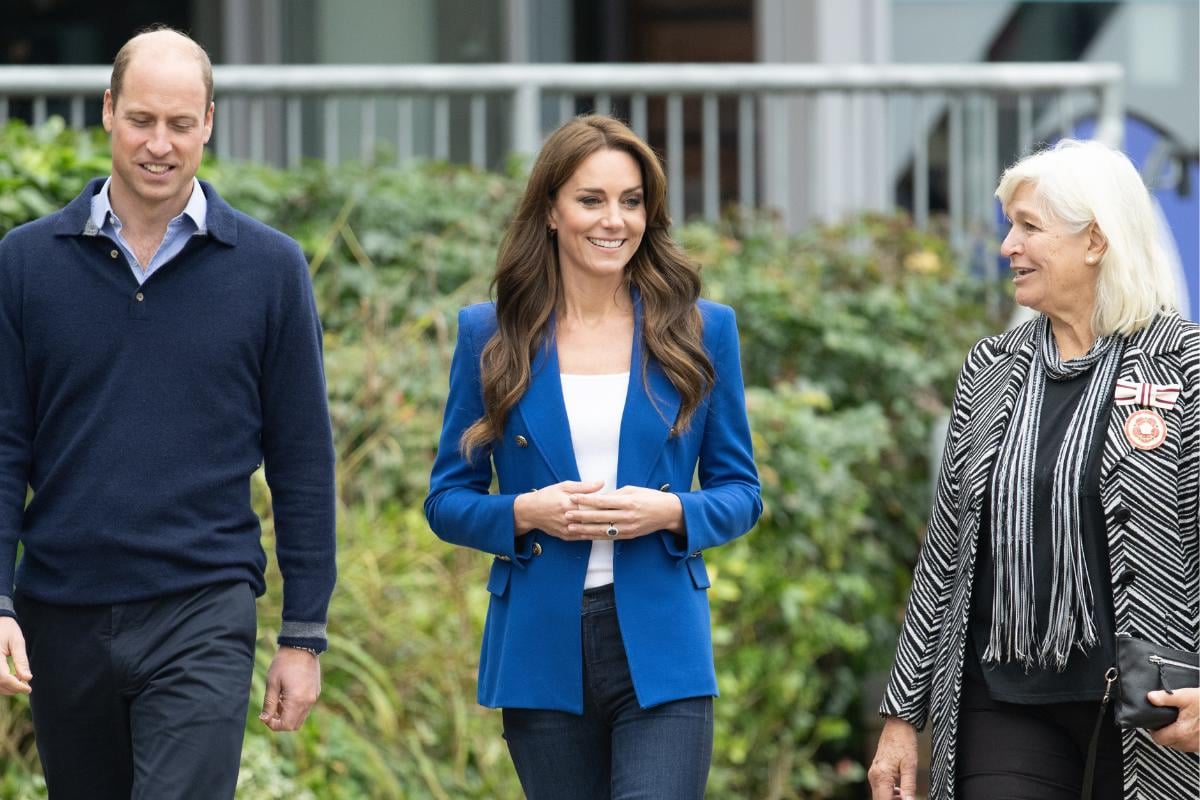
On Sept. 16, 2025, after the Requiem Mass for Katharine, Duchess of Kent, at Westminster Cathedral in London, the Princess of Wales said goodbye to King Charles on the cathedral steps. She gave him a quick kiss on the cheek and, with a comforting hand on his shoulder, a quick curtsy. It was warm and personal, and it was also tradition: women in the royal family customarily curtsy to the monarch.
What the Palace Actually Says
Here is the surprise. The royal family’s own website states that “there are no obligatory codes of behaviour when meeting The King and Queen or a member of the Royal Family,” although “many people wish to observe the traditional forms.” Men may give a neck bow, women a small curtsy, and “other people prefer simply to shake hands in the usual way.”
In other words, the curtsy is a courtesy, not a requirement, especially for people who are not subjects of the King.
Why Americans Don’t Curtsy
When Melania Trump arrived at Windsor Castle for the state visit in September 2025, she greeted the King, Queen Camilla, Prince William and the Princess of Wales with handshakes rather than curtsies. Royal historian Marlene Koenig explains why that was perfectly correct. “It’s not customary for Americans or indeed people from countries where King Charles is not the sovereign to curtsy or bow,” she said.
Koenig points to the founding ideals of the United States and the Declaration of Independence’s line that “all men are created equal.” “The nation was founded on rejecting the notion that some people are born into a higher status,” she noted. A respectful handshake, a smile and good manners are all that is expected.
How to Greet a Royal, Just in Case
If you ever meet the King, the palace guidance is clear: say “Your Majesty” first, then “Sir” for the rest of the conversation. For the Queen, it is “Your Majesty,” then “Ma’am,” pronounced with a short “a,” as in “jam.” For other members of the royal family, start with “Your Royal Highness,” then “Sir” or “Ma’am.” Wait for them to offer a hand, shake it lightly, and let them lead the conversation. A curtsy is optional; a warm smile never is. Royal etiquette keeps evolving, as the royal travel rule Prince William and Prince George just broke shows. The lesson worth borrowing is that good manners matter more than perfect protocol.
For Kate, of course, the gesture is also deeply personal, part of the close family bond she has also shown as a mother, speaking about missing Prince George after he left for Eton.
The Bottom Line
Kate Middleton curtsies to King Charles, as tradition expects of royal women. But Americans don’t have to, and the palace’s own website says so: there are no obligatory codes, and a handshake is perfectly fine.


