










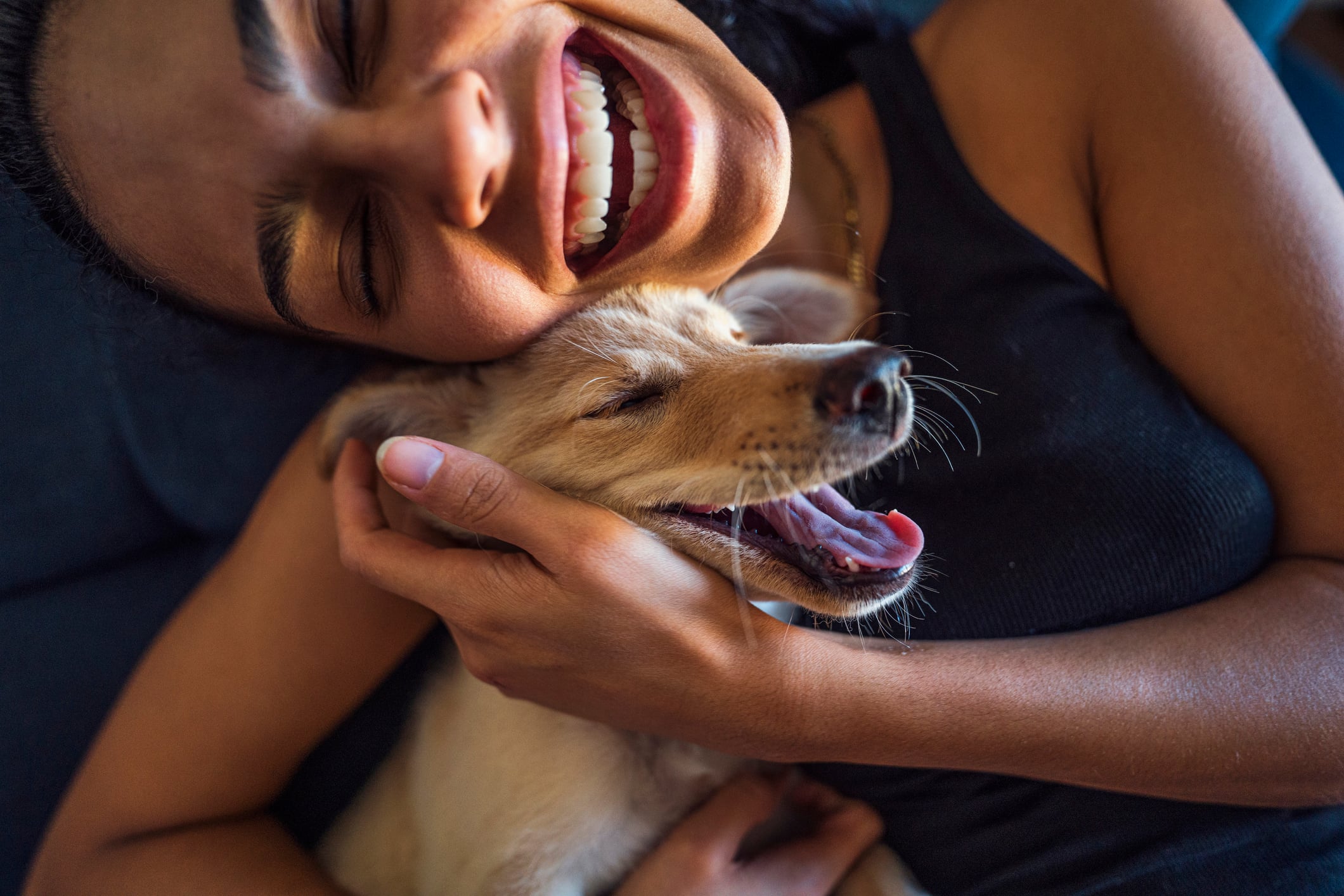
You know that moment when you walk through the door, drop your bag, and there’s your dog, grinning like they thought they would never see you again? Tongue out, eyes bright, entire back half of the body wagging –– and you swear, a huge smile on their face.
But did he actually smile or are we projecting our own need for a feel-good reaction meme onto an animal who mostly communicates with tail flicks and spine wiggles?
Do Dogs Actually Smile Like Humans?
Short version: not exactly. Humans have a very specific, socially learned smile. We pick it up in childhood, we use it to smooth meetings and first dates, and we can flash it even when we are secretly annoyed. It is as much performance as emotion.
Dogs simply do not use their facial muscles that way. Research on canine facial expressions finds that while dogs absolutely show emotions on their faces, they are not arranging their mouths into a “grin” with the deliberate, selfie-ready intention we do. What owners read as a smile is usually an open, relaxed mouth that appears when a dog is calm, content, or gently excited.
And here is the crucial thing behaviorists keep repeating: dogs are whole-body communicators. That mouth means almost nothing if you ignore the tail, ears, muscles and movement. Interpreting a dog’s “smile” from the face alone is like reading one text bubble out of a very long, very chaotic group chat.
What A “Dog Smile” Really Means
Start with the classic happy grin. The mouth is open, the corners softly pulled back, the tongue loose over the teeth. The eyes look soft or even squinty, not hard and staring. The rest of the body is loose, bouncy, almost wiggly; many friendly dogs have that C-shaped curve through their spine as they shimmy toward you. The tail is usually at mid or low height with an easy, sweeping or “helicopter” wag.
You will see that package during play dates, sofa cuddles, lazy backyard hangs. A relaxed open mouth is also common when a dog is just cooling off after a walk, so you always have to cross-check with context: are they lounging in the shade, or pacing and drooling at the vet?
Then there is the other grin – the one that launches a thousand “guilty dog” videos. Here, the lips pull back more tightly, exposing the front teeth. The ears flatten, the head drops, the body crouches or leans away, and the tail sinks low or even tucks while wagging nervously. Many owners think, “He knows he was bad, he’s smiling in apology.” In behavior language, this is appeasement. The dog is saying, as clearly as they can, that they feel uncomfortable and would really like the tension to drop.
True warning looks different again. Teeth may show, but now you get a stiff, forward-leaning body, frozen tail, and hard stare. This is not a smile and not a joke. It is a dog asking for distance and potentially seconds from a snap if that request gets ignored.

A Five-Step Checklist To Decode Your Dog’s Smile
The next time your dog looks like they are beaming, run this quick mental checklist before you swoon or stick a phone in their face.
- Scan the body. Loose, wiggly, and bouncy usually means relaxed or happy. Stiff, statue-still, or hunched suggests stress.
- Check the tail. A mid or low, swoopy or helicopter wag is a good sign. Very high and rigid, or tucked tight, is emotional overload in either direction.
- Look at ears and eyes. Neutral or gently forward ears with blinking, soft eyes signal comfort. Pinned-back ears, “whale eye” (white of the eye showing), or an intense stare are red flags.
- Read the room. Is this during play, greetings, or couch time – or right after you yelled about the chewed heel, in a crowded dog park, or at the groomer? Context can flip the meaning of the same mouth shape.
- Notice direction. A dog joyfully smiling usually moves toward you or at least hangs close. A “smiling” dog who is leaning away, turning their head, or trying to leave is not having fun.
If a “smile” comes bundled with tension, avoidance, or a kid hanging off the dog’s neck, your job is not to get the shot – it is to gently end the interaction and give the dog space.
Can Dogs Laugh – And Are They Smiling At You On Purpose?
Behaviorists describe a kind of canine “laughter”: a breathy play-pant that shows up in rowdy chase games and tug sessions. Recordings of that sound have been shown to excite puppies and even soothe some shelter dogs, which suggests it works as a social, feel-good signal in their world, the way laughter does in ours.
On the human side of the leash, studies using photos of faces suggest dogs can tell the difference between happy and angry expressions and change their behavior accordingly. Pair that with the fact that smiling, cooing owners tend to hand out treats, toys, and walks, and it is not shocking that many dogs flash their relaxed grin more around our big delighted reactions.
So can dogs really smile? Not in the carefully curated, tagged-on-Instagram human way. But that open, goofy, soft-eyed expression you adore is usually a reliable reflection of how good they feel in that moment with you. Read the whole body, respect the “smiles” that actually mean “please calm down,” and you will both have plenty of genuinely happy photos – no projection required.


