










We hesitate, we overthink the wording, and we often don’t send it at all. The person on the other end, research suggests, would have loved it.
Picture this: someone did something kind for you weeks ago. You meant to write. You started a message twice, deleted it twice, and told yourself it would feel a bit strange after all this time. If that sounds familiar, you are in good company, and you are probably wrong about how it would land.
In 2018, behavioral scientists Amit Kumar and Nicholas Epley of the University of Chicago Booth School of Business published four experiments in the journal Psychological Science on exactly this hesitation. Participants wrote a letter of gratitude to someone who had meaningfully affected their life, then predicted how the recipient would react. The researchers then asked the recipients how they actually felt. (Kumar has since moved to the University of Texas at Austin; Epley holds the John Templeton Keller professorship in behavioral science at Booth.)
We Get the Reaction Wrong in Three Ways
The writers consistently misjudged the moment. They underestimated how surprised recipients would be to learn why they were appreciated. They underestimated how positive recipients would feel. And they overestimated how awkward recipients would find the whole thing.
In other words, the main risk people imagined, an uncomfortable reader, barely showed up. What showed up instead was a happy one.
The Words Matter Less Than You Think
The most revealing finding was about wording. Writers worried a lot about finding the right words and saying it well. Recipients, on the other hand, responded to the warmth of the gesture itself. Kumar has said that “thoughts about how competently people can express their gratitude may be a barrier” to doing it at all.
That is the quiet trap. We treat a thank-you like a performance to be graded, when the other person is simply touched that we thought of them.
Why the Old-Fashioned Note Still Works
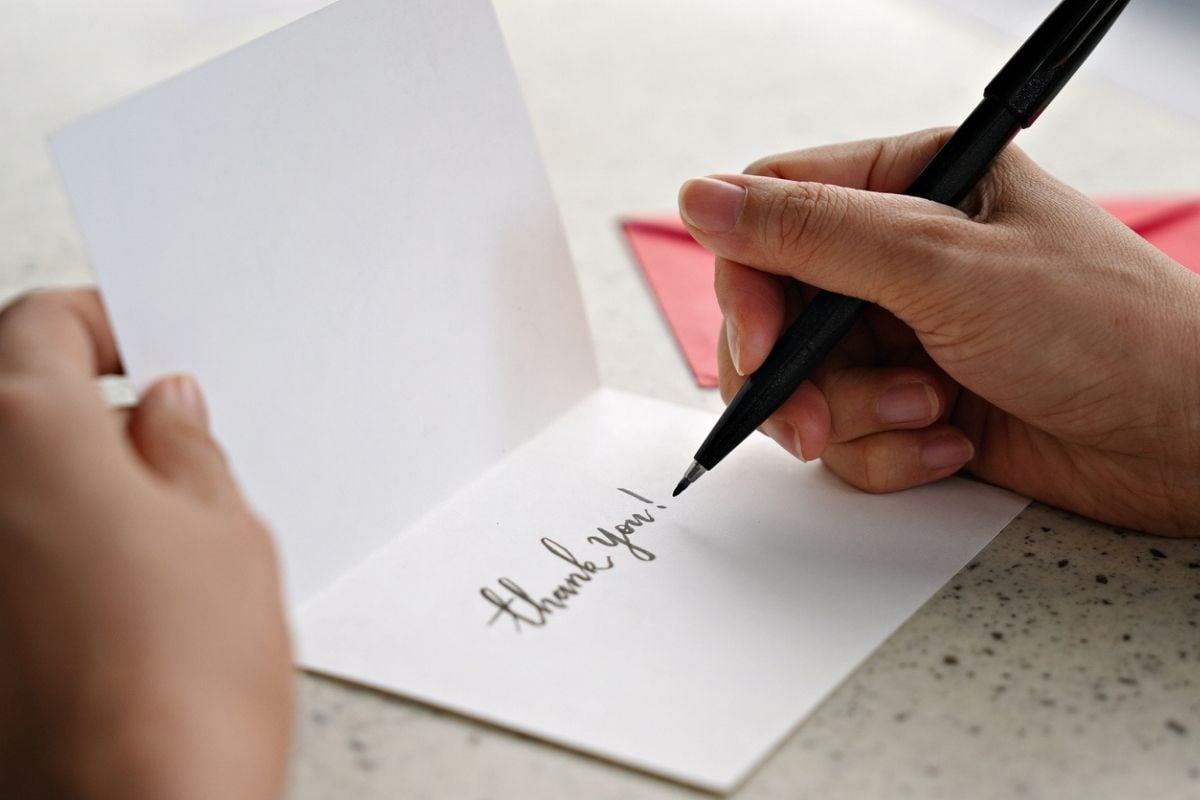
A handwritten card or a few honest lines takes minutes, yet it does something a quick emoji cannot: it tells the other person exactly what they did and why it mattered. That specificity is what produced the surprise in the study. It also fits a broader pattern researchers have noticed, that kindness tends to grow stronger with age, along with small courtesies like helping waiters clear the table.
How to Write One This Week
Choose one person who changed something for you, big or small: a teacher, a neighbor, a former boss, an old friend. Name the specific moment and what it changed. Keep it short; three or four sentences are plenty. Skip the apology for writing late, because the study suggests nobody minds. If a full letter feels daunting, start with a postcard: the small space keeps you honest and brief. Then send it, by post if you can, by message if you must, and resist the urge to rewrite it a fourth time. The lesson worth borrowing is that warmth beats wording every time.
The Bottom Line
People who still send thank-you notes are onto something. Across four experiments, recipients felt more surprised and more positive, and far less awkward, than the writers expected. The note you keep putting off is likely to land better than you think.


