










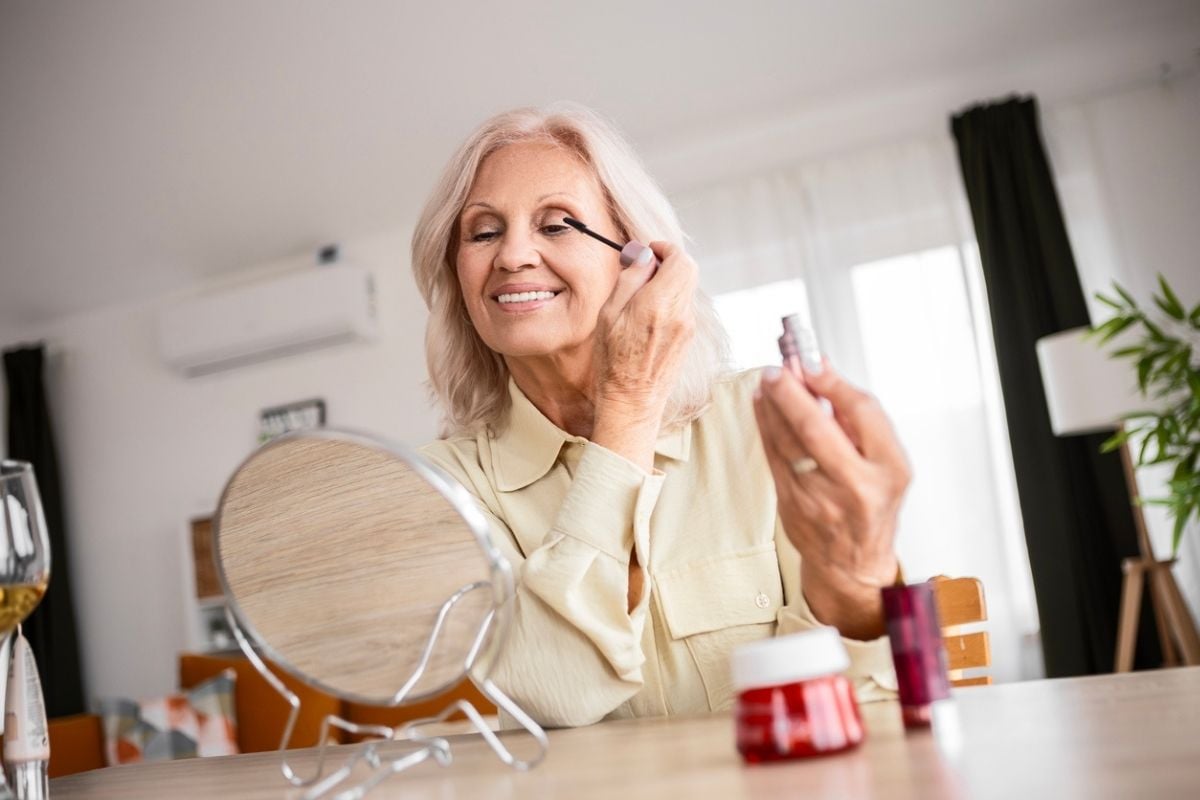
Cooler, softer and a touch deeper than your hair: the shade shift that keeps silver looking intentional. Going gray changes more than your hair. It changes the way everything else on your face reads. The lipstick you loved suddenly looks different, your blush seems brighter, and the eyebrow pencil you have used for years may start to look wrong without you being able to say why.
Usually, the answer is simple. The pencil is now too warm, too dark, or both.
Why Your Old Shade Stops Working
Gray and silver hair naturally leans cool. Most brow pencils, especially the brown shades many women wore for decades, lean warm, with red or orange undertones. Next to silver, that warmth stands out. “Because gray hair naturally leans cool, warm pencils that pull red or orange immediately look disconnected,” says Lauren D’Amelio Ventre, a celebrity makeup artist and founder of D’Amelio Cosmetics.
Depth is the other problem. A brow that matched your dark brunette hair can look heavy and severe once that hair turns silver, drawing attention to the brows instead of framing the eyes.
The Rule: Slightly Deeper, but Softer and Cooler
The most flattering brow color, D’Amelio Ventre explains, is “slightly deeper than the hair color but softer and cooler than a traditional brunette brow.” The brow still needs enough color to define the face, but it should harmonize with the hair rather than fight it.
“Shades like taupe, soft ash brown, grey-brown or even a cool light charcoal work beautifully,” she says. The makeup brand Charlotte Tilbury gives the same advice for silver hair, noting that a cool shade like taupe or ash brown can look more flattering than warm browns.
Match the Shade to Your Gray
Not all gray is the same, and the right brow depends on yours.
Bright silver or white hair with fair skin: choose a very soft taupe or light ash tone that keeps the face lifted.
Salt-and-pepper or steel gray: go a little deeper, with an ash brown or gray-brown, to anchor your features.
If your hair used to be very dark: resist going back to your old shade. D’Amelio Ventre recommends a cooler, muted brown or taupe instead.
Black is usually too harsh next to gray hair for most skin tones. Charlotte Tilbury reserves its softest black shade for deeper complexions.
Technique Matters as Much as Color
With a lighter shade, build structure with technique rather than heavy pigment. Use short, hair-like strokes along the natural shape of the brow, concentrating on sparse areas, then brush through with a spoolie to soften the line. A tinted brow gel can help blend gray brow hairs with the pencil and hold everything in place.
One warning: do not use scalp hair dye on your brows. “Hair dye is not approved for use near the eyes, and it can cause irritation or injury,” D’Amelio Ventre cautions. The US Food and Drug Administration has long warned that permanent hair dyes are not approved for dyeing eyebrows or eyelashes. If you want tinting, see a professional and patch test first.
How to Test Your New Shade
Try two or three cool shades on the back of your hand, then on one brow, and look in natural daylight. The right one should make your eyes look brighter, not make the brow the first thing you notice.
After going gray, your eyebrow pencil needs to change too, and not by going darker. A cooler, softer shade is what keeps silver hair looking polished.


