










Cool, dark and humid is the rule, and a fruit bowl is the last place they belong. Fall is the season of big potato bags. They are cheap, practical and perfect for soups and roasts. But a few weeks later, many end up soft, green or covered in sprouts. In most cases, the problem is not the potatoes themselves but where they are kept.
Iowa State University’s extension service has clear guidance on how to store them, and one common habit makes things worse.
The Ideal Conditions
For long-term storage, Iowa State recommends a dark place at about 40°F, with high humidity of 90 to 95 percent. Darkness matters because potatoes “turn green when exposed to light.” Cool temperatures slow sprouting, and humidity keeps them from shriveling.
Both extremes cause problems. Above 50°F, potatoes may start sprouting within two or three months. Below 40°F, they become sugary and sweet-tasting. If that happens, Iowa State suggests leaving them at room temperature for a few days before cooking to restore their normal flavor.
The Best Spots in a Real Home
Few kitchens offer 40°F and high humidity, so aim for the closest match. An unheated basement or root cellar is ideal. A cool closet, a pantry on an outside wall or an enclosed garage that stays above freezing can also work.
If you have no cool space, keep them in a paper bag or a cardboard box in a dark drawer or cabinet, away from the oven, the dishwasher and heating vents. Paper and cardboard block light while letting moisture escape, unlike plastic bags, which trap humidity and encourage rot.
The Two Classic Mistakes
The sunny counter is the first. Light turns potatoes green, and warmth encourages sprouts.
The fridge is the second. It is usually colder than 40°F, which converts starch to sugar. The result tastes oddly sweet and can brown too quickly when fried or roasted.
Why the Apple Trick Backfires
A popular tip says an apple in the bag keeps potatoes from sprouting. Iowa State says the opposite. Ripening fruit releases ethylene gas, which encourages tubers to sprout, so potatoes should be kept away from apples and other fruit. Onions are best stored separately too, in a dry, airy spot of their own.
There is no magic product either. “The keys to successful storage of potatoes are the proper temperature and relative humidity,” the extension service notes.
What to Do With a Sprouted or Green Potato
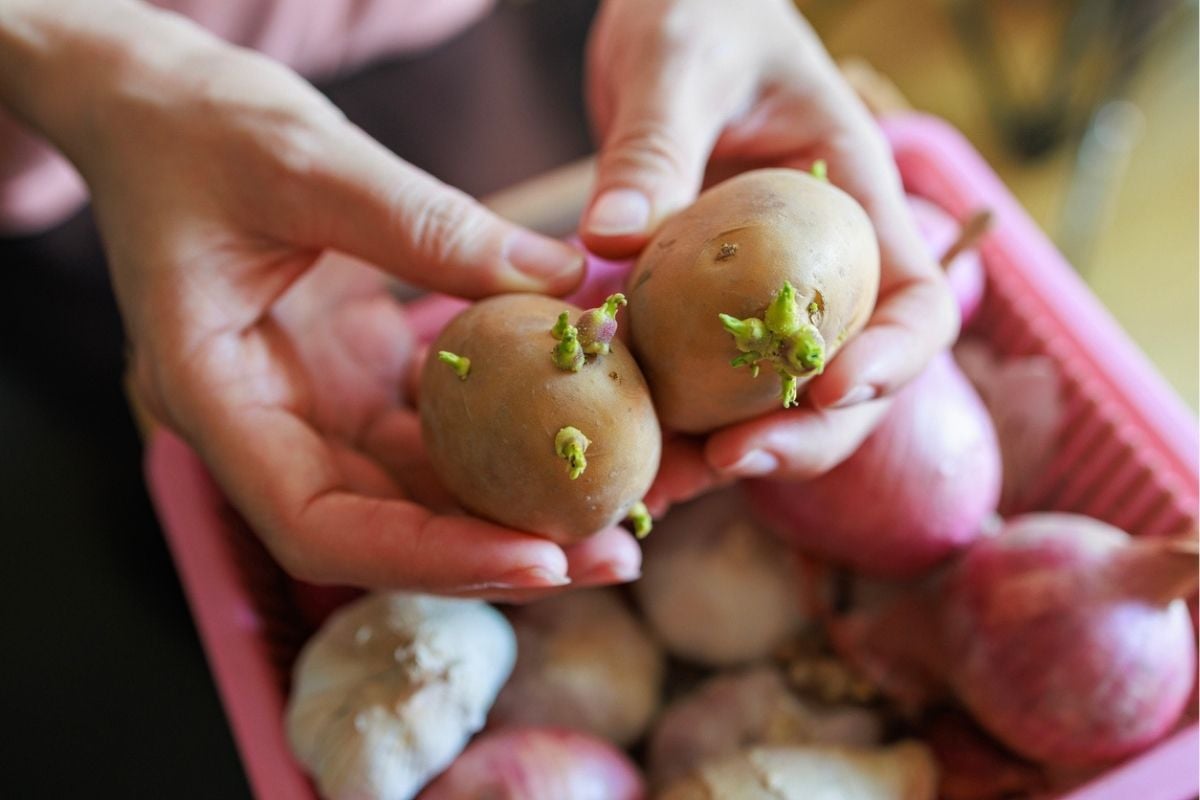
If a potato has a few small sprouts but is still firm, it is generally fine to use: cut out the sprouts and the eyes around them. If it is soft, shriveled or heavily sprouted, it is better to discard it or plant it.
Green patches are a different matter. The green color is chlorophyll, but it often comes with higher levels of solanine, a naturally bitter compound that can upset the stomach. Peel or cut away green areas generously, and throw the potato out if it is very green or tastes bitter.
A Few Extra Habits
Do not wash potatoes before storing them, since moisture on the skin encourages rot. Sort them first and use any cut or bruised ones quickly. Check the bag every week or two and remove any that are soft, so one bad potato does not spoil the rest.
Goodbye sprouted potatoes. A cool, dark spot, a paper bag and a little distance from the fruit bowl are all it takes to make that big fall bag last.


