










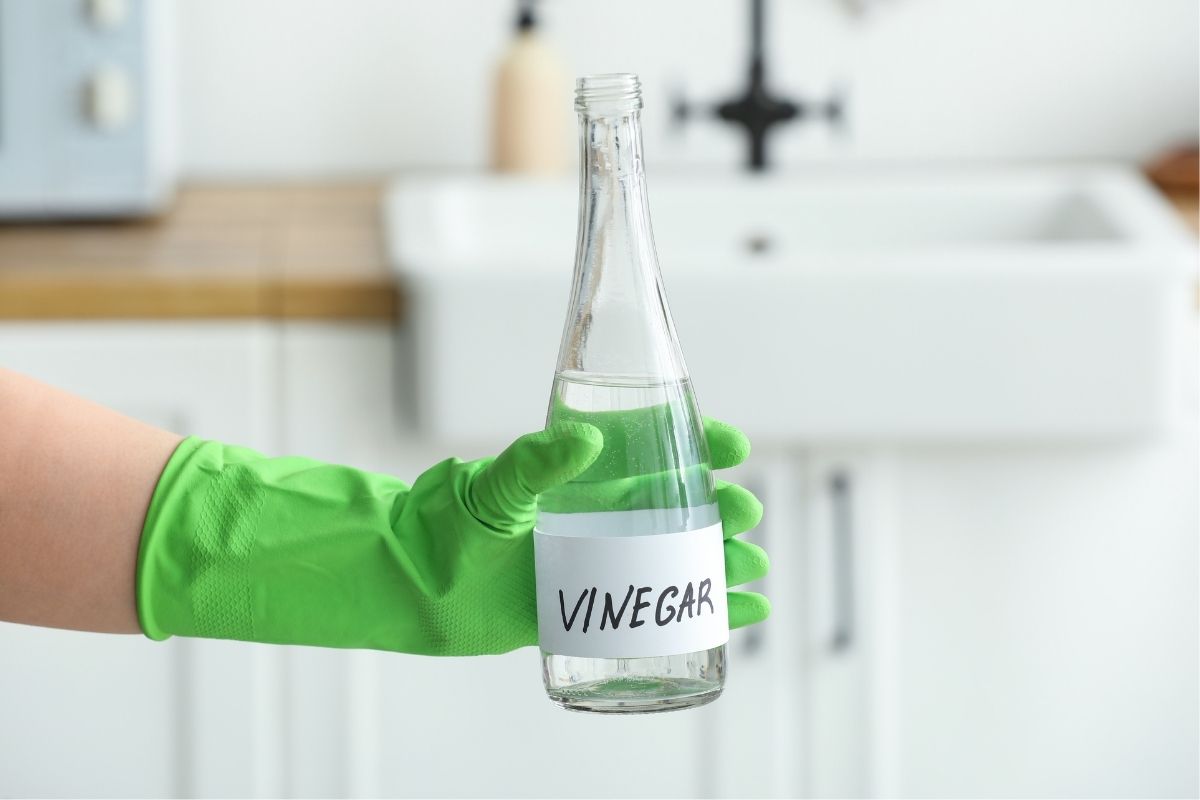
A spray bottle, an hour and a scrub brush: the monthly habit that keeps bathroom and kitchen walls healthier. Mold rarely announces itself. It starts as a faint shadow in a bathroom corner or behind a kitchen backsplash, and by the time it is obvious, it has already settled in. That is why a growing number of cleaning guides recommend a simple preventive habit using something you probably already own.
The product is plain white vinegar. Sprayed on walls in high-moisture rooms about once a month, it can help stop light mold before it takes hold.
Why White Vinegar Works
White vinegar contains acetic acid, typically around 5 to 8 percent, with a pH of about 2.5, according to Healthline. That acidity can fight small amounts of mold and bacteria, especially when they are caught early.
It is not a miracle solution, though. A 2015 study cited by Healthline found that vinegar was effective against Penicillium chrysogenum, a common household mold, but not against Aspergillus fumigatus. In other words, it works on some molds, not all of them, which is why prevention matters more than treatment.
Where and How Often
House Digest recommends cleaning walls in bathrooms and kitchens on a monthly basis. These are the rooms where steam, cooking and poor airflow create the humidity that mold loves. Laundry rooms and basements can benefit too.
The Method, Step by Step
Pour undiluted white vinegar, at least 5 percent acetic acid, into a spray bottle. Open a window or turn on a fan, and wear gloves, a mask and eye protection.
Spray the wall and let the vinegar sit for 30 to 60 minutes. Healthline suggests at least an hour on visible mold. Then scrub with a brush, using soft bristles for routine cleaning and firmer ones for stubborn spots. Wipe with a damp cloth, and keep the room ventilated until the wall is completely dry. Wash your tools well afterward, or throw them away if they touched mold.
If your walls are painted or finished, test on a small, hidden area first.
What Not to Do
Never mix vinegar with bleach. Healthline warns that the combination can create toxic chlorine gas. Avoid mixing it with hydrogen peroxide too.
Keep vinegar off natural stone such as marble and limestone, which it can etch, and go gently on drywall so you do not damage the surface. Porous materials like ceiling tiles or carpet usually cannot be cleaned effectively and may need to be replaced.
When to Call a Professional
Vinegar is for small areas of light mold. The Environmental Protection Agency advises seeking professional help for mold covering more than 10 square feet, a patch a little over 3 feet by 3 feet. The CDC adds that you should also call a pro if mold has spread into your heating, ventilation or air conditioning system.
And if mold keeps coming back, look for the cause. Recurring growth often points to poor ventilation or a hidden leak in a pipe or wall.
Spraying white vinegar on your walls will not replace a good exhaust fan or a plumber. But once a month, it is a cheap, easy way to keep the damp corners of your home cleaner, and to catch problems before they grow.