










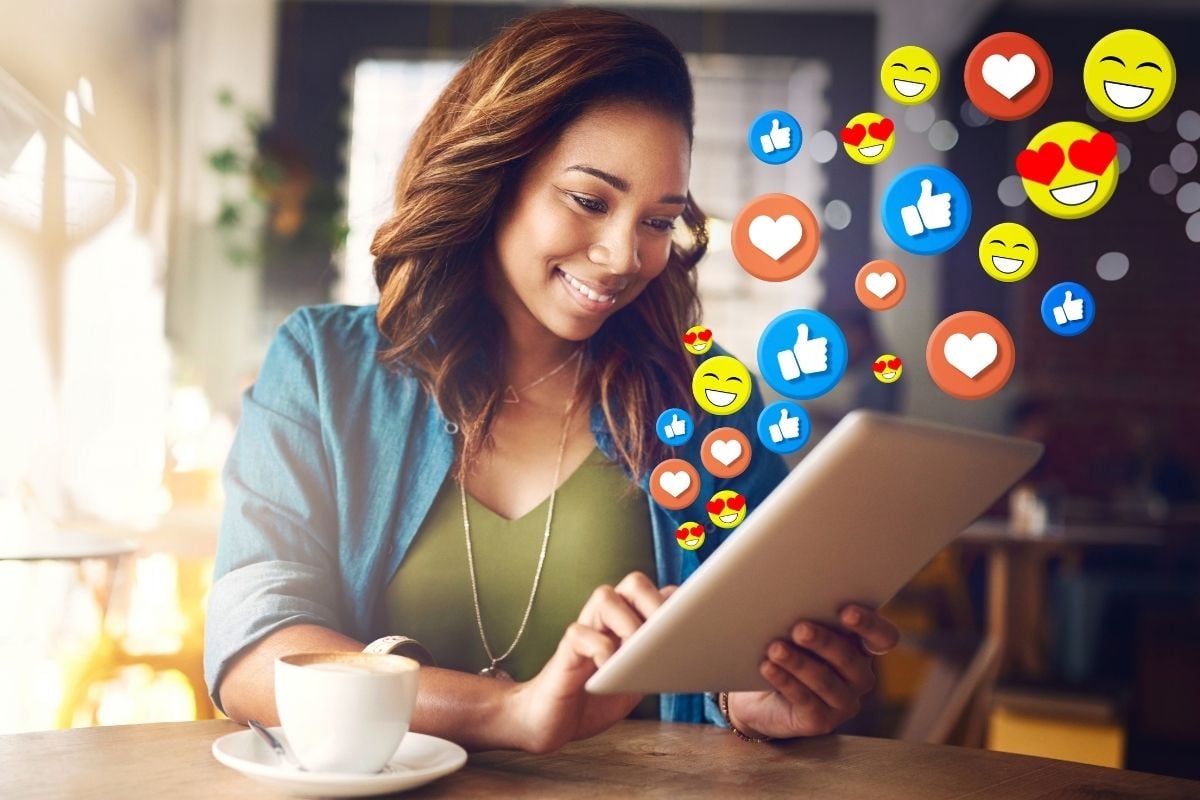
You probably do it without thinking. A thumbs-up after confirming dinner plans, a laughing face to soften a sarcastic remark, a heart slipped into a goodnight message. Emojis have become so woven into the way we text that most of us never stop to wonder what those tiny icons actually say about us. But researchers at Indiana University decided to look closer – and what they found might make you appreciate your emoji habit a little more.
Your texting style is more revealing than you think
Text messaging has come a long way since the days when critics dismissed it as a language-impoverishing shortcut. Some of us type out long, detailed paragraphs. Others fire off rapid bursts of short, direct sentences. Regardless of your preferred format, chances are you punctuate those messages with emojis – small icons that represent an emotion, a character, or an action.
A study conducted by scientists at Indiana University examined how these digital pictograms relate to deeper psychological traits. The research, reported by Newsweek, surveyed a panel of 320 adults in their thirties, a sample that was predominantly white and heterosexual. The goal was straightforward: to determine whether the way people use emojis in private conversations could reveal something meaningful about their emotional makeup. Could something as casual as a smiley face actually signal heightened empathy?
Emojis, empathy, and the way you bond with others
According to the findings, the answer is yes. Participants who regularly added emojis to their personal messages demonstrated a stronger capacity to convey their emotions and to forge deeper connections with the people they were communicating with. In other words, sprinkling a heart or a grinning face into a conversation is not mere decoration – it reflects a heightened emotional intelligence, meaning the ability to recognize, understand, and manage emotions in yourself and others.
Simon Dubé, a psychologist at Indiana University and the study’s author, explained that the way we interact in virtual communications can reveal something deeper about who we are. A smiley or a heart emoji is not just a cute addition; it is a way of transmitting a message more effectively. How you use these icons, he noted, says a great deal about you as a person. That said, this conclusion applies specifically to personal exchanges. In professional settings, emojis tend to be replaced by more formal expressions.
The study also uncovered a link between emoji use and attachment style. People who frequently use emojis tend to have what psychologists call a secure attachment style, meaning they navigate stable, healthy emotional relationships. This type of attachment is generally associated with having grown up in a warm and balanced environment. On the flip side, individuals with avoidant or anxious attachment styles – often linked to a more distant or chaotic upbringing – tended to be less expressive in their digital exchanges.
Women, men, and the unspoken emoji code
The research revealed a notable difference between genders. Women were generally more inclined to insert emojis into their conversations. However, they reserved these textual embellishments primarily for exchanges with close friends or family members. When it came to discussions with a romantic or sexual partner, their emoji use actually decreased, sometimes betraying more avoidant behaviors.
Men, on the other hand, did not appear to have established as precise an emoji code. Their usage patterns were less clearly differentiated depending on the recipient. While the study’s sample size remains limited, the findings suggest that even the smallest digital gestures carry psychological weight we rarely consider.
It is worth noting that none of this means you should start flooding every group chat with smiley faces to prove your emotional depth. The research points to natural, spontaneous emoji use as the marker – not a deliberate performance. We text the way we relate to others, and those tiny icons serve as small but genuine windows into how comfortable we are expressing emotion.
What this means for the way you communicate
Here is what you can take away from all of this. The emojis you casually drop into your messages are not meaningless fluff. They may reflect your capacity for empathy, the stability of your emotional bonds, and even aspects of your upbringing. Despite the limited scope of the Indiana University sample, the conclusions invite us to pay a little more attention to our digital habits. A well-placed emoji might just be one of the most honest things you send all day.