










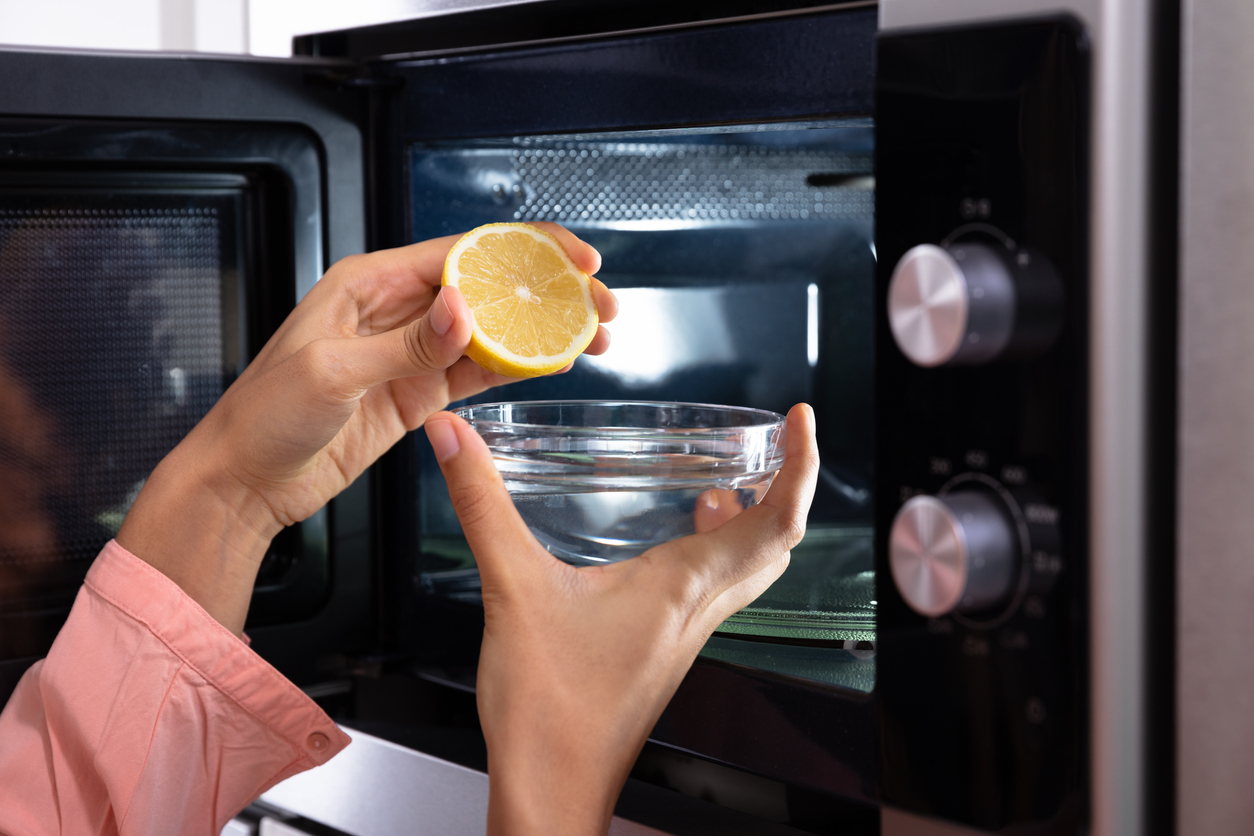
You open the microwave door and there it is: the tomato sauce from Tuesday, baked onto the ceiling in little orange constellations, and a faint smell of last week’s leftover fish. You know the routine. Spray something that promises to cut grease, breathe it in while you scrub, then scrub some more. Here is the good news: professional cleaners say you can skip almost all of that. The easiest way to clean a microwave is to let the microwave do it, with a bowl of water and a lemon you probably already have in the fridge.
Why steam does the hard work for you
The method is built on a simple idea. Dried-on food sticks to the walls of a microwave because it has lost its moisture; give that moisture back and it lets go. A bowl of water brought to a boil inside the closed appliance fills it with steam, which settles on every surface and softens even the most stubborn splatters. “Steam is an excellent cleaning method for microwave ovens because it eliminates the need for any chemicals,” Sabrina Fierman of the New York cleaning company Little Elves told Homes & Gardens. “It also does all the hard work for you, penetrating and loosening the food residue.”
The lemon is what turns plain steam into a cleaner. “Lemon contains citric acid and natural oils that neutralize odors and break down grease,” Alicia Sokolowski, president and co-CEO of the cleaning company AspenClean, explained to Real Simple. The acid helps loosen greasy film, and the oils in the peel leave behind a clean, fresh smell instead of the chemical one that lingers after a spray. The British TV presenter Sarah Beeny, who has built a career around making homes work, has gone further and called lemon absolutely the best way to clean a microwave.
How to do it, step by step
Cut a lemon in half and squeeze both halves into a microwave-safe bowl with about a cup of water, then drop the rinds in too. Don’t fill the bowl more than halfway. Heat it on high for three to five minutes, until the water is boiling and the window has fogged up. Then comes the step most people skip: leave the door closed. Cleaning pros recommend letting the bowl sit for at least five minutes more, and up to fifteen for a truly neglected microwave, so the steam can keep working on the walls.
When the time is up, open the door and give it another thirty seconds for the hottest steam to escape before reaching in. Remove the bowl carefully with an oven mitt, lift out the glass turntable to wash separately, and wipe the inside with a soft sponge or microfiber cloth dipped in the warm lemon water. Most of the mess should come away in a single pass. For greasy patches that resist, Alessandro Gazzo of the Dallas cleaning service Emily’s Maids suggests adding half a cup of white vinegar to the bowl and working the spot with a soaked sponge.
The safety detail nobody mentions
Water heated in a microwave can occasionally become superheated, hotter than its boiling point without visibly bubbling, and then erupt when it is disturbed. It is rare, but the fix is simple: place a wooden toothpick or a wooden spoon in the bowl before you heat it, as Tom’s Guide recommends, which gives the water somewhere to form bubbles safely. And always use a bowl you know is microwave-safe, never metal, and handle it with an oven mitt, since it will be hotter than it looks.
A grandmother’s trick with a very modern appeal
Part of why this method keeps resurfacing is that it belongs to a whole family of kitchen tricks our grandparents never needed a product for. The same logic, simmering something natural and letting the steam work, is behind the bay leaf, clove and cinnamon pot that so many people use to freshen their homes as the windows start staying shut. It costs almost nothing, it takes five minutes, and it leaves the kitchen smelling of lemon rather than of bleach.
To keep the microwave from getting that bad again, cover food with a microwave-safe lid or a paper towel before heating, and wipe up spills while they are still fresh. A quick lemon steam once a week or so, before anything has had time to bake on, is enough to keep it looking new.
The takeaway
A lemon, a cup of water and five minutes of patience will do what a shelf of sprays promise: loosen the grime, lift the grease and get rid of the smell, with nothing harsher in the air than citrus. Put a wooden toothpick in the bowl, keep the door shut longer than you think you need to, and let the steam do the scrubbing.


