










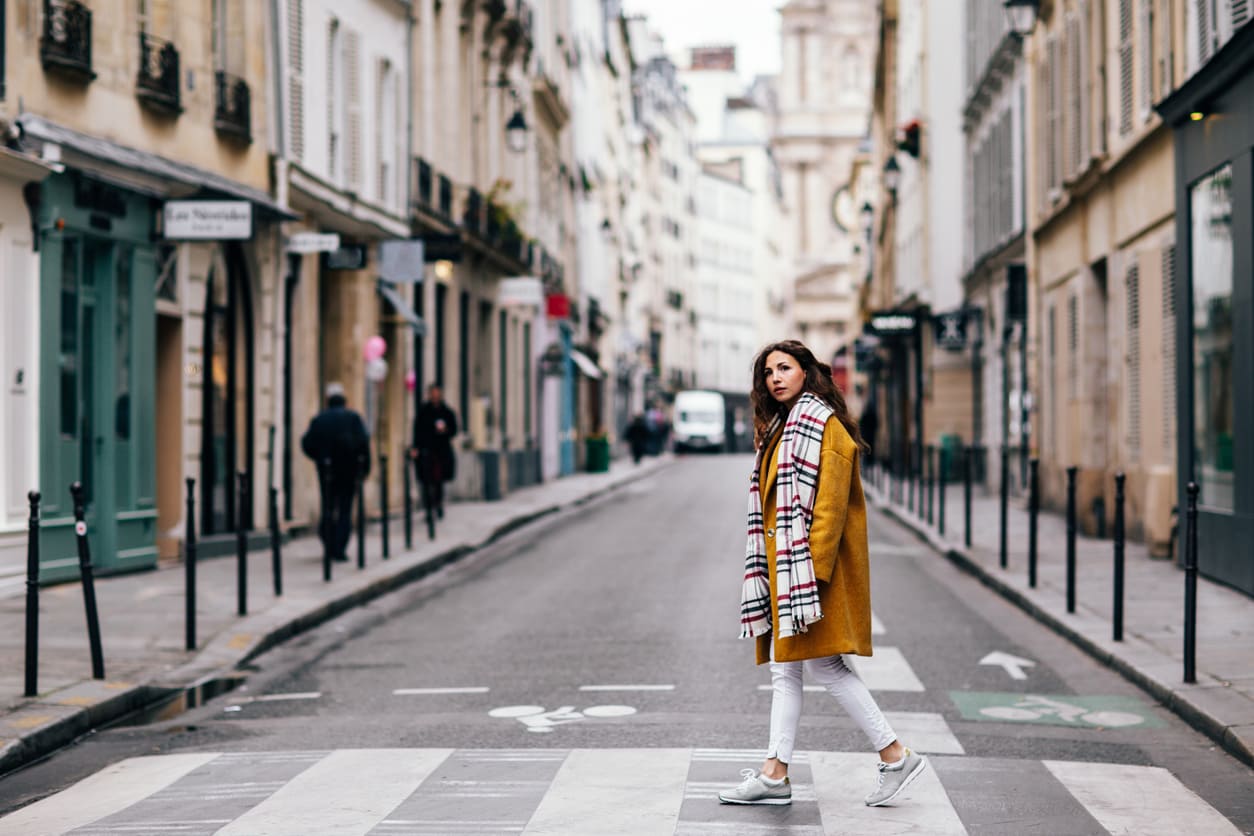
You have probably stood in front of your closet on a chilly morning, thrown on a chunky sweater, added a scarf, then a coat, and walked out feeling like you were wearing everything you owned at once. We have all been there. The instinct is to pile on more when temperatures drop or when we want an outfit to feel “complete.” But if you have ever watched a woman stroll through a Parisian arrondissement looking impossibly put-together in what appears to be just three simple pieces, you already sense that the approach on this side of the Atlantic might be fundamentally different. The distinction is not about owning better clothes. It is about understanding one deceptively simple principle that changes everything.
Why most of us get layering wrong
According to a Paris-based portrait photographer who has lived in the city long enough to decode the mechanics of French fashion firsthand, Parisian layering is not about piling on pieces. It is built on intention, restraint, and a quiet confidence that lets each layer breathe. That description alone should make you rethink the extra cardigan you grabbed this morning.
There is a rhythm to the way French women and Parisian women dress that feels almost instinctive. It is never overly styled, never trend-chasing, and never driven by fleeting fashion trends. Instead, it is thoughtful – rooted in texture, proportion, and a deep understanding of how clothing moves through real life. Most of these wardrobes are anchored by a capsule wardrobe of well-made pieces rather than a revolving door of impulse buys. So why does the same concept feel so elusive when we try to replicate it at home?
The answer, it turns out, is that we tend to focus on the wrong layer entirely.
The base layer matters more than you think
The non-negotiable rule comes down to fit and fabric at the very first layer. Your base should be clean, comfortable, and quietly refined. Nothing overly bulky, nothing overly styled – this layer anchors everything else, much like key items in a capsule wardrobe.
In winter, the base layer is actually the most important layer of all. It traps heat close to your body more effectively than a huge outer layer. When it is really cold out, warmer materials like wool or blends will keep your core warm. And the best part is that these cozy layers are usually invisible, hidden beneath the more intentional pieces you place on top. So the first layer should be practical rather than fashion-forward.
From there, balance takes over. Think of it the way you would never pair a baggy shirt with baggy pants or a tight top with tight pants. If one element of your outfit is flowy, contrast it with something more form-fitting to add shape – and vice versa. Too much of any single quality, whether that is thick fabric, loose silhouettes, tight garments, bright colors, or neutral colors, ends up looking unbalanced. Balance is the main thing we are trying to achieve.
Outerwear should also shift with the calendar. A light spring trench coat serves a completely different purpose than a heavy winter wool coat. Coordinating with the seasons keeps you comfortable and visually cohesive.
How color restraint actually makes your outfits more interesting
Parisian layering rarely relies on loud color. Heavy, brightly colored makeup and head-to-toe saturated hues can sometimes be an American tendency. The French approach builds depth through nuance and neutral shades instead. Monochromatic dressing, or staying within a tight palette of neutral tones, allows textures and silhouettes to take center stage.
This does not mean your outfits will be boring. Color moderation can actually allow certain shades to really pop. But if you reach for bright colors and patterns in every part of your outfit, the overall effect risks looking chaotic and distracting. Instead of dramatic contrasts, aim for harmony – soft transitions between fabrics, neutral tones that sit comfortably together, and silhouettes that feel lived-in rather than styled. The goal is not perfection. It is ease and effortless style.
When one layer is oversized, another should be more fitted. Pairing straight-leg jeans with a structured coat or a fluid top demonstrates this perfectly. If your coat is long and structured, your base might feel lighter and more fluid underneath. Accessories like a silk scarf, ankle boots, or a simple belt should feel like a continuation of the outfit rather than an interruption. Beauty choices follow the same philosophy: minimal makeup, perhaps just a touch of red lipstick.
Wardrobe staples like a striped Breton top, a leather jacket, or a slip dress create variation while keeping everything cohesive. These small swaps offer variety without requiring an entirely new outfit.
What changes when you dress with intention
Once you start approaching your closet this way, something shifts. Your wardrobe feels more cohesive. Getting dressed in the morning becomes simpler instead of stressful. Whether you are heading to a date night or stepping out for a quiet morning in the city, mastering this kind of layering can transform everyday wear into genuinely chic outfits.
The takeaway is refreshingly straightforward: every layer should earn its place. Keep the base practical, play with proportion, let neutral tones do the heavy lifting, and treat accessories as extensions rather than additions. You do not need a bigger wardrobe. You just need a more intentional one.


