











The novel opens with a dropped cat. James places Silver into Katie’s arms as though handing over something she already loves, and Katie lets her fall, watching the animal land on her feet with the effortless competence that will haunt the rest of the book. Stacey Yu builds her debut, Kitten, on that first small failure, following a narrator fresh out of college and short on money who becomes increasingly fixated on her wealthy boyfriend’s borrowed pet, studying the creature the way one studies a rival or a role model. Published by Random House this August and already a national bestseller, longlisted for the Center for Fiction’s First Novel Prize, the book has arrived with the momentum usually reserved for third novels rather than first ones.
The Seduction of Being Helpless
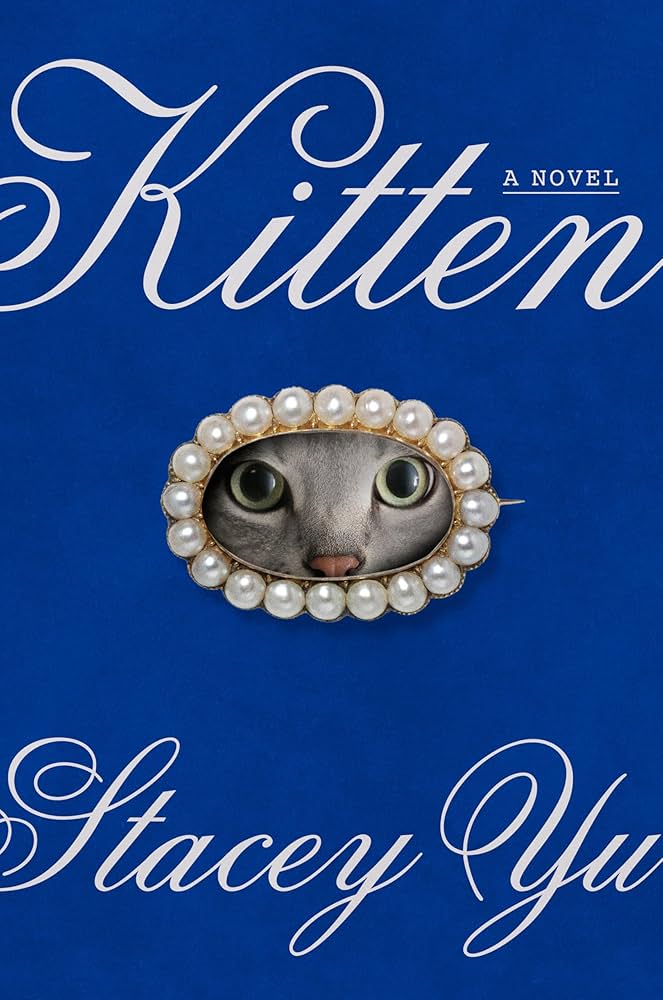
Kitten by Stacey Yu, from $ 21.29
Yu grew up between Texas, Arkansas and California, studied English literature at Columbia and now writes from London, and the distance shows in the cool precision she brings to a very American predicament. Her Katie has graduated into an economy that offers her gig work and an apartment she cannot afford, alongside a boyfriend who covers everything and asks for gratitude in the currency of dependence, and she finds herself calculating whether a life of being looked after might beat a life of being seen. The cat becomes her tutor in that arithmetic, since Silver receives adoration for existing and answers to nobody. The premise carries an unmistakable literary ancestor. Colette published La Chatte in 1933, a short and merciless novel about a young husband whose devotion to his cat corrodes his marriage from within, and she understood already that the animal in the room functions as a mirror held at an unflattering angle. Yu turns the arrangement around and hands the mirror to the woman.
A Mother, a Boyfriend, and the Anti-Girlboss Turn
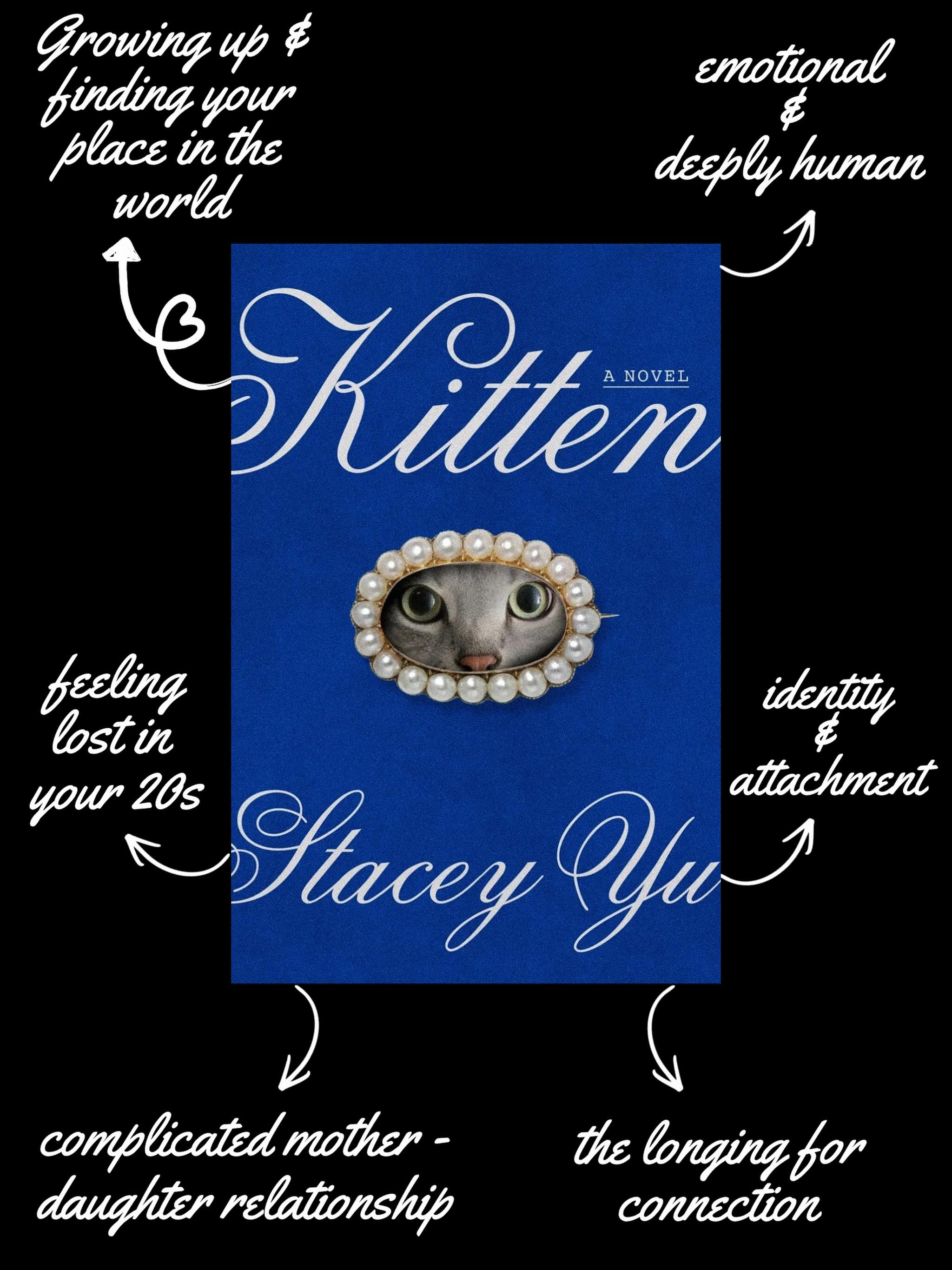
Underneath the comedy runs a portrait of a difficult mother, drawn with the psychological accuracy that reviewers have singled out, and a running examination of how affection quietly keeps its own ledger. Critics have placed the novel inside the current backlash against the girlboss decade, reading Katie’s yearning for helplessness as a symptom of a generation that watched ambition get repackaged as self-exploitation and decided to opt out. Others have connected it to the line running from The Bell Jar through My Year of Rest and Relaxation, that tradition of young women whose refusal to participate arrives dressed as lassitude. What keeps Kitten from settling comfortably into either category is Yu’s refusal to redeem her narrator on schedule. Katie stays prickly, evasive and frequently exasperating, which is precisely what makes her recognizable to anyone who has spent a season of early adulthood hoping somebody else would handle it.


