









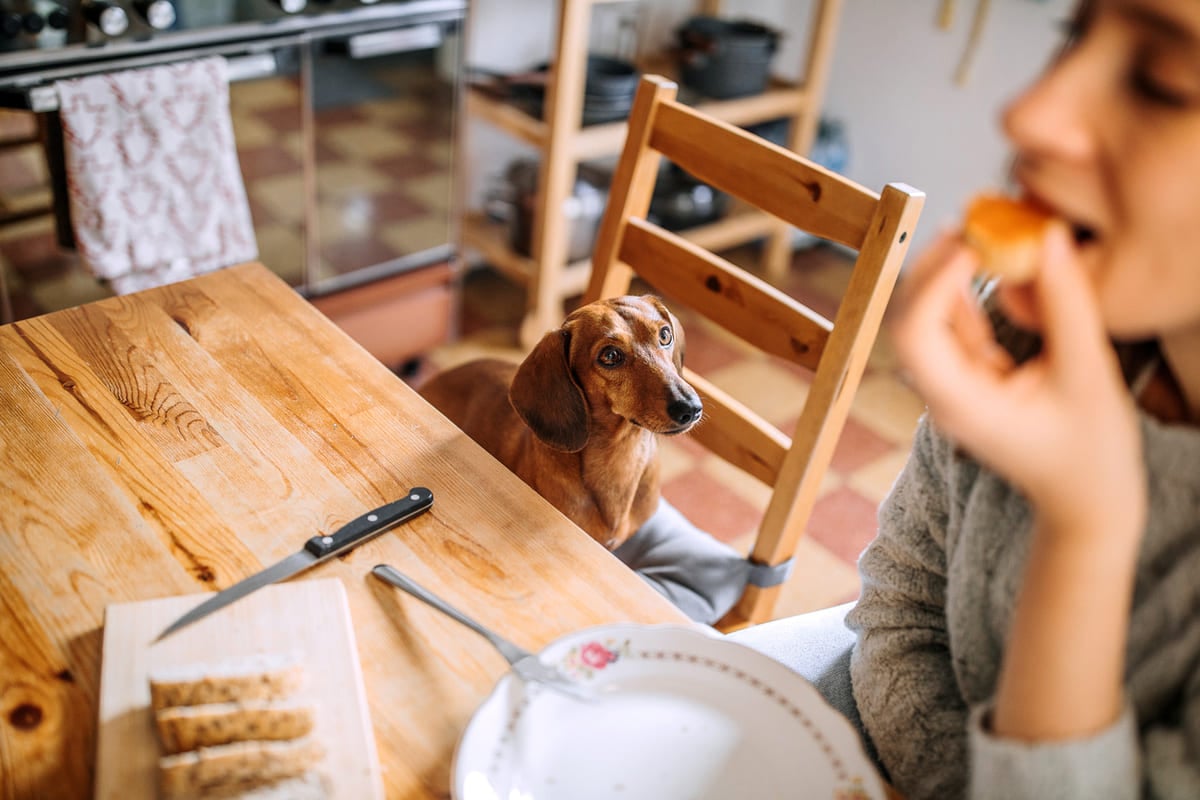
You have barely lifted the fork when you notice it – two unblinking eyes tracking every movement from your hand to your mouth and back again. Your dog is perfectly still, seated like a furry statue, radiating a silent intensity that somehow makes your pasta taste like guilt. Most of us assume this means our pet is starving, but the truth is a little more layered than simple hunger. What is actually going on behind that soul-piercing gaze has as much to do with ancient wolf instincts and your own past behavior as it does with the aroma wafting off your plate.
Why your pup watches every bite you take
The most common explanation is also the most straightforward: your dog wants what you are eating. Even a recently fed pup can be captivated by the smell of your dinner. Staring is essentially a polite, nonverbal request to share. But wanting food is only one piece of the puzzle.
Dogs are social, observant creatures that like to stay involved in whatever their humans are doing. Because they rely so heavily on body language and sensory cues, watching you eat is partly an attempt to understand your activity and figure out whether it might involve them. In other cases, that laser-focused stare is simply a sign of boredom. Dogs need regular activity and enrichment, and when those needs go unmet, they may channel restless energy into attention-seeking behaviors – including planting themselves at your feet during dinner.
There is also a deep evolutionary thread here. Dogs descended from wolves, who hunted in packs and followed a strict social hierarchy. Higher-ranking members typically ate first while lower-ranking wolves waited their turn. Staring served as a passive way to show interest, essentially a polite request for leftovers. In your home, your dog likely views you as the one who controls valuable resources and may be doing exactly what its ancestors did: waiting quietly, hoping for scraps.
How one table scrap creates a lasting habit
According to Erin Askeland, an animal health and behavioral expert at Camp Bow Wow, dogs learn to stare and beg based entirely on how their owner responds. If the behavior results in food, even once, they are likely to repeat it. That is positive reinforcement in action, and it is why establishing good habits from day one matters so much. Some dogs even pick up the tactic by watching other pets in the household – if they see another dog get rewarded for waiting patiently, they may try the same strategy.
Breed also plays a role. Askeland notes that some breeds are more food-obsessed than others, pointing to Labradors, Beagles, Bulldogs, and Corgis as particularly persistent fixators. Herding breeds such as Border Collies and Australian Shepherds use strong eye contact as part of their instinctive behavior, which can naturally surface during mealtimes. And personality matters, too. A bold, confident dog might park itself directly in front of you without a shred of shame, while a more timid pup might hover quietly at the edge of the room, hoping for a dropped morsel.
If your dog only stares at you and not at other family members or guests, that is likely because they associate you specifically with sharing food from your plate. In their mind, you are simply more likely to cave.
Practical ways to reclaim a peaceful dinner
Quiet staring from a distance, without whining, pawing, or jumping, is usually harmless. But once the behavior escalates to vocal begging, table-surfing, or a nose landing in your plate, it is time for boundaries – especially if it disrupts meals for you or your guests.
One of the most effective strategies, according to Askeland, is feeding your dog at the same time you sit down to eat. This keeps them occupied with their own meal and reinforces that food comes from their bowl, not your plate. If your dog tends to finish long before you do, try a slow-feeder bowl or enrichment toys that extend the eating experience.
Teaching a command like place can also help. Direct your dog to a designated mat or bed during meals, reward them with praise for staying quietly, and offer a dog treat – not human food – after you finish eating. If they creep closer, gently redirect them without scolding. A long-lasting chew or puzzle toy is another great way to shift their focus.
If you want to share a bit of dog-safe human food, Askeland recommends placing it in their bowl away from the dining area and only offering it when your dog is calm or engaged in a behavior you want to encourage, like lying down elsewhere. Avoid making eye contact, talking to, or petting your dog while they stare. Even small reactions can signal that the behavior is getting your attention, and that alone is often reward enough. For dogs that simply will not settle, a crate, playpen, or separate room with a comfy bed and a chew toy is a reasonable option.
Above all, Askeland stresses household consistency. Everyone needs to follow the same rules – no sneaking table scraps, no responding to stares with attention, no exceptions. Mixed messages confuse dogs and undermine training.
What to remember next time those eyes lock on
Staring does not necessarily mean your dog is hungry. Dogs are opportunistic by nature and may fixate on your plate simply because something smells appealing, regardless of how recently they have eaten. Occasional, polite staring is normal and harmless, but persistent or intense gazing – especially when paired with whining or barking – can point to behavioral concerns that benefit from structure. The takeaway is refreshingly simple: keep meals separate, reward calm behavior after dinner rather than during it, and stay consistent. Your dog will not love you any less for setting boundaries – and you will finally get to enjoy your food without that soul-level guilt trip.


