










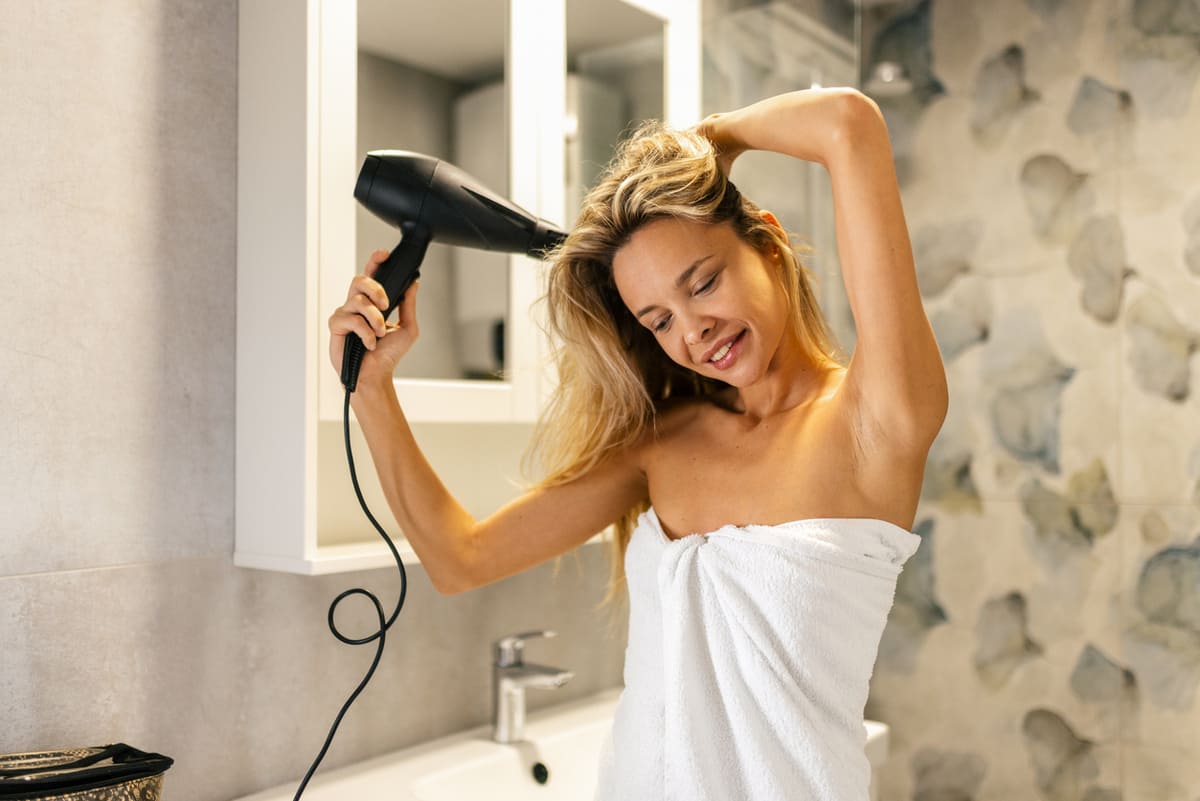
You step out of the shower, wrap your hair in a towel, and let it do its thing. No heat, no fuss, no damage – right? That is the assumption most of us have been operating under for years. Skipping the blow dryer felt like the kindest thing we could do for our strands. But what if the habit you adopted to protect your hair is actually working against it? According to hairdresser Dejan Garz, the answer might unsettle everything you thought you knew about your post-shower routine.
Why wet hair is more fragile than you think
We tend to worry about heat damage above all else, and for good reason – cranking a blow dryer to its highest setting is not exactly a spa day for your strands. Yet the real vulnerability window opens the moment your hair gets wet. As Garz explains, shampoo and warm water lift the cuticle layer, which is the outermost protective shield of each strand. Once those cuticles are raised, hair becomes extremely prone to friction.
Think about what happens next. You toss a towel over your shoulders, pull on a T-shirt, lean back against the couch. Every surface your damp hair touches creates friction that can lead to breakage. And the longer your hair stays in that wet, open-cuticle state, the more susceptible it becomes to that kind of mechanical damage. So while you are patiently waiting for your hair to dry on its own, you may actually be extending the window during which it is most at risk.
Does that mean air drying is always the wrong choice? Not exactly. But understanding how wet hair behaves changes the calculation considerably.
When reaching for the blow dryer matters most
If your hair is bleached, highlighted, dyed, or chemically treated, drying it quickly is not a luxury – it is a necessity. In these cases the cuticle is already compromised by the chemical process, so every extra minute spent wet compounds the potential for further damage. Garz is emphatic on this point: getting color-treated or chemically processed hair dry as fast as reasonably possible helps limit additional harm.
He is equally direct about one particular habit many of us are guilty of – going to bed with wet hair. Prolonged friction against a pillow throughout the night can lead to breakage and split ends, turning what feels like a low-effort evening into a slow-motion assault on your strands. For anyone with treated hair, sleeping on a damp mane is one of the worst things you can do.
That said, there is some grace for those with virgin, untreated hair. If you have never colored your strands and you do not frequently use a straightener or curling iron, your hair will generally tolerate daytime air drying without serious consequences. Natural curls, in particular, can actually look better when left to dry on their own. According to Garz, even using a diffuser attachment on a gentle setting can disrupt the curl structure, preventing it from fully setting and ultimately causing frizz and split ends.
The right way to blow dry without trading one type of damage for another
Swapping air drying for blow drying only helps if you do it correctly. Otherwise, as Garz points out, blow drying at too high a temperature is no gentler than letting hair air dry. The key is a medium heat setting paired with a heat protection product applied before you even turn the dryer on.
Before you reach for the blow dryer, however, start with a good microfiber towel. It absorbs water far more efficiently than a standard terry cloth towel, cutting down overall drying time significantly. Garz recommends wearing a towel turban for just a few minutes – long enough for the hair to become slightly dry, not the two-hour wrap many of us default to.
Once you begin blow drying, direct the airflow from roots down toward the ends. This means you might need to flip your head upside down at certain points, but it prevents tangling and frizz. Working in sections is worth the extra effort: start at the roots, move downward, and use a round brush to build smoothness and volume as you go. When you are finished, hit the cool-shot button. That final blast of cool air seals the cuticles back down, locking in shape and volume for the rest of the day.
What this means for your routine going forward
The takeaway here is refreshingly simple. Air drying is not inherently virtuous, and blow drying is not inherently destructive. What matters is how long your hair stays wet and how you handle it during that vulnerable window. For treated or damaged hair, a quick, controlled blow dry at medium heat with proper protection is genuinely gentler than hours of open-air exposure and friction. For natural, untreated curls, air drying during the day remains a perfectly valid option. Either way, a microfiber towel and a few minutes of intentional care right after the shower can make a meaningful difference. You do not have to overhaul your entire routine – just rethink the part you have been getting wrong.


