









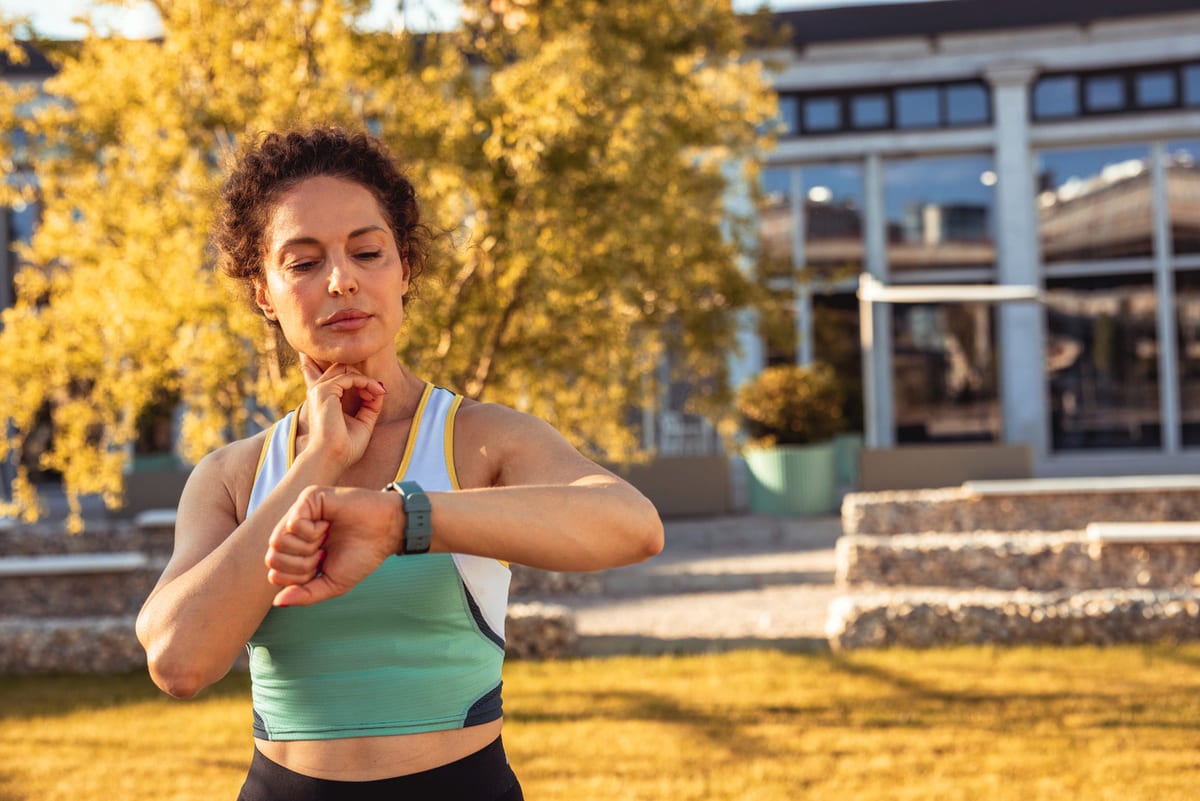
You lace up your sneakers, step outside, and start putting one foot in front of the other. It feels almost too simple to count as exercise. Maybe you even wonder whether a walk could ever compete with a run when it comes to shedding stubborn body fat. Here is where your instinct might be steering you wrong – and where the numbers tell a surprisingly different story. The pace you choose matters far more than you think, and the sweet spot is lower than most people assume.
Why walking actually outperforms running for fat loss
It sounds counterintuitive, but the proportion of fat your body taps into during exercise drops as intensity rises. According to Dr. Stéphane Cascua, author of Le Sport pour maigrir, walking burns roughly 45% fat, compared to 35% when jogging and only 25% when running near the point of breathlessness. In other words, the harder you push, the more your body shifts away from fat as its primary fuel source.
Research backs this up beyond the lab. A 2014 study published in the journal Physical Activity and Nutrition found that walking just three days per week for 12 weeks was highly effective at reducing belly fat, particularly among older women. So the question is not whether walking works – it clearly does. The real question is how fast you need to go to get the most out of every step.
The numbers behind each pace
At a gentle 5 km/h, roughly 3.1 mph, one hour of walking burns close to 240 calories. Push that pace up to 6 km/h (about 3.7 mph) and the calorie count climbs to around 300 per hour. Increase it again to 7 km/h (approximately 4.3 mph) and you are looking at roughly 360 calories torched in the same timeframe. The pattern is clear: the faster you walk, the more energy you expend.
Steven Stonehouse, a certified running coach who spoke with Eat This, explains that picking up your walking pace is essential if you want the benefits to translate into real weight loss. A higher speed helps your body tap into stored body fat more efficiently, which in turn drives measurable results over time.
What makes this so appealing is that you do not need to break into a jog or gasp for air. You simply need to walk with purpose – briskly enough to feel the effort, gently enough to keep fat burning in its optimal zone.
Smart tricks to amplify every walk
Speed is one lever, but it is not the only one. Fitness coaches recommend a technique called interval walking to supercharge your sessions. The idea is straightforward: walk at your maximum speed for about 30 seconds, then shift to a slower, recovery pace for another 30 seconds, and keep alternating. Tom Holland, author of The Micro-Workout Plan: Get the Body You Want Without the Gym in 15 Minutes or Less a Day, notes that varying your walking speed – especially by adding faster intervals – raises your heart rate and increases your overall caloric expenditure, helping you lose more weight over time.
Another effective approach involves adding resistance. Carrying a weighted vest, holding light dumbbells, or strapping small weights to your ankles and wrists makes each stride more demanding. This increased difficulty elevates your heart rate and helps strengthen and tone your body, including your midsection – especially if you consciously engage your core muscles throughout the walk.
Where you walk matters, too. Heading outdoors rather than sticking to a gym treadmill introduces natural terrain variation. Hills, sand, and gravel all create more pressure and resistance underfoot. That extra challenge fires up the muscles in your legs and trunk while pushing your heart rate higher – all of which translates to more calories burned without any change in duration.
The bottom line for your daily routine
Walking is gentler than running, more accessible for people with fragile physical conditions, and, perhaps most surprisingly, more effective at burning fat as a percentage of total energy used. You now know that a steady 5 km/h walk already burns close to 240 calories an hour, and that bumping your speed to 7 km/h can push that figure to 360 calories. You also know that interval walking, added weights, and outdoor terrain can amplify those results even further. The takeaway is refreshingly simple: you do not need to run to lose fat. You just need to walk a little faster, a little smarter, and let the science do the rest.


