










 Fashion disposes of
certain silhouettes for a reason, and the bandage dress was buried
with unusual conviction. It belonged to an era of tabloid scrutiny
and body-first dressing, an unofficial uniform for a decade that
measured women in inches, and when the culture around it collapsed
the dress went down with it, filed away beside the bodycon and the
six-inch platform. Which makes its return in 2026 genuinely
interesting. Bandage dressing has spent this year
climbing back onto red carpets, resale platforms and runways,
arriving in a landscape that thinks about bodies very differently
from the one that first embraced it. And the surest sign that a
revival has passed the point of debate remains the high street,
where Zara has just put out a $49.90 halter
version of the look. The Stretch Band Halter Top
does the job with restraint, wrapping the torso in horizontal bands
with a halter neck and a deep V, in a light gray that has none of
the club-floor urgency the original silhouette used to demand.
Fashion disposes of
certain silhouettes for a reason, and the bandage dress was buried
with unusual conviction. It belonged to an era of tabloid scrutiny
and body-first dressing, an unofficial uniform for a decade that
measured women in inches, and when the culture around it collapsed
the dress went down with it, filed away beside the bodycon and the
six-inch platform. Which makes its return in 2026 genuinely
interesting. Bandage dressing has spent this year
climbing back onto red carpets, resale platforms and runways,
arriving in a landscape that thinks about bodies very differently
from the one that first embraced it. And the surest sign that a
revival has passed the point of debate remains the high street,
where Zara has just put out a $49.90 halter
version of the look. The Stretch Band Halter Top
does the job with restraint, wrapping the torso in horizontal bands
with a halter neck and a deep V, in a light gray that has none of
the club-floor urgency the original silhouette used to demand.
A Short History of the Tightest Dress Ever Made
The story begins with Azzedine Alaïa in the 1980s, the Tunisian couturier whose knits clung so devotedly that the press crowned him the King of Cling. Hervé Léger took the concept further in 1992, constructing dresses from dozens of bandage-like viscose strips stitched together to sculpt the body through pure engineering rather than embellishment. By the mid 2000s the silhouette had gone fully mainstream, worn on every red carpet and in every club, photographed on a generation of it girls until it became shorthand for a very particular kind of body-first dressing. Then it vanished, replaced by oversized tailoring and the great minimalist cleanse.
Why It Feels Different
This Time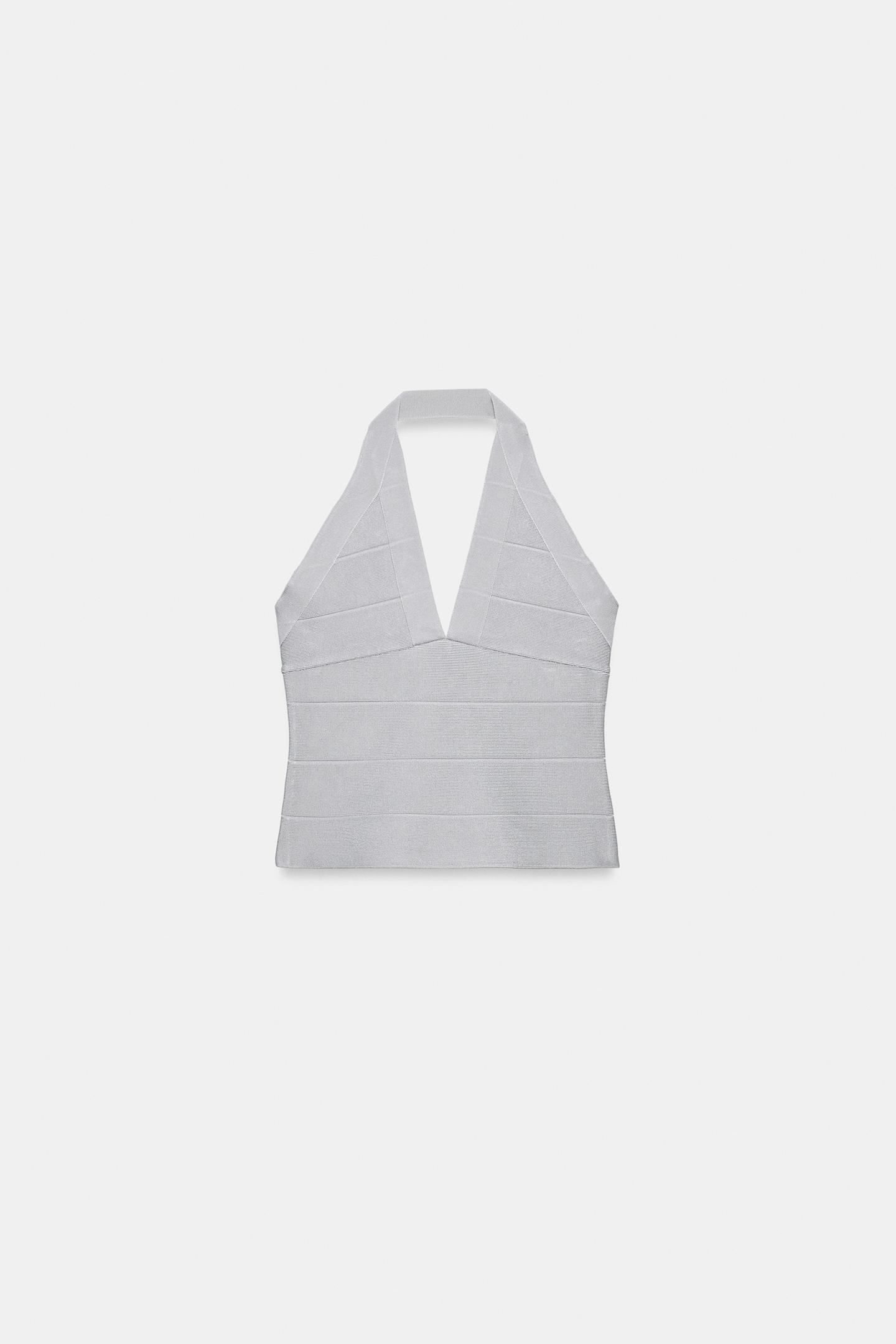
Zara Stretch Band Halter Top, $ 49.90
The 2026 version arrives with the volume turned down. Under creative director Michelle Ochs, Hervé Léger has expanded the silhouette beyond the club mini into midi lengths, sculpted separates and daywear, and the palette has swapped neon for espresso and bone. The styling rules changed completely too. Where the original demanded platform heels and full glam, the current iteration turns up under blazers, over ballet flats, in broad daylight. Kaia Gerber wore a floor-length white version to a film festival as a nod to her supermodel mother, while Olivia Dean took a candy-striped bandage maxi to an industry showcase, and Hailey Bieber and Sabrina Carpenter have both revisited the sculptural shape. There is even a psychological theory circulating, which suggests the appeal lies in the pressure itself. Fashion psychologists describe the sensation as sensory anchoring, the same grounding comfort a weighted blanket delivers, which explains why a generation raised on chaos finds something soothing about clothing that holds on tight.
How to Wear the Zara Top Without Time-Travelling
 The trick is context. Pair
the halter with wide-leg trousers or a long fluid skirt so the
proportion stays modern, and let the top handle all the structure.
Denim works beautifully, especially a relaxed straight leg that
argues with the fit above. For daytime, layer a boyfriend blazer
over it and leave the neckline visible. For evening, add slim heels
rather than platforms, keep jewelry sparse and skip the rest of the
2003 references entirely. At $49.90, it is a low-risk way to test a
silhouette that spent fifteen years in exile. The archive purists
can keep hunting Vinted for the real thing.
The trick is context. Pair
the halter with wide-leg trousers or a long fluid skirt so the
proportion stays modern, and let the top handle all the structure.
Denim works beautifully, especially a relaxed straight leg that
argues with the fit above. For daytime, layer a boyfriend blazer
over it and leave the neckline visible. For evening, add slim heels
rather than platforms, keep jewelry sparse and skip the rest of the
2003 references entirely. At $49.90, it is a low-risk way to test a
silhouette that spent fifteen years in exile. The archive purists
can keep hunting Vinted for the real thing.


