










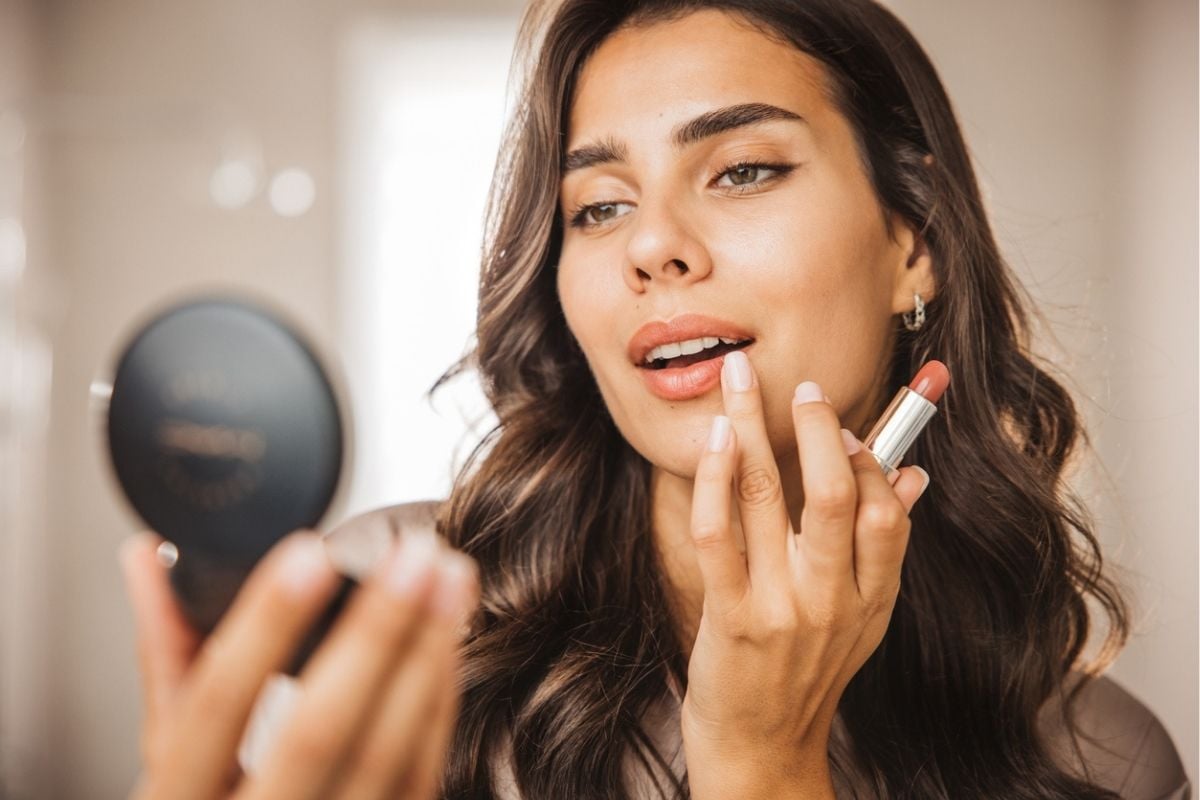
You scroll through your camera roll after a night out and there it is – that one photo where your smile looks slightly more yellow than you remembered. You know your teeth are healthy. You brush, you floss, you do the things. But coffee, tea, and life in general have a way of dimming what we optimistically call our pearly whites. Before you spiral into a whitening-strip binge, though, consider this: the lip color you were wearing in that photo might be working against you. And with a simple swap rooted in basic color theory, you could make your smile look noticeably brighter without a single bleaching agent.
Why your lip color might be sabotaging your smile
Having off-white teeth is completely normal, yet certain lipstick shades can actually emphasize those warm, yellowish tones and make teeth appear even duller. The principle behind it is surprisingly straightforward. On the color wheel, hues that sit directly opposite one another cancel each other out. Yellow lives across from purple and blue, which means cool-toned lip colors naturally counteract the warm tones in a less-than-luminous smile.
Think of it the same way purple shampoo works on lightened hair – it minimizes the appearance of brassiness by introducing an opposing pigment. Purple or blue-toned lipstick does the same thing for your teeth. Cooler shades contrast against the warmth in your smile, creating the visual illusion of whiter enamel. That does not mean you need to reach for an electric cobalt, either. You simply need to pay attention to undertones.
So how do you know whether a shade runs cool or warm? Try swatching a few options on your arm near a window. In natural lighting, cool shades tend to look brighter and punchier, while warm ones lean deeper, moodier, or more bronze. You can also check the packaging – many brands print a C, N, or W on the label to indicate cool, neutral, or warm undertones. And if you follow the seasonal color analysis trend on TikTok, think of cool shades as springs and winters, and warm shades as autumns and summers.
The cool-toned families that brighten your grin
When it comes to reds, the distinction matters enormously. Red lipstick is a timeless staple with countless variations, but brick reds, scarlets, and orange-reds carry warm undertones that can highlight the yellow in stained teeth. A true blue-red, on the other hand, does the opposite. If you are after that crisp crimson effect, look for shades that lean slightly cool without veering into neon territory.
Nudes can work in your favor, too, as long as you choose wisely. Avoid caramels and peachy beiges, which add warmth right next to your teeth. Instead, reach for nudes with a tinge of pink, mauve, or cool-toned beige. These barely-there hues pair beautifully with a smokey eye and work from day to night without drawing attention away from your smile.
Berry shades deserve special mention because their naturally cool blue or purple undertones make them reliable allies for a brighter-looking smile. The berry family is vast – raspberry, blackberry, mulberry – and all of them straddle the line between pink and purple in a way that flatters the teeth. A cool-toned purple, which is more intentionally violet than a reddish-purple or a purple-pink, tends to be even bolder and can mute yellow hues effectively.
Then there is the nostalgic cherry-stained lip, the shade that mimics the natural tint you get from a cherry-flavored ice pop. That vibrant, reddish-pink hue is fantastic for making teeth appear whiter in the most effortless way. Cool pinks also belong on your radar, particularly those in the magenta family or soft pinky-nudes with mauve undertones. Peach and coral, however, fall squarely in the avoid category.
Finishes, undertones, and what to skip entirely
Color is not the only variable at play. The finish of your lipstick matters, too. Shimmery formulas can make teeth look dull by comparison, because the sparkle draws attention to any lack of luster in your enamel. A glossy finish creates a shimmer-free sheen that enhances the brightness of your smile. Topping off any lip color with a clear gloss is a quick hack to fake a whiter, more radiant grin.
On the flip side, there are shades you should consciously sideline when a bright smile is the goal. Anything with a yellow base – gold tones, peachy hues, warmer browns like toffee, honey, or caramel – can amplify yellowish tones in your teeth. Orange-tinted lipsticks are equally problematic, and that includes any warm-toned hue with orange undertones, from tangerine to coral to brick red. Even certain nudes can backfire; those with warm brown undertones may highlight discoloration rather than mask it.
The oxblood trend that dominated social media around 2016 is back in full force, and it is worth noting that this sultry, dark shade works beautifully for teeth brightening thanks to its cool undertones. A vampy lip contoured with a burgundy liner and filled with a deep plum delivers both drama and a sparkling smile. For the boldest among us, a trendy blue lip is the ultimate cool-toned statement, practically guaranteed to make teeth pop.
Your brighter smile, no bleach required
The takeaway here is refreshingly simple. You do not need a new dental routine to look like your teeth just had a professional whitening session. You need cooler undertones on your lips. Stick with blue-reds, mauve nudes, berries, cool purples, and magenta pinks. Skip anything that leans orange, yellow, or warm brown. And when in doubt, finish with a clear gloss for an extra boost of brightness. Your camera roll will thank you.


