









 It is almost oxymoronic
that Haute Couture should owe its habit of closing
its shows with a wedding dress to
Chanel. Although Parisian ateliers have always
reserved a place for bridal creations as a moment of technical
virtuosity as well as a parenthesis of a potential market adjacent
to collecting, it was Karl Lagerfeld who
consolidated the tradition of the final bridal
look, when in the 1980s he chose the white dress as the
candid coda to the Maison’s couture. From unconventional tailored
gowns with feather trains to short 1920s-style designs,
Chanel has explored every possible frontier of
nuptial taste. And while, until last January, Matthieu
Blazy too seemed to have inherited this modus operandi,
the music changed with the latest Haute Couture Fall Winter
2026 collection, when Blazy chose to embrace the direct
legacy of Coco, who never married, closing the
show with a black dress.
It is almost oxymoronic
that Haute Couture should owe its habit of closing
its shows with a wedding dress to
Chanel. Although Parisian ateliers have always
reserved a place for bridal creations as a moment of technical
virtuosity as well as a parenthesis of a potential market adjacent
to collecting, it was Karl Lagerfeld who
consolidated the tradition of the final bridal
look, when in the 1980s he chose the white dress as the
candid coda to the Maison’s couture. From unconventional tailored
gowns with feather trains to short 1920s-style designs,
Chanel has explored every possible frontier of
nuptial taste. And while, until last January, Matthieu
Blazy too seemed to have inherited this modus operandi,
the music changed with the latest Haute Couture Fall Winter
2026 collection, when Blazy chose to embrace the direct
legacy of Coco, who never married, closing the
show with a black dress.
Chanel’s Bridal Fairy Tale
The theme of the recent couture was fairy tales. From Jack and the Beanstalk to The Ugly Duckling, Blazy drew from the heritage of fable, extracting explicit references and splendidly revealing them in every detail, from bean-shaped or sleeping-bear minaudières to heels with fairy wings. The show set itself assumed an almost fairy-tale connotation, in an alternation of climbing vines and flowers with blazing petals and a poisonous aura. And yet, those who know Blazy know that his is the work of a cantor of metaphors, and while wonder acts as the binding agent for his thematic scaffolding, the layers of interpretation lie elsewhere and are decidedly more complex. The choice of a botanical environment lends itself beautifully to narrative dualism: on one side, the fallacious innocence of buds, harmless in their role as beings that can be plucked; on the other, the corolla opened wide onto a palette of carmine red, corrosive yellow, and brine green seems to hymn The Alnwick Garden in Northumberland and the lethal species it houses in its soil, teeming with belladonna, castor bean, and jimsonweed. Not to mention that those same colors possess an exquisitely Pre-Raphaelite quality, and strongly recall the waterborne obsequies of petals in Millais’ Ophelia. All that glitters is not gold, and not everything that begins as a fairy tale ends as one. After all, it is no coincidence that his couture debut began with a Disney soundtrack, with the notes of Sleeping Beauty in the background, and has now flowed into a corpus of unsweetened tales, like those of the Brothers Grimm or Madame d’Aulnoy, where happily ever after is replaced by other, more realistic formulas. Here too, the soundtrack offers clues. The score of The Lord of the Rings or October Sky, the biopic inspired by the life of aerospace engineer Homer Hickam, accompanies the individual looks like the moral that follows every story: the grand finale consists in realizing one’s dreams, whatever they may be. And not always, as in the case of Coco Chanel herself, do those dreams include a Prince Charming.
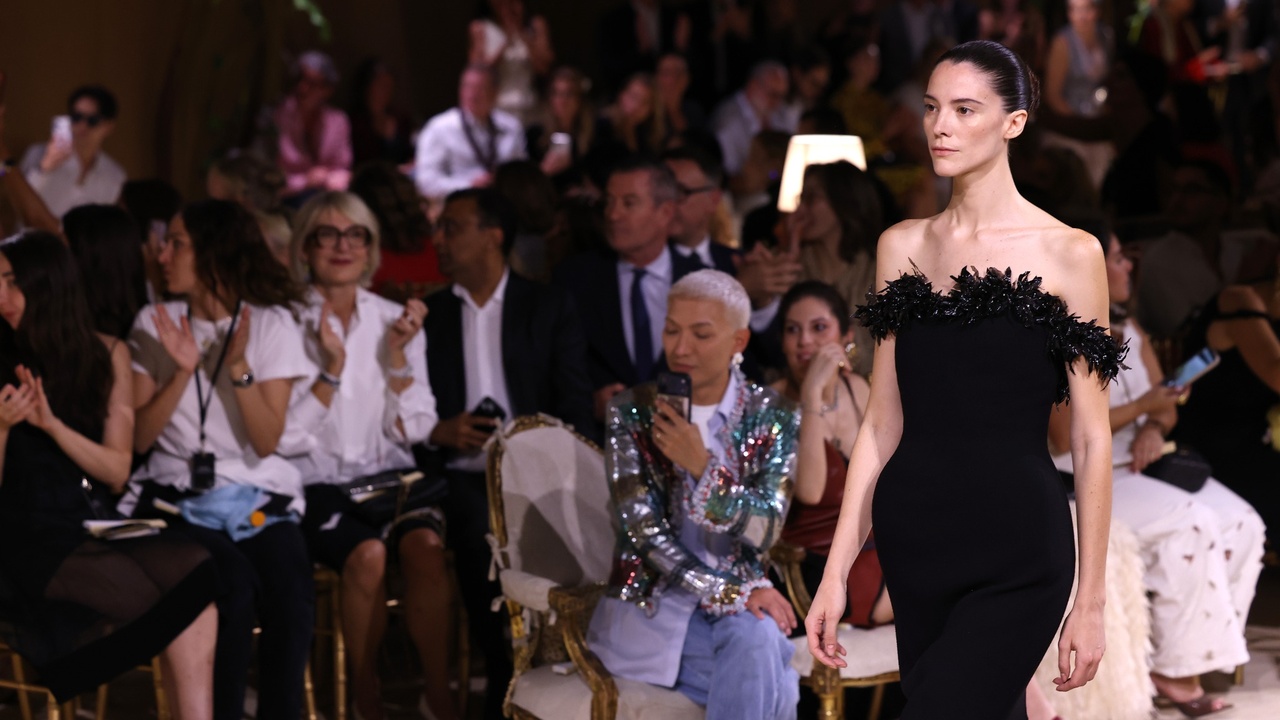
A Black Dress Closes Chanel Couture for the First Time
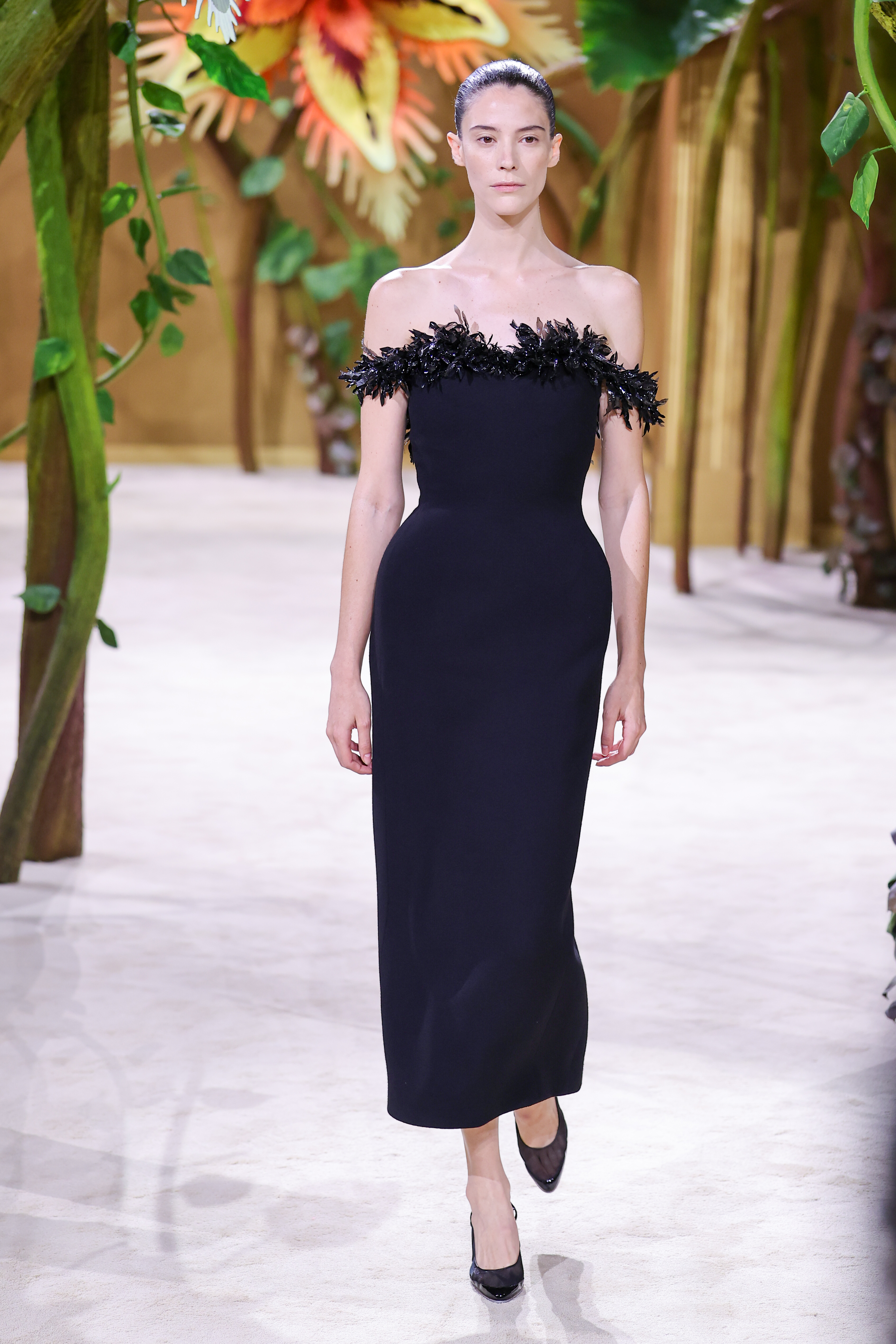
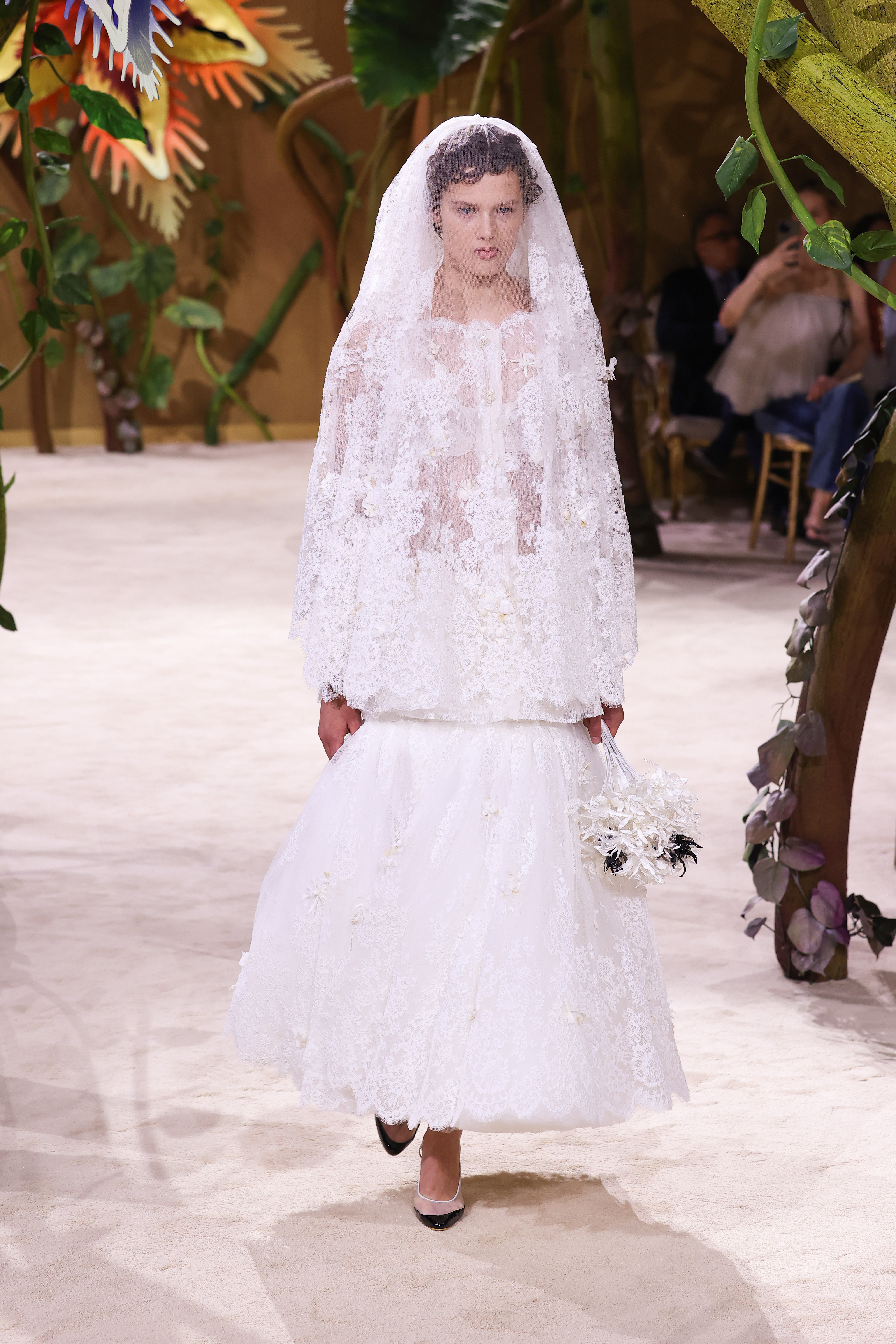
Mademoiselle Chanel never married. In a life strewn with great loves, from Boy Capel to Igor Stravinsky, the designer chose unmarried life as a form of self-affirmation against the patriarchal system of marriage, which, especially in the first half of the twentieth century, relegated wives to a subordinate position. In his impeccable wide-angle vision of fashion, Matthieu Blazy continues the work of celebrating Gabrielle Chanel, and does so with an intellectual honesty even more immaculate than Lagerfeld’s. The wedding dress is there, and it is an enchantment of layered lace, with a tulle skirt and a long veil that seems to evoke a weeping willow stirred by the wind. But it does not close the show, because that is not how Coco’s fairy tale ends. Closing the show instead is a splendid little black dress, the uniform par excellence of Chanel elegance, with a semi-fluid sheath silhouette and a strapless sweetheart neckline edged in resin feathers in shades of ink and London fog. And in a contemporary landscape where the crisis of marriage seems to concern not so much the rate of separations as the absence of the ceremony itself in relation to women’s ever greater employment, and their consequent economic independence, this choice seems not only the most coherent with Chanel’s past, but also the most representative of the present: a fairy tale becomes a dream only when imposition turns into choice.


