










Somewhere between padel and Pilates, mahjong became the plan. The one that lives on the calendar, that needs a group text, that no one cancels. It’s social but contained, competitive without being intense, and just structured enough to justify sitting in one place for hours
What used to feel like something your mom’s friends did has fully reset.
“It’s been really fun to see how many people in Hollywood have picked it up, but it makes sense,” says Oh My Mahjong founder and CEO Megan Trottier. “Mahjong is the kind of thing you can do at home with friends that still feels like an outing. Once people learn, they get hooked. It’s one of those games that just keeps you coming back.”
That’s the shift. —it’s gone from niche to something people actually plan around. “Mahjong is really having a moment lately,” Trottier says. “It’s kind of the new dinner party. People genuinely look forward to it. There’s this bigger shift happening — people want to get off their phones and spend time with friends in a way that feels a little more considered than just grabbing a drink.”
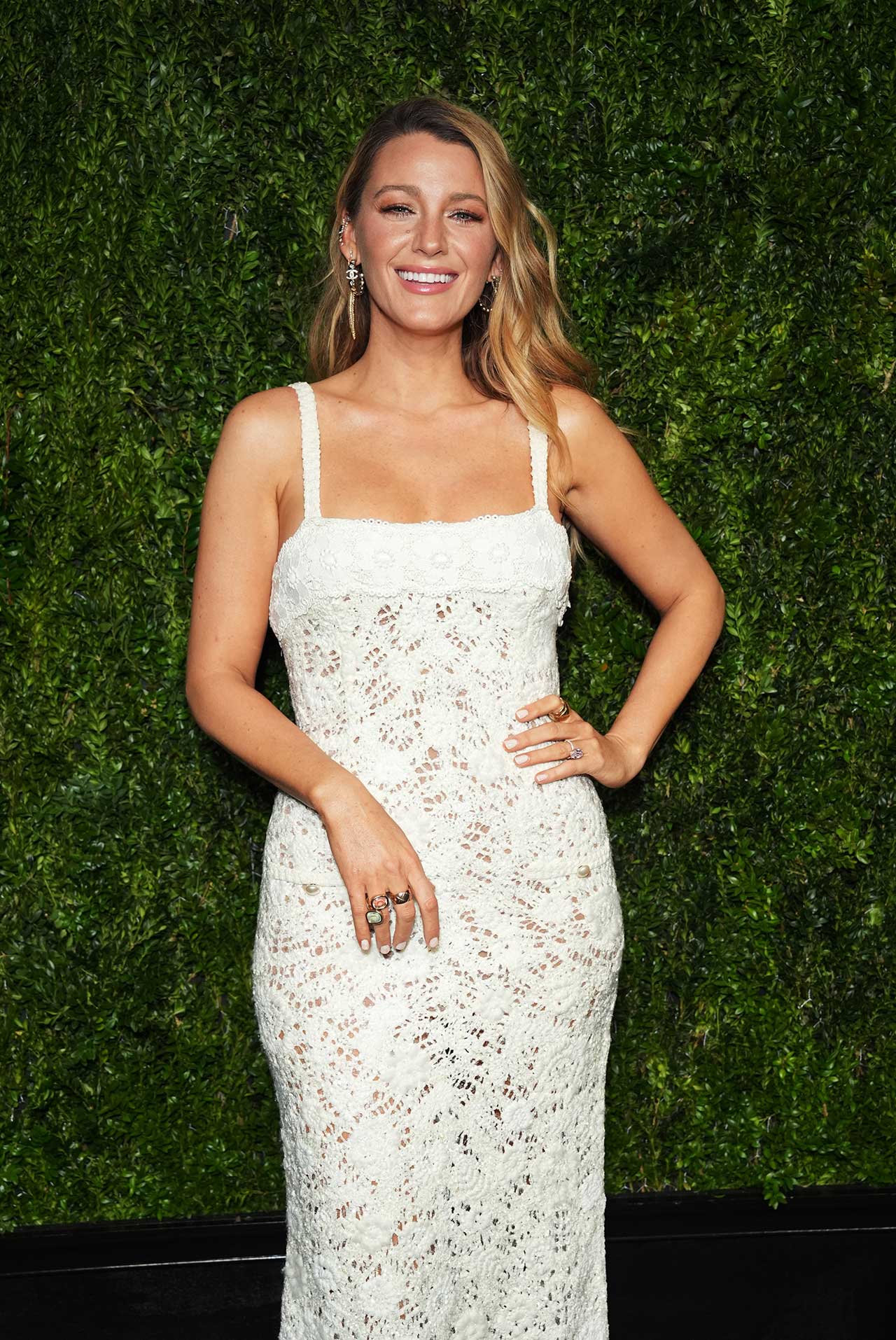
And the crowd reflects that. The game has quietly worked its way into a wide slice of the celebrity orbit, from Blake Lively and Joanna Gaines to Tommy Hilfiger, Hoda Kotb, and Maria Shriver (all fans of Oh My Mahjong) — along with a more social-first set like Claudia Oshry, Arielle Charnas, and Katie Sturino. It tracks: mahjong hits that rare sweet spot of being social but contained, a little competitive, and easy to build a night around.
“It also allows people to meet other people who love playing,” Trottier adds. “It’s social, a little competitive, and once you start, you want to keep going.” In L.A. especially, that’s turned into a full ecosystem — less casual hang, more standing plan — with instructors, group chats, and weekly games that book out ahead.
Mahjong originated in China in the mid-to-late 1800s, often linked to the Qing dynasty era. The game uses a set of 144 tiles marked with Chinese characters and symbols — bamboo (“bams”), circles (“dots”), and characters (“craks”), along with winds, dragons, and flowers. Traditionally played with four people, it blends elements of rummy with a level of strategy that can turn unexpectedly intense, depending on the table.
By the early 20th century, mahjong had made its way to the U.S., where it quickly caught on. Sets were sold in department stores, rulebooks circulated widely, and by the 1920s, it had already had its first American boom. In 1937, the National Mah Jongg League was formed, standardizing the rules and introducing the now-iconic annual card — a printed guide to all the official hands you can play that year (Yes, it changes every year. Yes, people have opinions.).
It’s part logic puzzle, part memory game, and part ritual. Once you know what you’re doing — or even know enough to fake it till you make it — it becomes the kind of thing you look forward to all week.
Mahjong is popping up everywhere, from poolside tables in Miami to standing weekly games at places like Sadelle’s Coconut Grove to private games in NYC and events in Los Angeles hosted by branding pro Carol Bell, and everywhere in between. It hits a very specific sweet spot: screen-free but still engaging, social without being chaotic, and structured enough to feel addictive.
It also taps into something people have been missing: ritual. A standing game, a set group, a night that repeats. In a culture that tends to overcomplicate plans, mahjong simplifies them. You show up, you sit down, you play.
And then there’s the aesthetic. The new wave of mahjong sets at all price points — lucite tiles, soft pastels, monogrammed racks — has turned the game into something closer to a lifestyle accessory, making it feel less inherited and more curated.
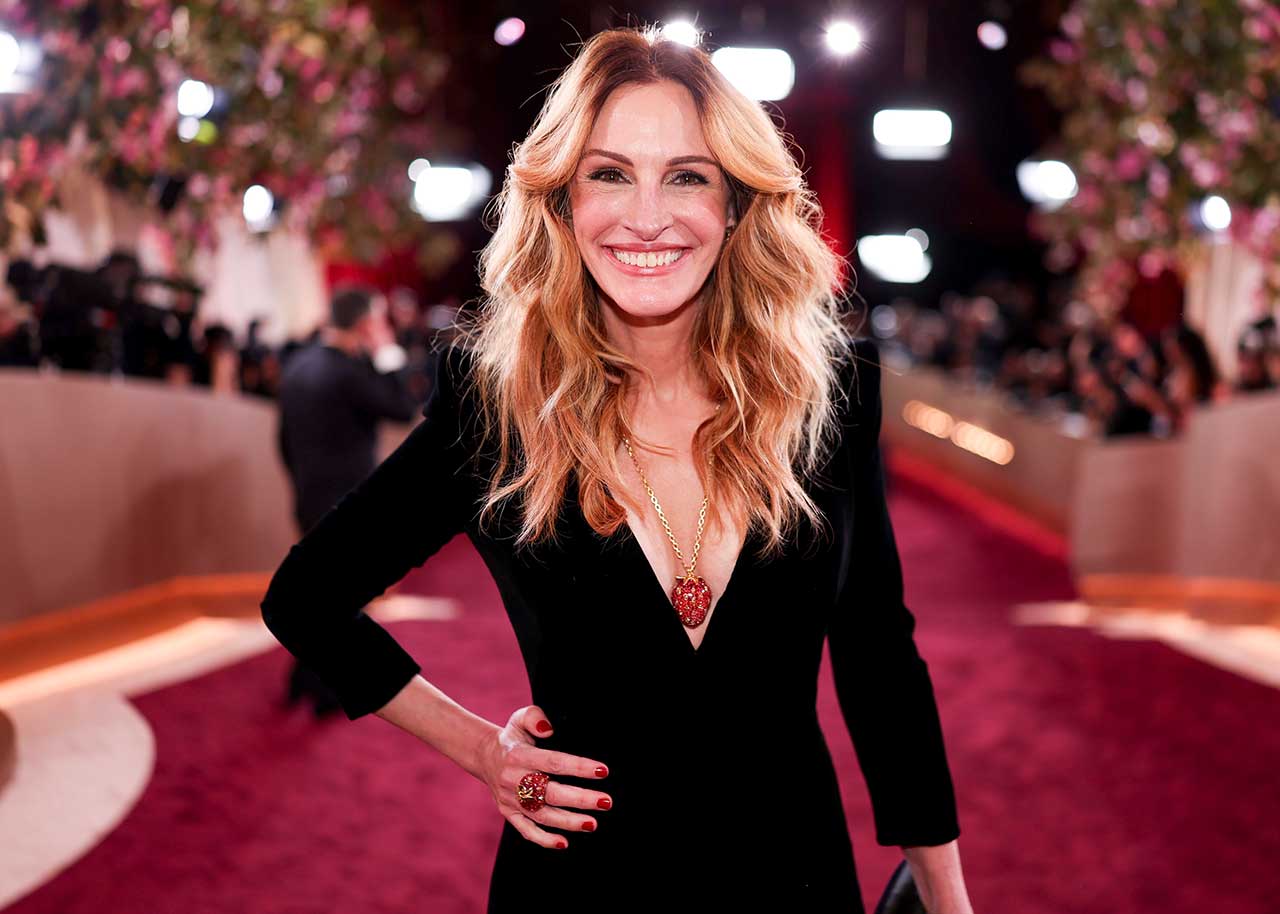
Mahjong’s current wave isn’t happening on red carpets; it’s happening at home, which is exactly why the celebrity overlap feels real. Julia Roberts has long been associated with playing as part of her off-duty routine, while Sarah Jessica Parker — a longtime player — cements its place as a New York social ritual rather than a niche hobby.
Drew Barrymore leans into that same energy — classic games, friends over, nothing overly produced — while Amy Schumer has referenced playing in a more social, group setting.
Then there’s Jill Kargman, whose whole Upper East Side orbit feels practically designed for mahjong: slightly irreverent, deeply social, and built around the idea that staying in can be its own kind of going out.
The through line isn’t traditional endorsement — it’s that the game fits seamlessly into how these women actually live now. At home, with friends, doing something just structured enough to feel like you showed up for it.
At its core, mahjong isn’t just a game — it’s a system, a language, and increasingly, a reason to gather.
It’s also one of the rare things that manages to feel both timeless and current. You can learn it at 10 or 70. You can play seriously or barely keep up. And once you know what you’re doing — even a little — it becomes the kind of thing you build a week around.
Which is probably why everyone is playing again.
Shop the Mahjong Moment:
This is where the trend really clicks: mahjong isn’t just something you play — it’s something you style. The sets have become part décor, part personality, and in some cases, full-blown collector’s items. From playful, color-forward tiles to couture-level objets, this is the edit that makes the whole thing feel elevated. The best mahjong set isn’t just about how it plays — it’s about how it lives in your space. Whether you lean playful, polished, or full collector, the right one makes the night feel considered before the first tile is even picked up.
Hermès
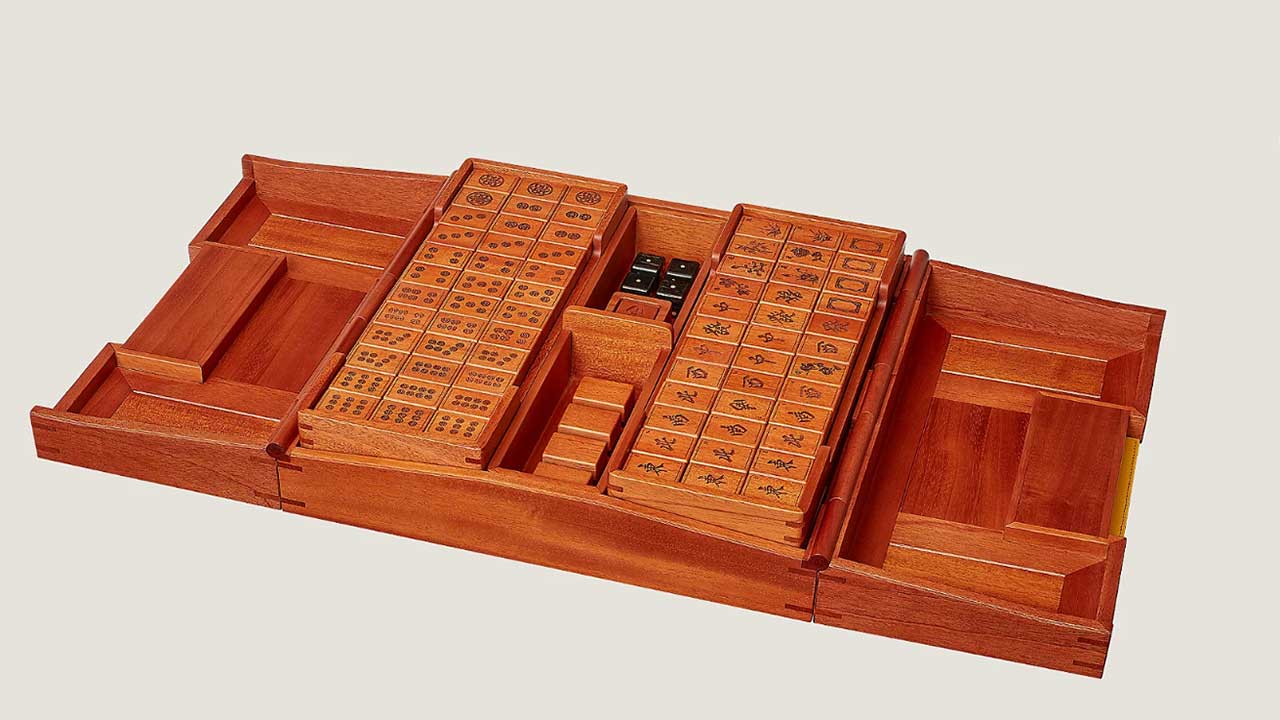
At the highest end, this is mahjong as a true luxury object — solid mahogany and cassia wood tiles, impeccable craftsmanship, and the kind of detailing that puts it firmly in collector territory.
Tiffany & Co.
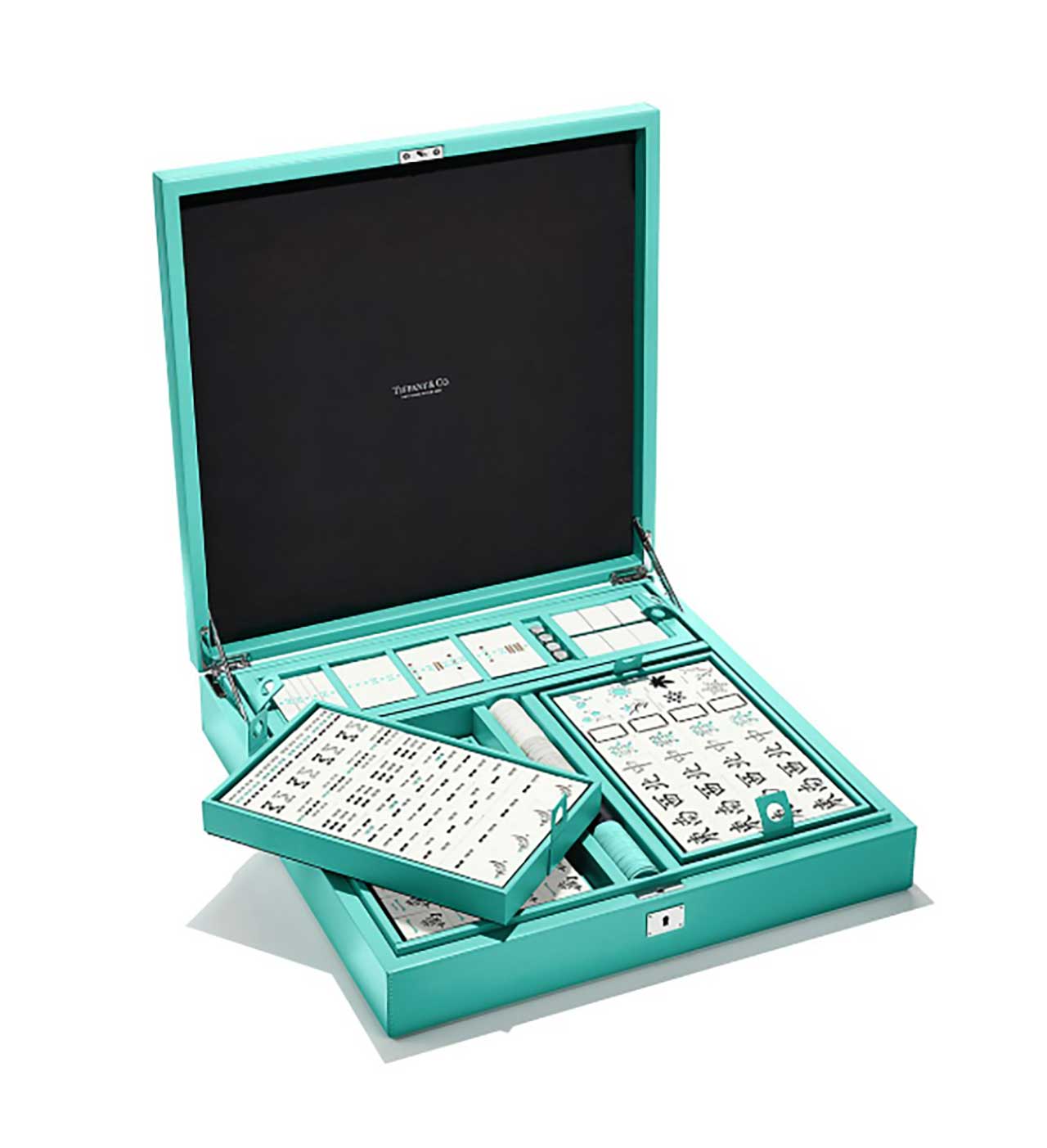
Clean, polished, and unmistakably refined in gorgeous Tiffany & Co. blue, it reads less like a game set and more like an heirloom piece you keep — and actually use.
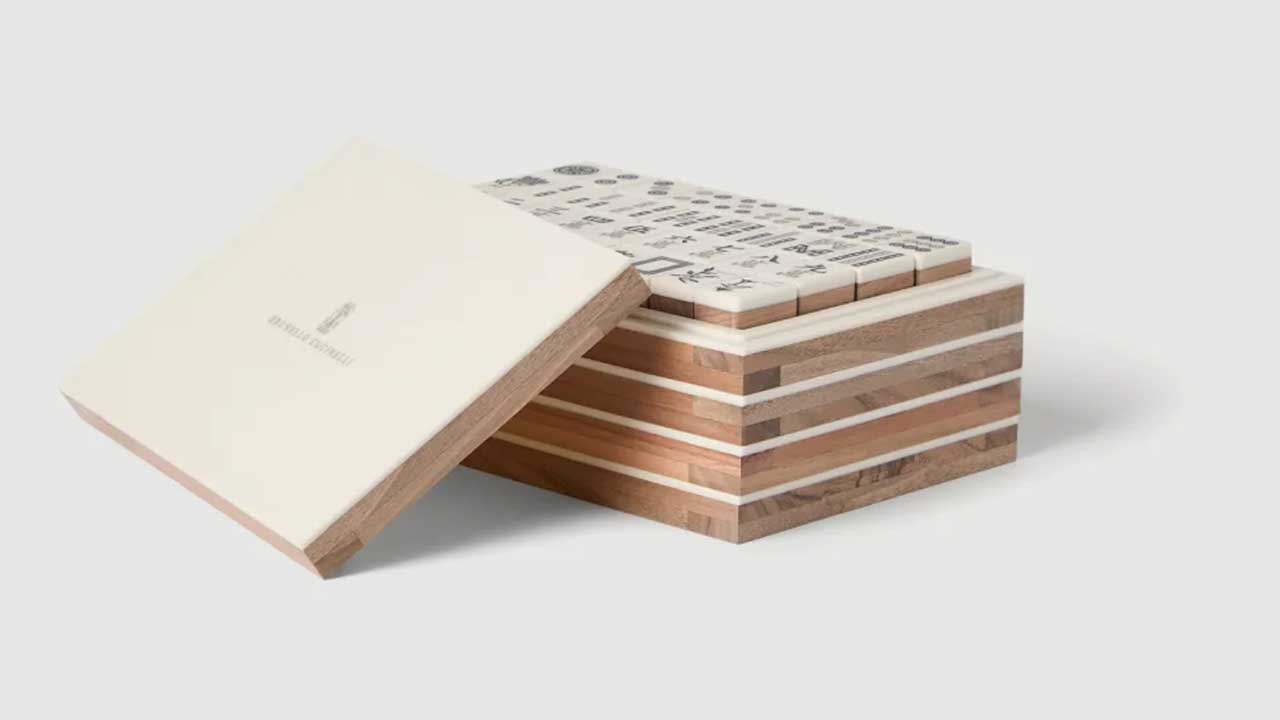
Brunello Cucinelli
Quiet luxury, translated. Soft neutrals, tactile materials, and a level of restraint that makes it feel elevated without ever trying too hard.
Prada
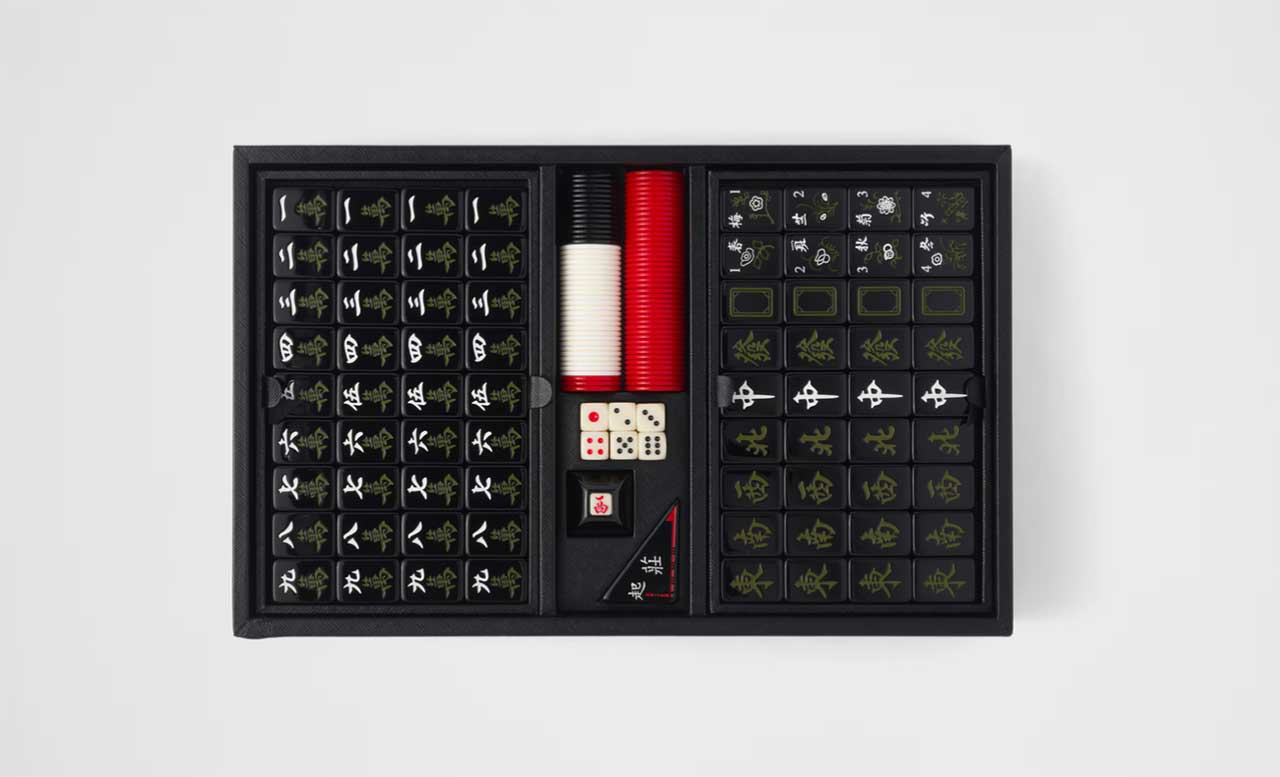
Sleek and slightly unexpected, with a design-forward approach that treats mahjong as part of a broader lifestyle — not just a game.
Aerin
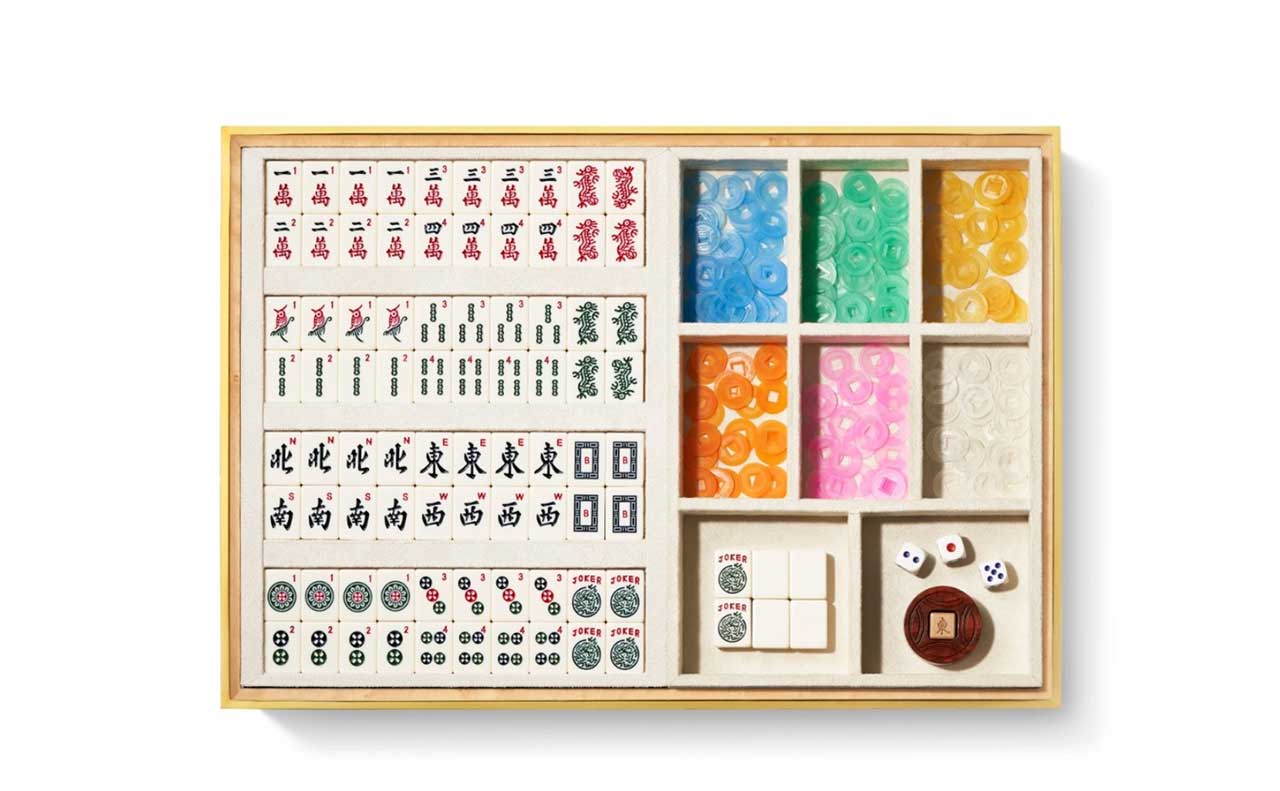
The sweet spot: refined, travel-friendly, and easy to live with. Elegant, but not so precious you’re afraid to actually play.
Oh My Mahjong
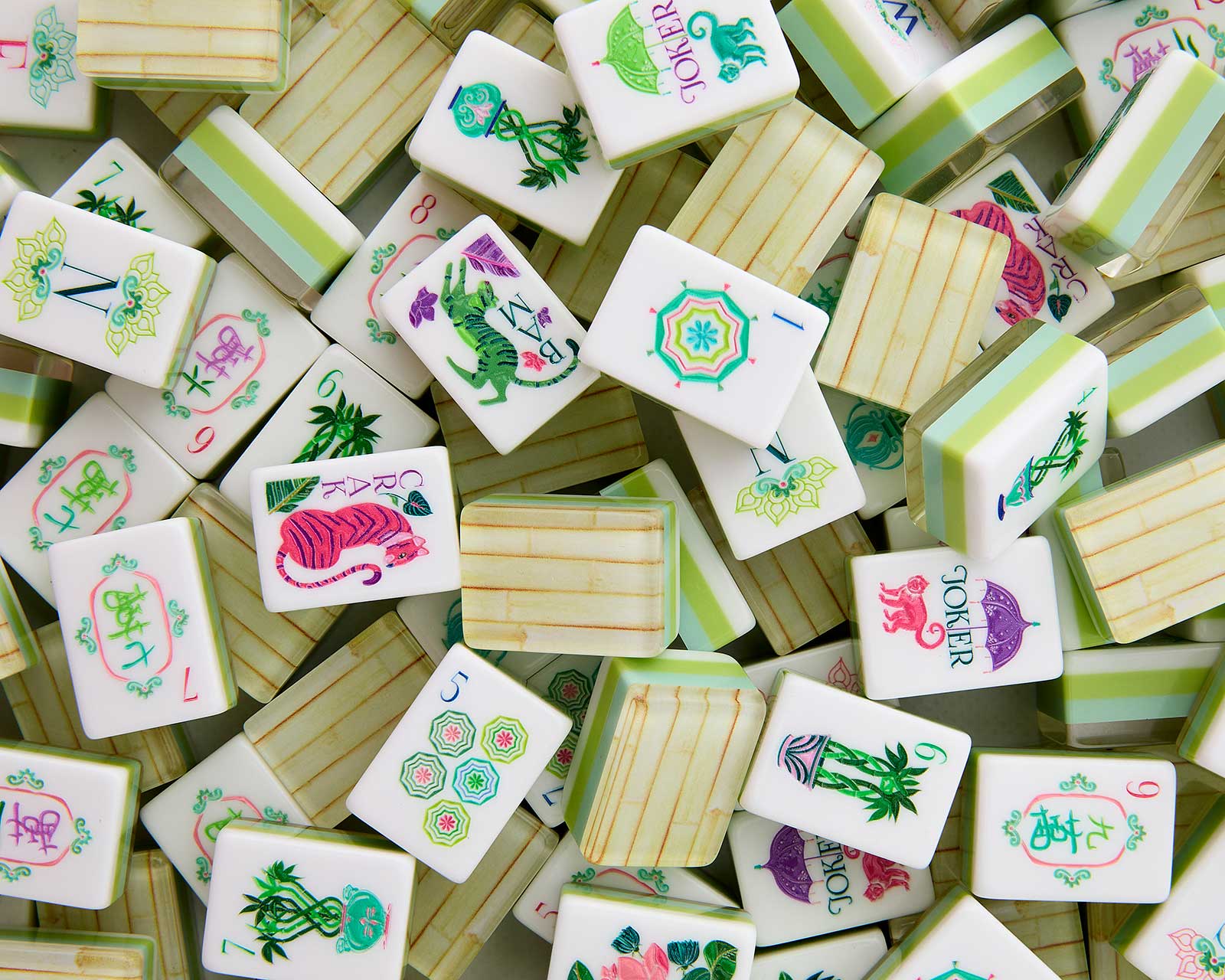
The set that arguably kicked off the current wave. Bright, customizable, and built for hosting, with pastel tiles and monogrammed racks that are meant to stay out on the table, not tucked away.
Spools
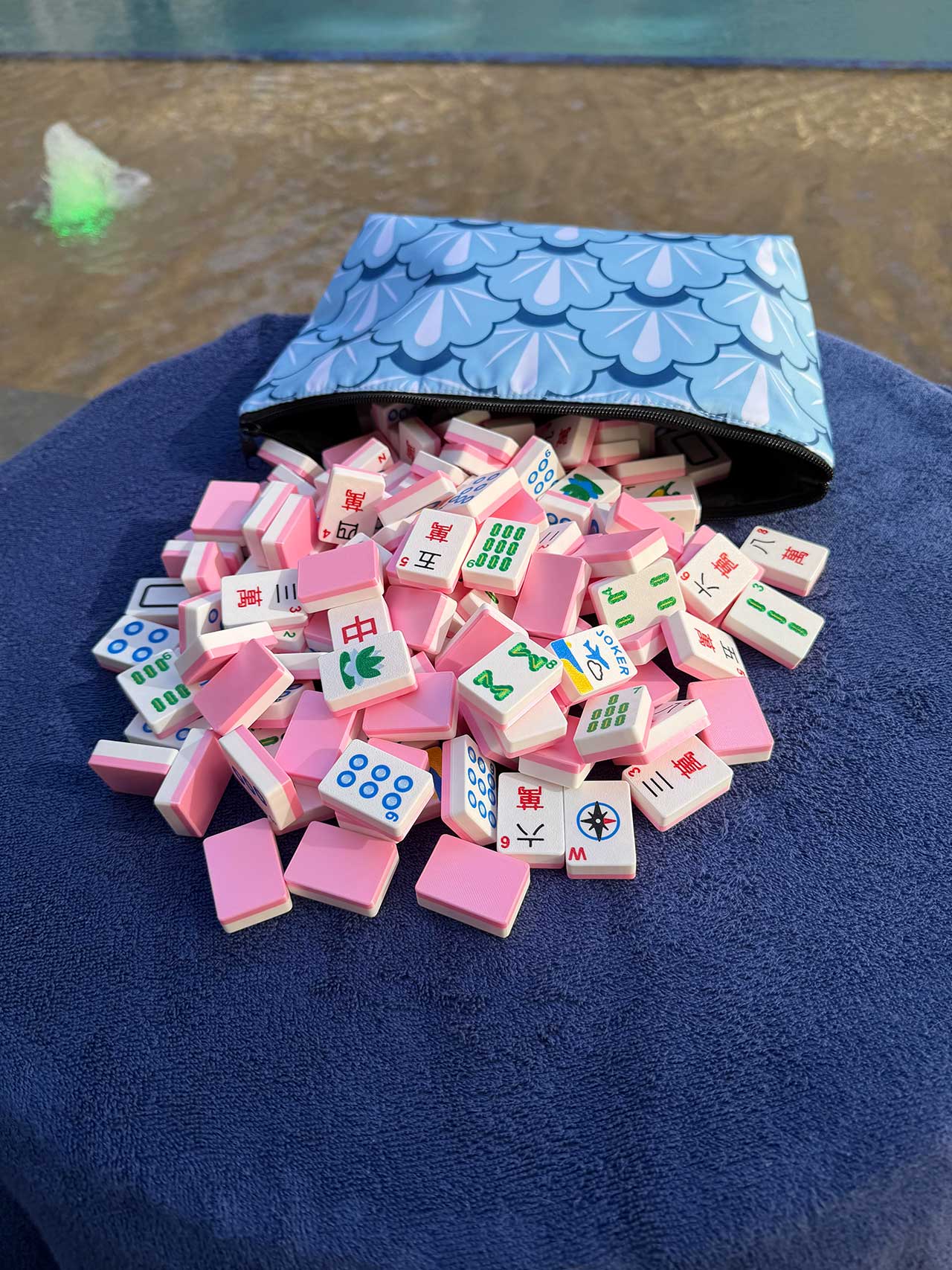
A little more polished, a little more traditional. Spools strikes that balance between classic and current — the kind of set that works just as well for a standing weekly game as it does for a more dressed-up table.
The Mahjong House
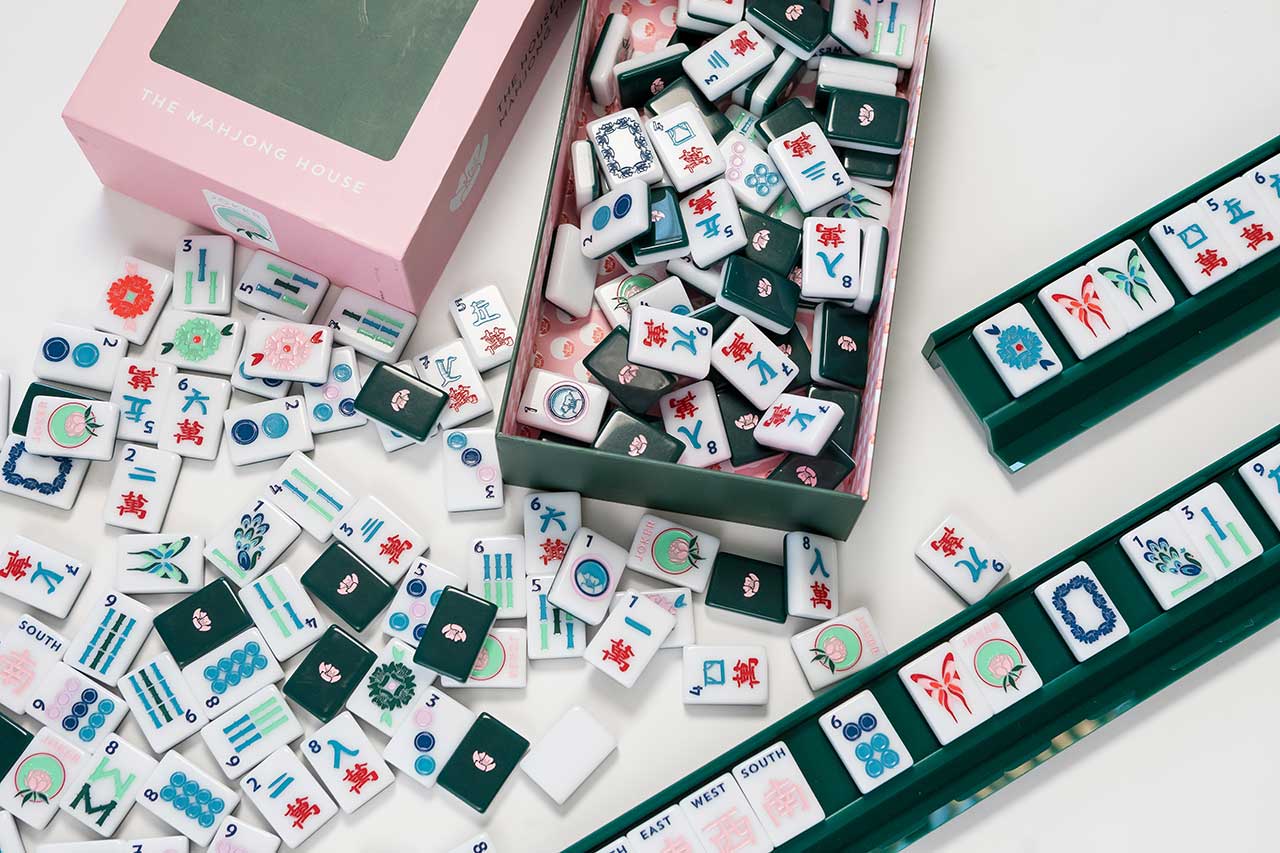
Closer to the roots of the game, with sets that nod to tradition while still feeling relevant now. A good entry point if you want something that doesn’t lean too novelty.
Haus of Tiles
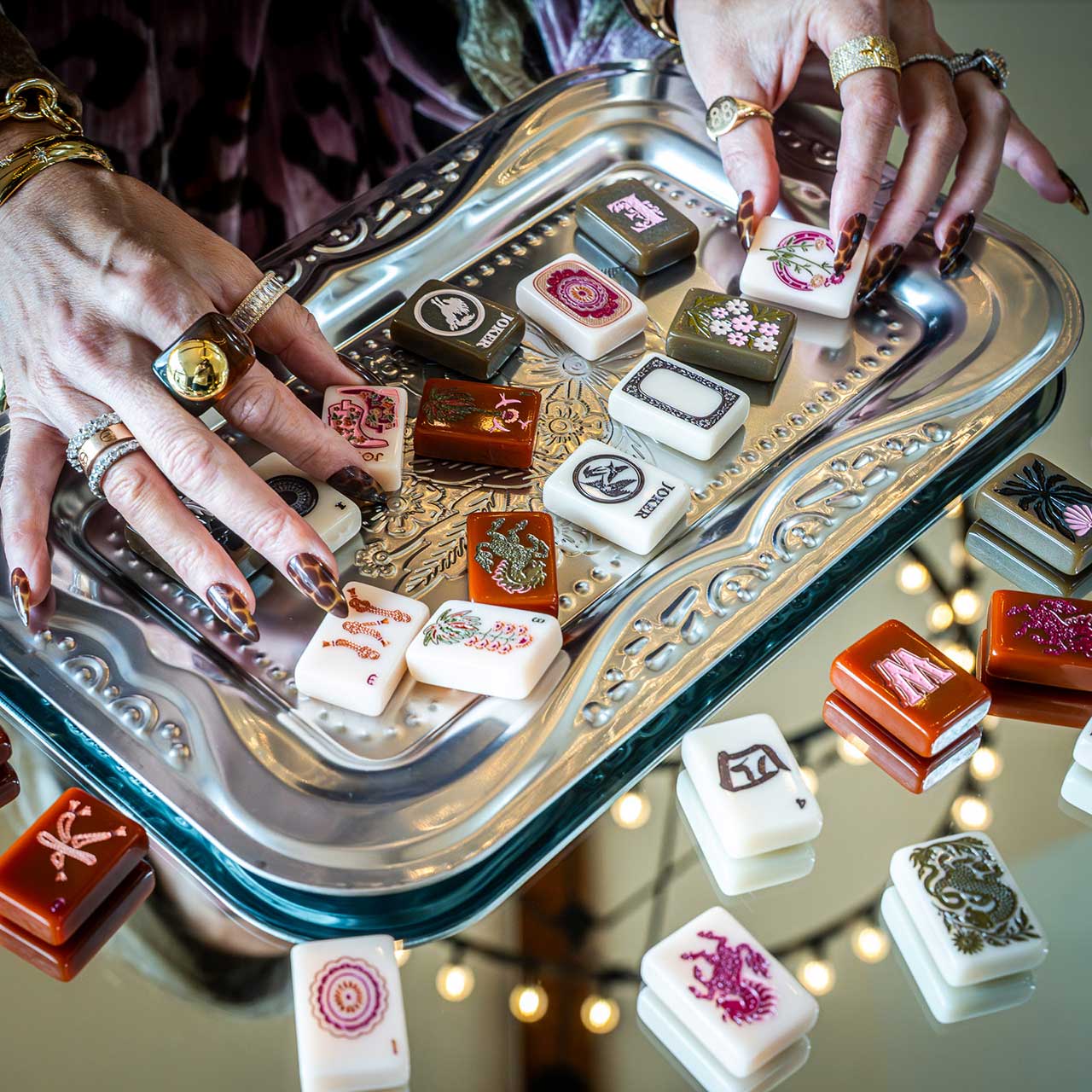
Color-forward and playful, these are the sets that immediately bring energy to a table. Less about subtlety, more about making the whole night feel a little more fun.
The Mahjong Line
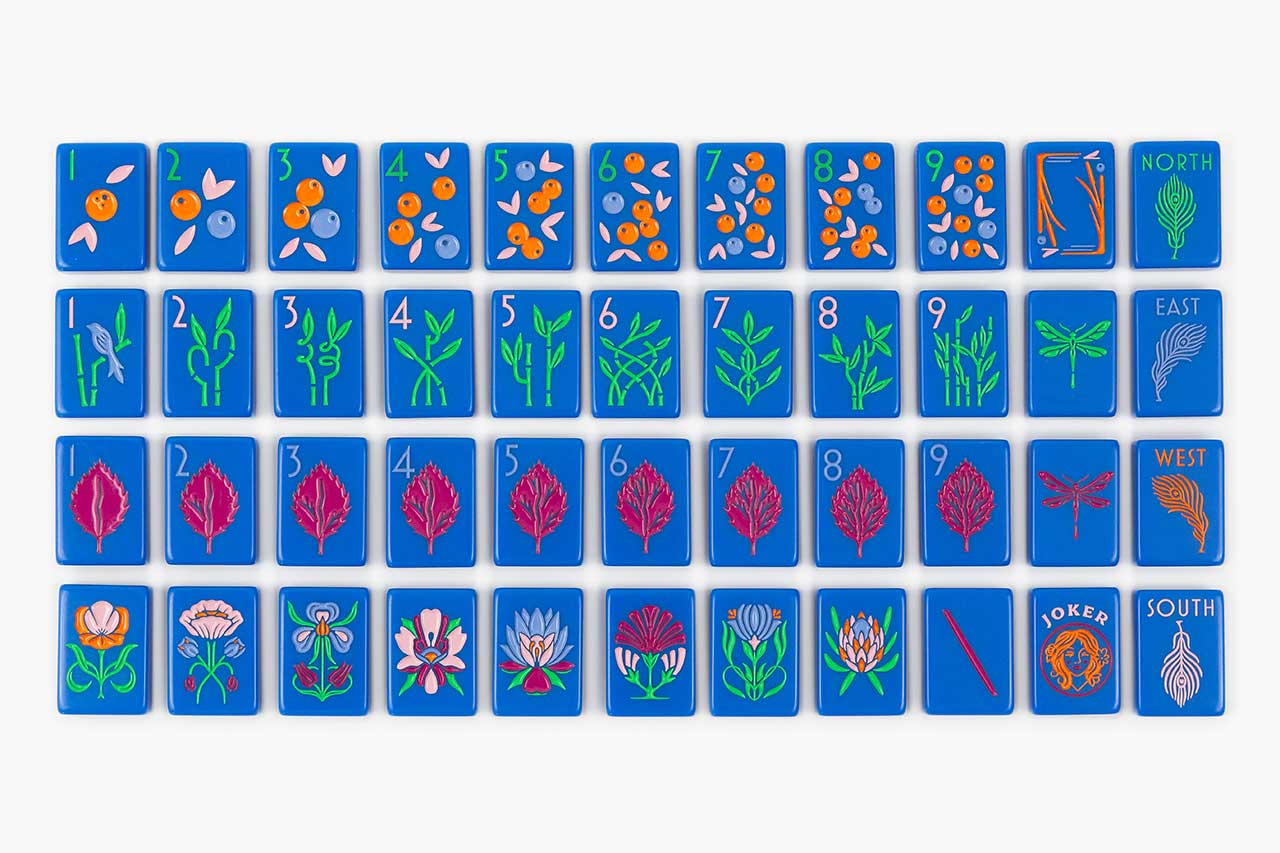
One of the brands that helped bring mahjong back into the mainstream. Bold, accessible, and built around a real sense of community — it’s as much about the culture as the set itself.


