










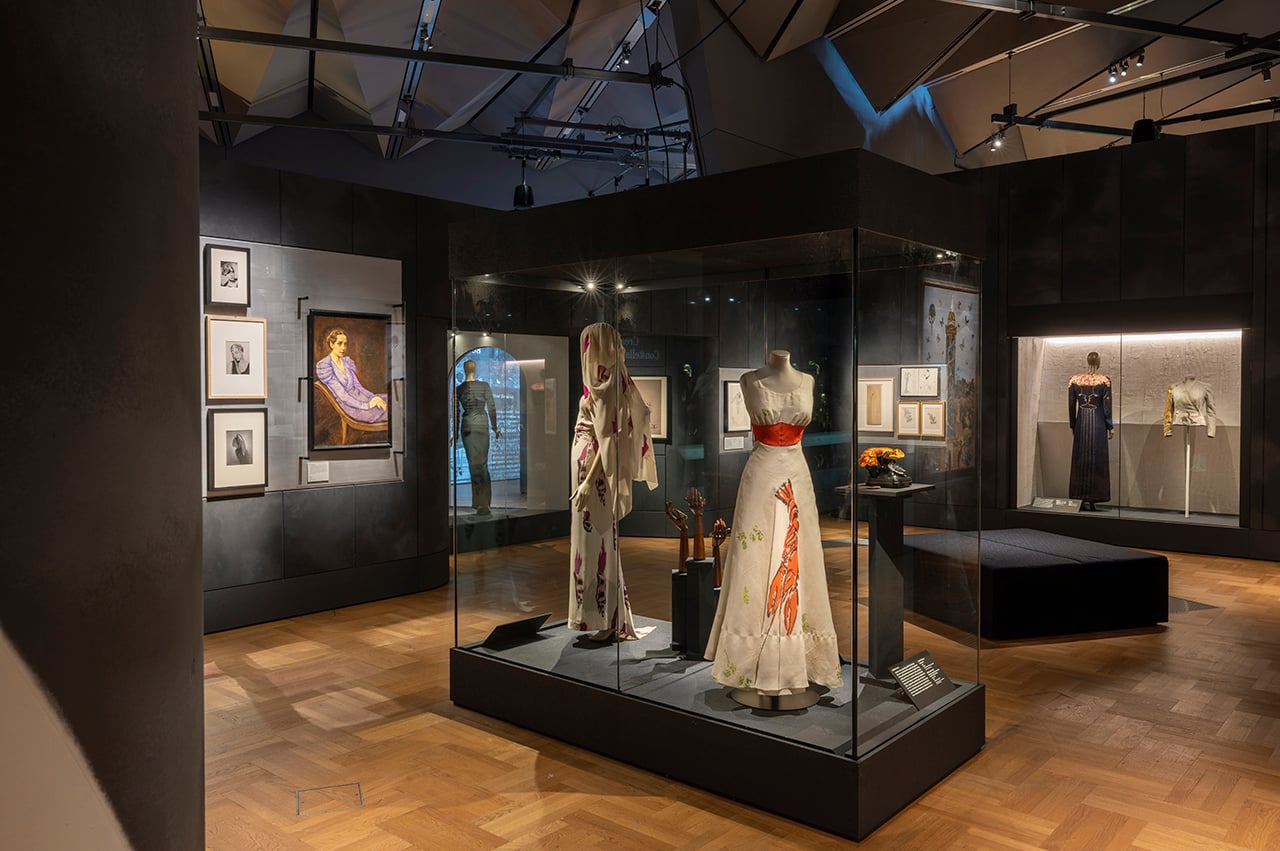
Photo Credit: Courtesy of the Victoria and Albert Museum
Is fashion art? The question has lingered for as long as the modern fashion industry has existed, exposing a perceived divide between the intellectual world of fine art and the commercial business of fashion. Today, artist collaborations are ubiquitous, with designers splashing famous motifs across garments to lend them cultural credibility. Schiaparelli: Fashion Becomes Art at London’s Victoria and Albert Museum explores the legacy of a 20th-century legend who dissolved that distinction long before it became a marketing strategy. If Gabrielle Chanel dismissed the Rome-born designer Elsa Schiaparelli, who launched her eponymous Paris maison celebrating Surrealism and eccentricity in 1927, as “that Italian artist who’s making clothes,” Cristóbal Balenciaga countered that she was “the only real artist in couture.”
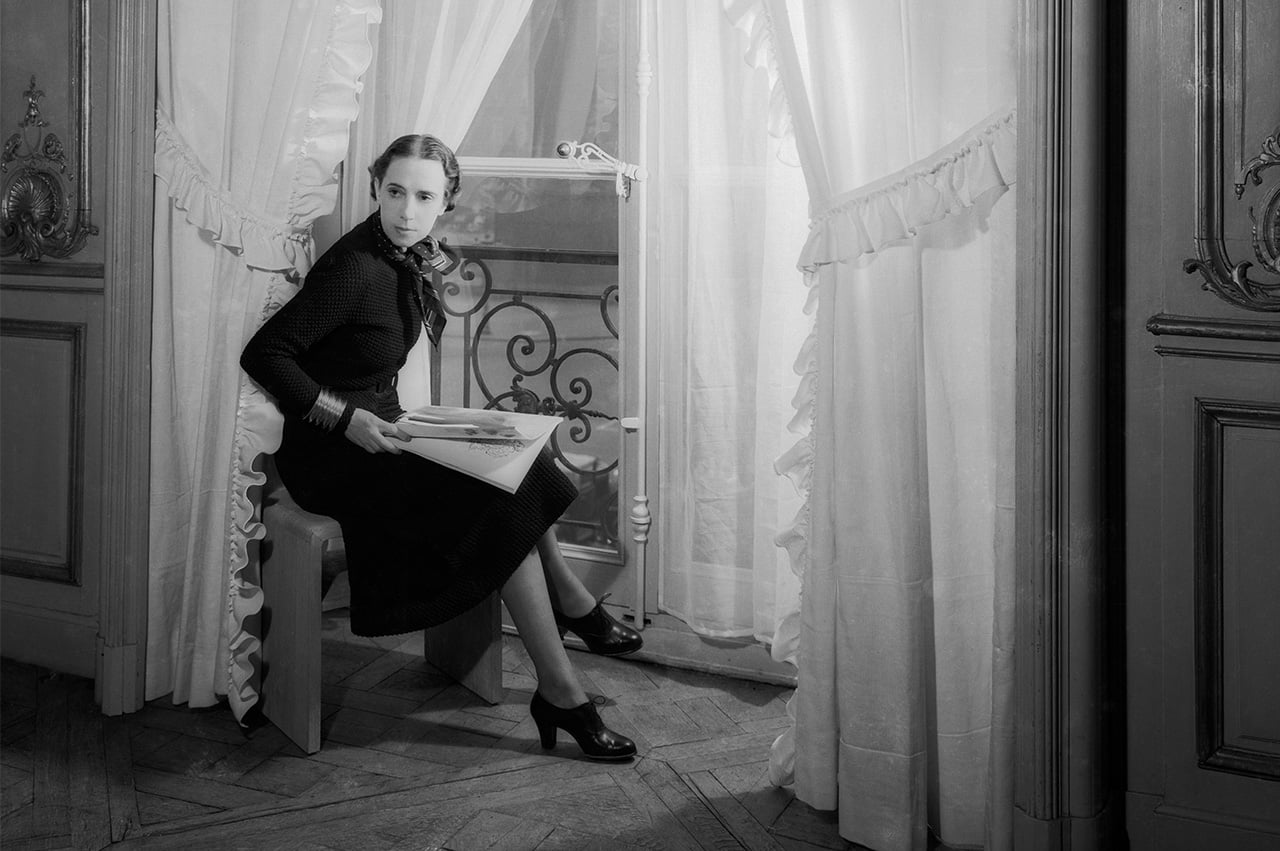
Photo Credit: © GrandPalaisRmn/François Kollar
Schiaparelli did not merely borrow motifs from the Surrealists; she was embedded in the movement’s inner circle, working closely with Salvador Dalí, Jean Cocteau, and Man Ray throughout the 1930s to shape its visual language. Today, that dialogue continues under Daniel Roseberry, the American designer who in 2019 was given the keys to her house, which had largey lain dormant for more than half a century since she retired in 1954. “What I am drawn to is the connectivity of Elsa’s work,” says Roseberry. “There was a distance between culture and most French couture houses back then. Elsa’s focus wasn’t just on good taste or lifestyle or even beauty, it was more cerebral than that. It was about how the expression of the surreal can create a more intimate connection between art, pop culture and fashion and between the designer and client.”
“Elsa’s focus wasn’t just on good taste or lifestyle or even beauty, it was more cerebral than that.”
—Daniel Roseberry
Sonnet Stanfill, the V&A’s senior fashion curator, organized the exhibition with Lydia Caston and Rosalind McKever, colleagues from the museum’s departments of photography and paintings and drawings. She has designed the show as what she calls an “oscillating conversation between two designers” rather than a conventional chronological survey. “In her autobiography, Shocking Life, Elsa uses the word ‘exhilarating’ to describe working with the leading artists of her day, and that sense of excitement continues in Daniel’s current practice,” says Stanfill. Comprising more than 200 objects—including garments, accessories, jewelry, paintings, photographs, sculpture, furniture, and fragrance—the exhibition reads like an exquisite corpse, with artist collaborations forming its conceptual nerve center.
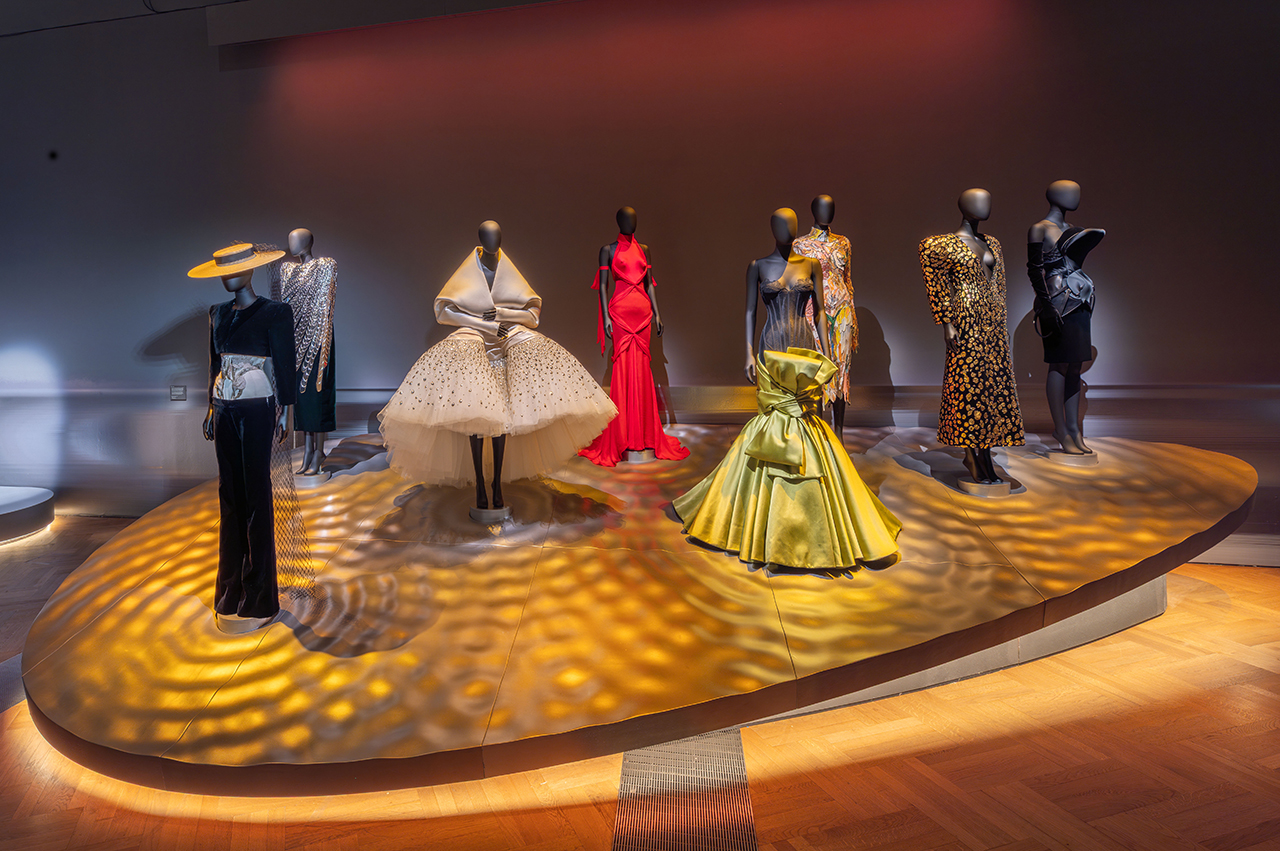
Photo Credit: Courtesy of the Victoria and Albert Museum
The central room features some of Schiaparelli’s most iconic pieces created with Dalí, from the Summer 1937 Lobster dress with suggestively positioned crustaceans that appeared in Wallis Simpson’s trousseau to the Summer 1938 Tears dress featuring a trompe l’oeil ripped pattern and coordinating veil lined with real tears in pink and magenta. A perfect example of their creative exchange is the juxtaposition of another piece from this collection, a Skeleton dress with padded ridges that seem to transpose the wearer’s skeleton to her exterior and a Dalí sketch inscribed, “Dear Elsa, I like this idea of ‘bones on the outside’ enormously,” which depicts a female skeleton from multiple angles. “The poses are reminiscent of a fashion model’s,” notes Stanfill, underscoring the playful back-and-forth that turned a concept into couture.
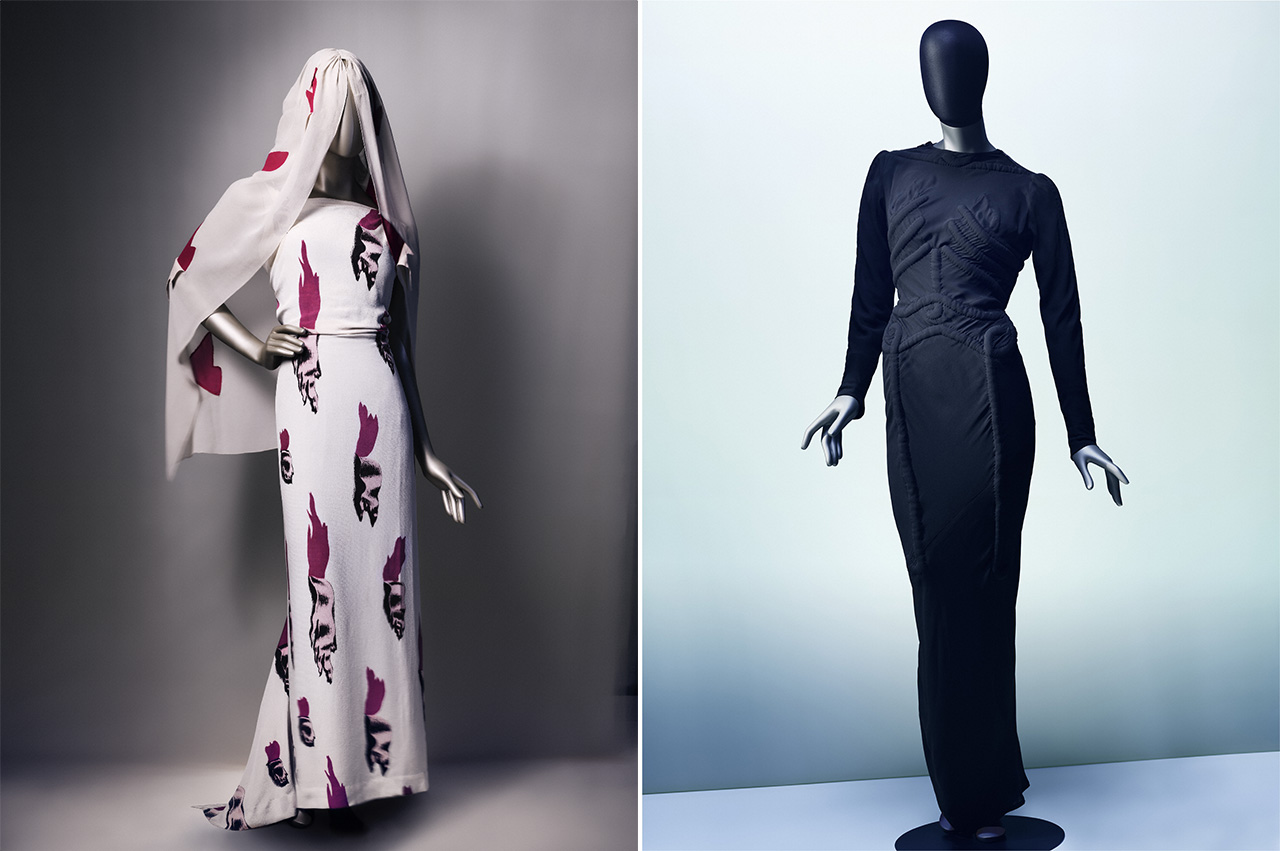
Photo Credit: Photograph © Emil Larsson; © 2025 Salvador Dalí, Fundació Gala-Salvador Dalí, DACS. Photograph © Emil Larsson
Schiaparelli’s clothes balanced fun and functionality, and a series of rooms highlights her vision for the modern wardrobe, built around sportswear, tailored daywear, and elegant eveningwear. The display opens with a trio of her trompe l’oeil bowknot sweaters, the first garments she designed for her label. Her sparkling evening jackets, heavily embroidered with everything from sequins to glass mosaic and which came to epitomize the soignée style of Café Society, take pride of place. “They’re showcased a bit like a box of chocolates,” says Stanfill. No modern wardrobe is complete without accessories, so the exhibition presents a profusion of hats, bags, shoes, and gloves. Roseberry’s Face bag, decorated with anatomical jewels in enamel and hammered brass, and his shoes with gold-tone brass toes are shown alongside Schiaparelli’s own buttons and jewelry, including Alberto Giacometti’s sculptural pieces and the writer Elsa Triolet’s Aspirin necklace, composed of porcelain beads shaped like pills.
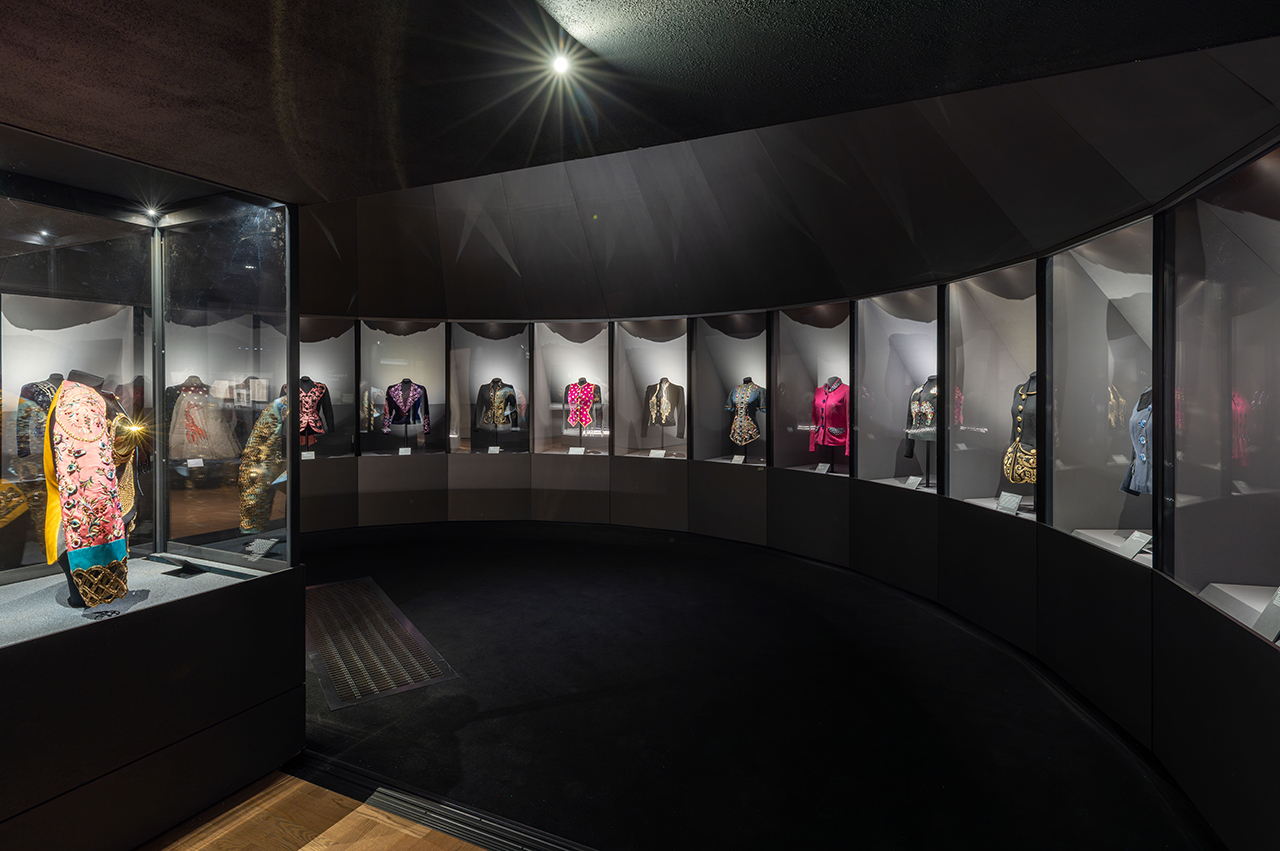
Photo Credit: Courtesy of the Victoria and Albert Museum
Wherever possible, the exhibition unpacks the stories of the remarkable women who have worn Schiaparelli, from aviator Amelia Earhart and tennis star Suzanne Lenglen to actress Marlene Dietrich and collector Peggy Guggenheim. “Schiaparelli described her clients as ‘glittering personalities,’ and she was very transparent about the importance of her clients in making the dresses come alive,” says Stanfill. The exhibition also pays tribute to the often unacknowledged contributions of women behind the scenes. The idea for the iconic upside-down Shoe Hat that Dalí designed for Schiaparelli’s Fall 1937 collection, for instance, can be traced to his wife and muse, Gala, who once playfully placed a slipper on his head. “Credit where credit is due,” says Stanfill.
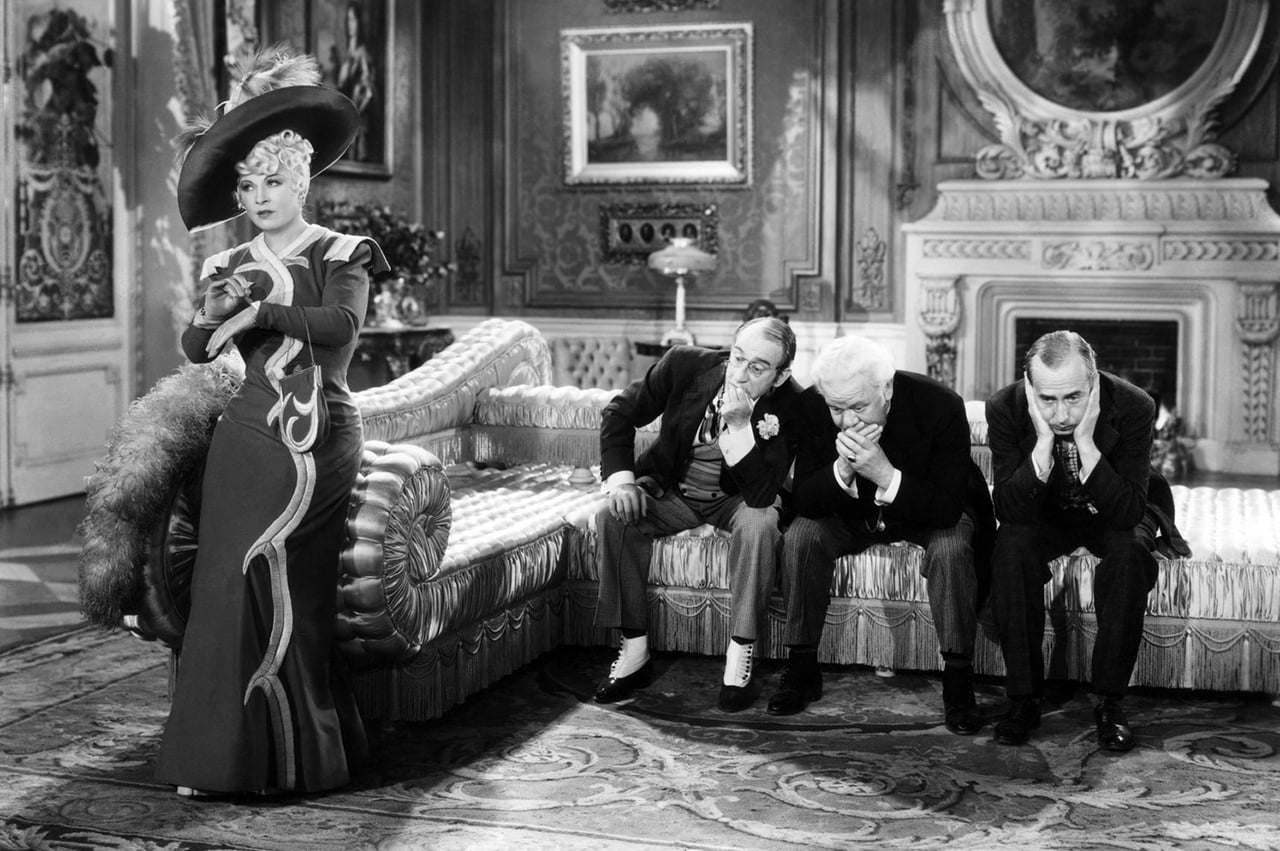
Photo Credit: Moviestore Collection Ltd/Alamy
Another curatorial device is doubling, with certain objects encountered more than once from different vantage points. The Shoe Hat appears first in the accessories gallery among Schiaparelli’s inventive millinery, then resurfaces in the artist collaborations room. The idea also extends across time. A Spring 1937 linen dinner jacket embroidered in golden thread with Cocteau’s double-image drawing of mirrored profiles forming an urn of flowers finds its twin in a sculptural minidress from Roseberry’s Fall/Winter 2021 haute couture collection, also executed in silk appliqué by Maison Lesage, with the roses multiplied across the bodice and sleeves. “It’s a kind of riposte, or an answer to the Elsa Schiaparelli design,” says Stanfill, highlighting the house’s suspension of time.
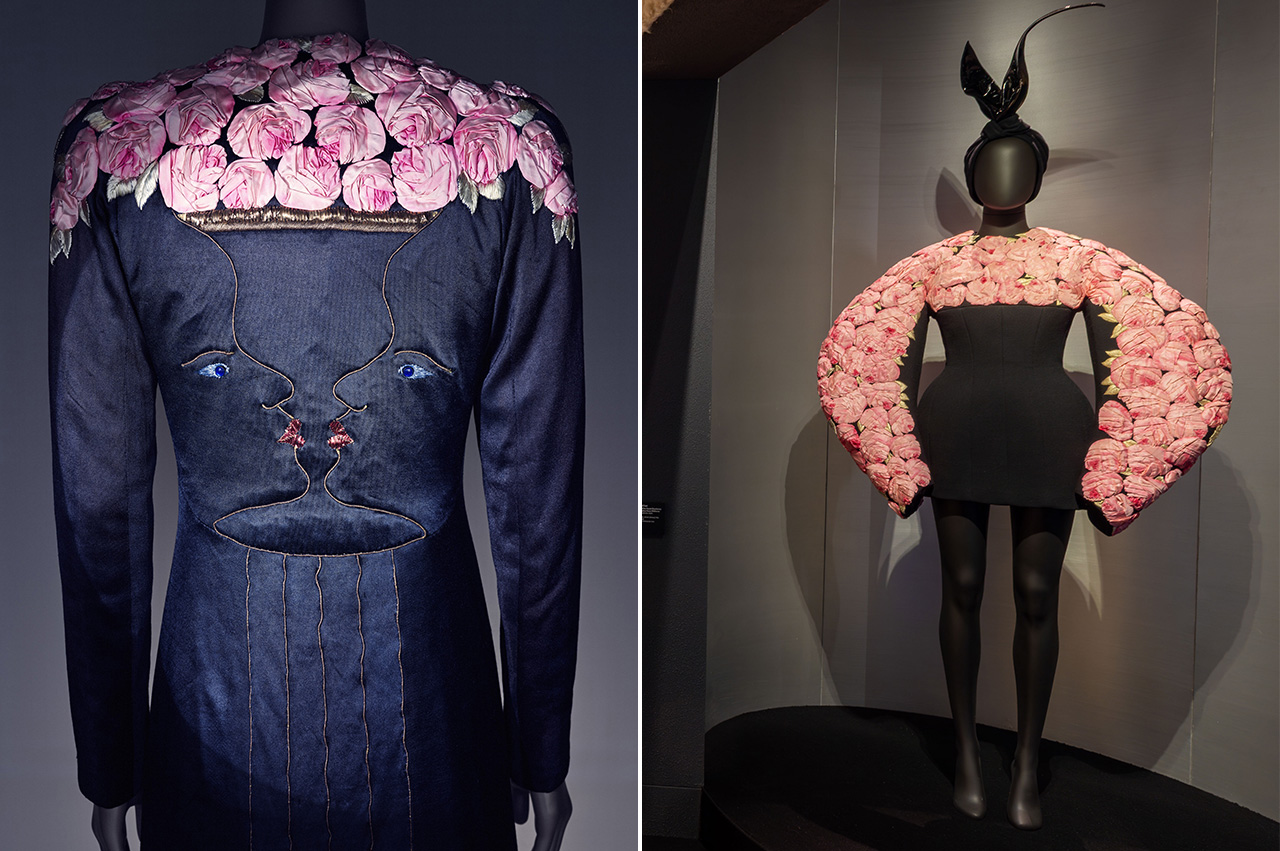
Photo Credit: © 2025 ADAGP DACS Comite Cocteau, Paris. Photograph © Emil Larsson; Courtesy of the Victoria and Albert Museum
For Roseberry, working at Schiaparelli is about a relationship with the house and its codes that cannot be rushed. “Being a creative director at a maison with a great history is like dating,” he says. “It’s the kind of chemistry that you cannot predict. You can’t fast track it and you can’t force it. When people ask me about my connection with Elsa and the codes, I feel there’s a natural chemistry between us. I think with other heritage houses the weight of the past could feel like a constraint — whether it’s a specific silhouette, colorway, graphic, or logo. But Elsa’s legacy seems to grant endless permission to explore, express, challenge, and shock.”


