

News feed

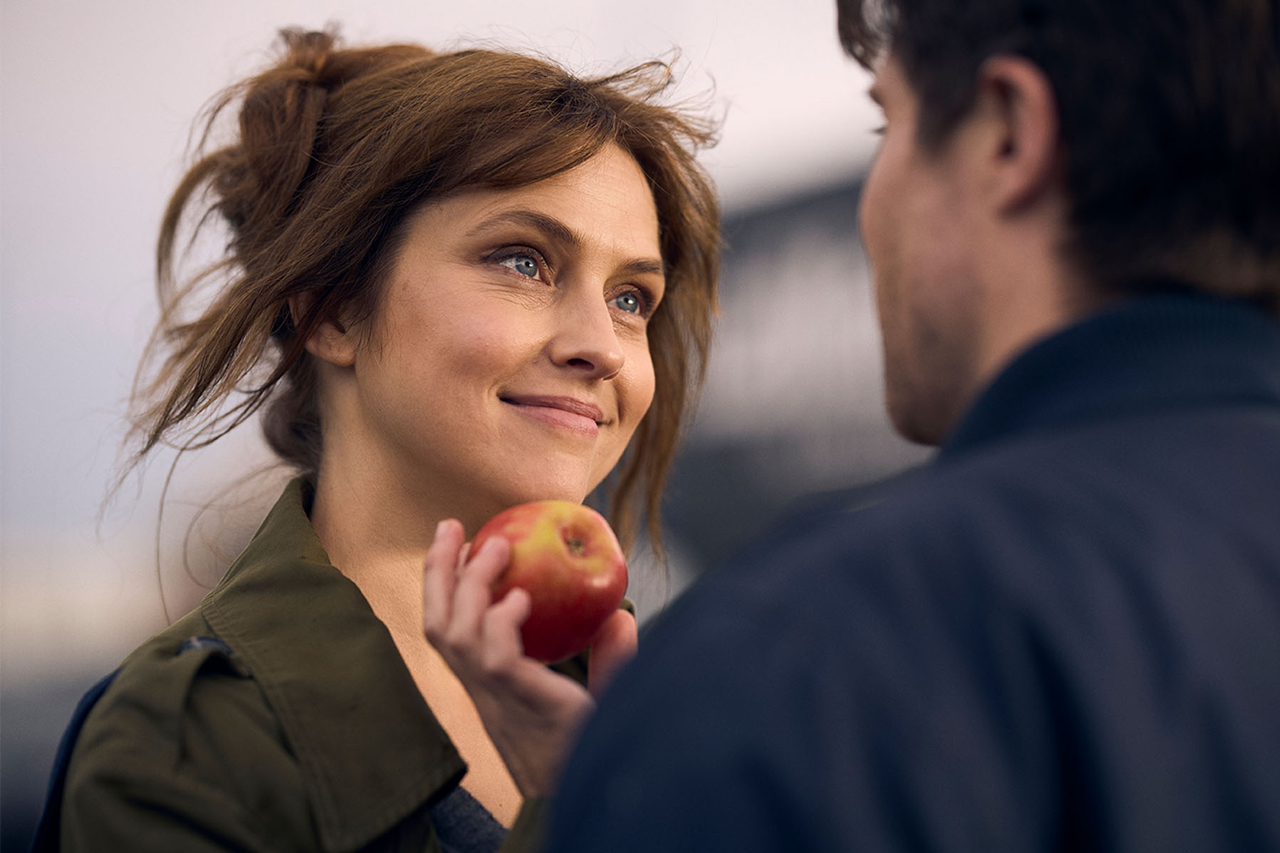
Australian screenwriter Becca Johnstone smiles when asked about the hardest part of adapting a beloved novel for the screen. “Choosing what to cut is difficult… but I think the hardest thing is deciding what to add, or what to lean into to ensure that the book is still honoured, while also allowing the story of Grace to have a new life in a different form,” she says of Addition, the quietly powerful new film finally arriving in cinemas this week after premiering at TIFF in 2024. “The hardest part is always taking these brilliant words and really drilling down into the basics: how does this look on screen? How will an audience experience this story?”
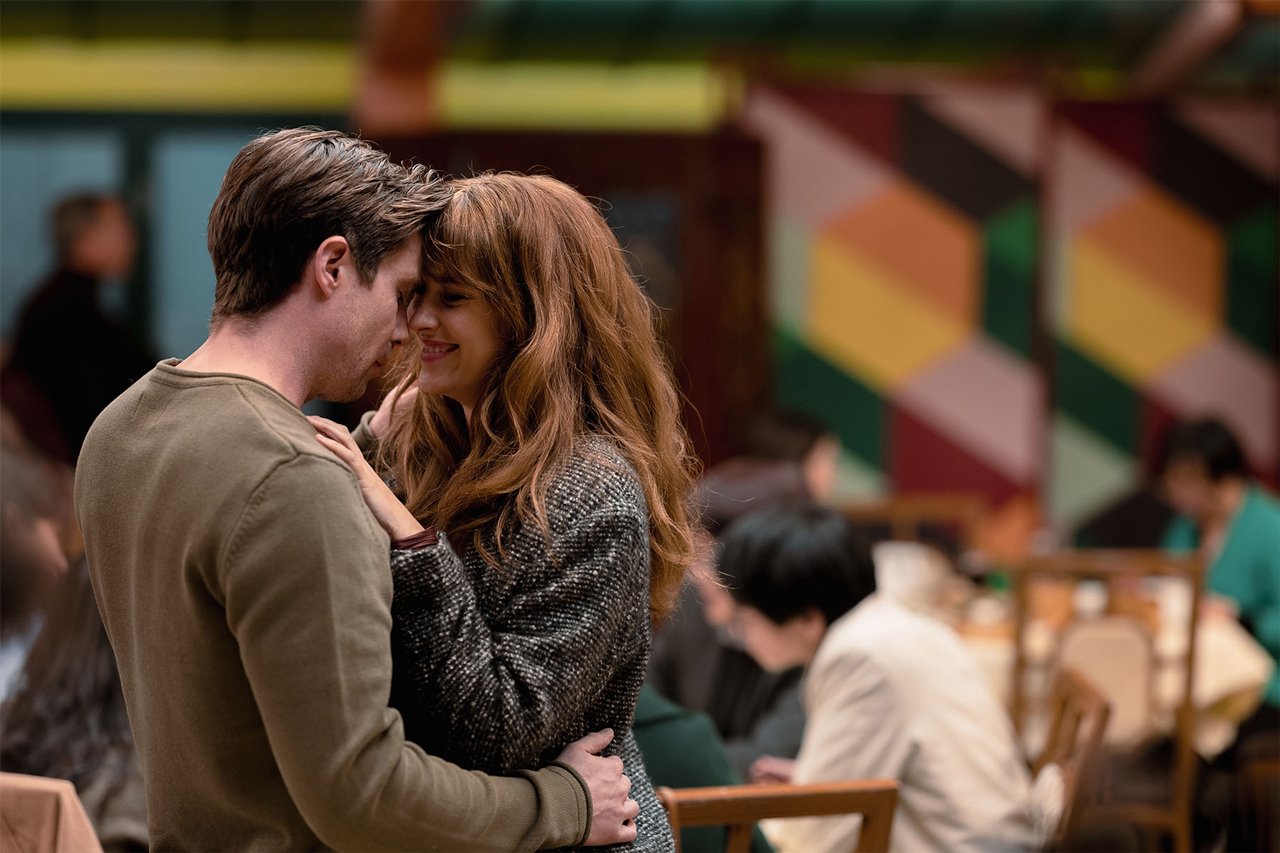
Starring Teresa Palmer (The Fall Guy, Hacksaw Ridge), Addition follows Grace Lisa Vandenburg, a young woman who counts everything—the letters in her name, the poppy seeds on her orange cake. She counts because for her, numbers hold the world together. But when a chance encounter with Seamus (Joe Dempsie of Skins and Game of Thrones) disrupts her carefully ordered life, Grace is forced to confront uncertainty, connection and the possibility of something more. Based on Toni Jordan’s novel of the same name, the film explores anxiety, love and identity with tenderness and humour, ultimately asking what—and who—really counts.
For Johnstone, whose adaptation of the novel earned her the 2024 Australian Writers Guild Award for Feature Film Adaptation, updating the story for today’s audience was critical. “This is a story about a girl with pretty severe OCD that was originally published 17 years ago,” she explains. “So for me it was critical to really dig into the research, to speak with people today living with this illness, and to ensure that the experience felt real for 2026.” That emotional authenticity is what grounds the film’s romance and gives Grace’s journey its depth—not a transformation, but an acceptance of who she already is.
After its world premiere at the Toronto International Film Festival—a moment Johnstone calls a “pinch-me” career milestone—Addition now begins its wider life with audiences. Ahead of the film’s cinema release, GRAZIA sits down with Johnstone to talk adaptation, anxiety, falling in love, and why she hopes viewers leave the theatre “wanting to love… loving someone else, loving ourselves. Let’s embrace the joy.”
GRAZIA: In adapting a novel, what were the hardest choices you faced—what to keep, what to change, and what to leave behind?
BECCA JOHNSTONE: I love the adaptation process, and it’s made so much easier when you have underlying material that is so brilliant. When you add to that the fact that Toni Jordan (the author of Addition) is an incredibly gracious and encouraging soul, it makes the process so dreamy. But the hardest part is always taking these brilliant words and really drilling down into the basics: how does this look on screen? How will an audience experience this story? And a lot of the time, that means finding the right way through the story itself. So yes, choosing what to cut is difficult… but I think the hardest thing is deciding what to add or lean into to ensure the book is still honoured, while also allowing the story of Grace to have a new life in a different form.
I think, in the case of Addition, it was also important to take a step back and look at the subject matter through a new lens. This is a story about a girl with pretty severe OCD that was originally published 17 years ago. So for me, it was critical to really dig into the research, speak with people living with this illness today, and ensure the experience felt real for 2026.
GRAZIA: Was there a particular scene from the book that you were excited to bring to life, and one that you found challenging? Why?
JOHNSTONE: There were so many scenes I was excited by! And so many that (alas, as is the way in filmmaking) we had to leave on the cutting room floor. I think the two that stood out for me from the book that I was really keen to play with were Grace and Seamus’s second meet-cute, where they have all this fun, flirtatious banter at a café. And our infamous yum cha scene, which is full of sensory overload and ends up triggering Grace pretty heavily. But I think my favourite thing that I pulled from the book and knew straight away I wanted to bring to life was the character of Nikola Tesla (played by Eamon Farren of The Witcher). Grace’s obsession and admiration for him drips all throughout the novel… I knew early in the writing that I wanted to make him a living, breathing character in this world. And being allowed the freedom to do that and to have Nik and Grace on their own little relationship arc was such a joy for me.
For me, it’s always the ‘crunchy’ scenes that are challenging: the breakups and arguments. Because Marcelle Lunam (our director) and I were so on the same page about the tone for the film and having it all feel very real and lived-in, dramatic scenes like that can get tricky. Because we’ve seen so many of them before, and we don’t want anything to ever feel melodramatic. So it was always about bringing everything back down to earth, to living with those uncomfortable moments all couples go through… just focusing on the real.
GRAZIA: When you hit a creative roadblock when writing a script, how do you get unstuck and keep the process moving?
JOHNSTONE: Two martinis and an 8-minute voice note in the group chat. [laughs]
In truth, I’ve always been one to really push myself through writer’s block. Because it’s just so agonising, isn’t it? Staring at the screen, the blue light feels like it’s mocking you. At some point, that frozen state starts to feel like self-sabotage. So I routinely will just keep going. I’m a firm believer in writing through it. And that doesn’t mean what I actually get on the page is any good (it is routinely quite sh*t)… but through that process, something good might come. Like the kernel of a good idea or good little run of dialogue might be born, you know? And even if it is just objectively bad, it’s more than I had when I started the day. And often that alone is enough to kick me out of my funk. Writing is editing—we can always go back and make it better. But we can’t do that if it’s not there in the first place.

GRAZIA: Writing about anxiety, order, and the need for certainty can be very personal. Did this story require emotional excavation from your own experiences?
JOHNSTONE: I would never have come on board this film if I didn’t think I could speak to it personally, or at least it had echoes in my own life. While I don’t have OCD, I have lived with anxiety my whole life, to varying severities. So, in my research process, understanding that the root of compulsions and intrusive thoughts for people with OCD is all about anxiety, too, it really cracked open Grace’s experience for me. I was able to approach the scenes in ways I could understand, too. And of course, I bring some of my experiences to the table as well. One of my favourite scenes in the film is this really tender moment between Grace and her Mum, where Grace catches her Mum smoking in the backyard. It was a moment I lifted directly from my life. I knew if my Mum had started smoking again, it meant she was worried about one of her kids, about our mental health. It was a classic tell. It’s been kind of wild to see those moments from life up on a big screen, but they’re really important. The whole team on Addition knows that mental health is a family illness, and we really wanted to capture the highs and lows of that, too.
GRAZIA: If Grace were your friend in real life, what advice would you give her at the beginning of her story? And what advice at the end?
JOHNSTONE: This is such a great question! I think at the beginning of Grace’s journey, I’d tell her to be brave. When we meet Grace, she’s sort of walled herself off from the world, so the story really becomes one of awakening for her—and to do that, she needs to confront the ugly sh*t. It’s a hard road and is gonna be uncomfortable—but anything truly worth it probably takes a little pain. And it’s not just about Seamus being worth it (he definitely is, for the record) … it’s about Grace realising she is worth it. She has value and space to take up in this world. And I think that journey requires bravery.
At the end of the film, I’d probably tell Grace to be gentle with herself. She has come so far and done the hard work, and she owes herself that recognition. Because the ‘Dreamboat BF’ isn’t the prize… he’s the bonus. The relationship Grace has with herself now is what really matters, and that’s bound to be up and down sometimes, too. So be gentle, Grace… take it one step at a time. Your new world looks beautifully expansive!
GRAZIA: Congratulations on having Addition’s world premiere at the Toronto Film Festival! What role do you think film festivals play for stories like Addition, especially in an era so dominated by franchises and streaming algorithms?
JOHNSTONE: TIFF was the quintessential pinch-me moment! I think festivals are incredibly important for stories like ours—and filmmakers like Marcelle Lunam and me, both first-timers at narrative features. I’m not out here saying they are the only way an indie film can make it in this day and age, but they are really beneficial. And for me, it was more about the festival’s culture, the experience of being surrounded by other filmmakers, imbibing pure cinema. The odd party didn’t hurt, but aside from the mania of the film premiering and meetings and whatnot… it was just a brilliant week to just see some flicks and meet interesting people. And you’ll never be able to recreate that with a streamer or a blockbuster franchise experience.
GRAZIA: You’ve written for both film and television. What are the main differences you find between the two, and do you have a preference?
JOHNSTONE: It’s like choosing between my two babies! I think fundamentally, the main differences are really only structural. I’m what we call a ‘character first’ writer, so every story that I tell has the foundation of a very considered, well-drawn character and an idea of the journey I want to take that character on. The plot comes out of that later. And that’s sort of something that has traditionally been more associated with film as opposed to TV (with some big exceptions, of course—looking at you Mad Men and The Sopranos).
So I tend to bring that ‘cinematic’ experience to my TV writing too, so it doesn’t feel too different to me. It just becomes more about how we tell the story—I have eight one-hour acts, instead of three acts in two hours, for example. But I know as long as I stay true to the character at the foundation, the story will get told.
I honestly don’t think I have a preference. There are pros and cons for both experiences. I will say this, though: it might just be recency bias, given we’re here talking about my debut feature… but there is something very, very special about making a movie. It’s kind of electric.
GRAZIA: If you could teach your younger self one thing about storytelling, what would it be?
JOHNSTONE: I had a teacher at film school who said something to me that I’ve carried my entire career, and wish I’d learned it sooner: “Don’t write what you know. Write what you know to be true.” It’s such a subtle thing, but it really helps me—and I think it’s because it all comes back to the truth about people (and character). It allows me to write across so many different genres, times, and places… because I can always return to the core of what I’m doing: writing what I know to be true.
GRAZIA: Is there a story you are personally dying to write—perhaps one that’s very different from Addition?
JOHNSTONE: I am currently deep in research on a story I’ve been wanting to tell for years. I can’t give too much away about it, but it’s set against the fall of the Soviet Union. It tracks a long-standing mystery from the past and the conspiracies surrounding it. But, given my style, it’s a deep character dive for a woman searching for the truth of what happened to her father behind the Iron Curtain. I have Serbian and Latvian heritage, both countries deeply impacted by communism, the USSR, and this kind of feels like a bit of a reckoning of all that generational trauma.
GRAZIA: Can you give us a sneak peek at any upcoming projects you’re working on that audiences should watch out for?
JOHNSTONE: I’m absolutely blessed to be working with the incredible Phoebe Tonkin (The Vampire Diaries, Boy Swallows Universe) on a detective series (based on Sarah Bailey’s brilliant Gemma Woodstock novels). Film-wise, we’re gearing up for my second feature, a survival thriller set in the world of free solo rock climbing, called Ascent. And excitingly, I’ve teamed up with another brilliant Aussie actor (and now criminally good writer) Eamon Farren: we’re working on a sexy, high-octane spy series together called The Foreigner.
GRAZIA: At the end of the day, what do you hope audiences walk away with after watching Addition?
JOHNSTONE: I hope our audiences walk away wanting to love! That might sound silly, but it’s true. This is a heavy film here and there, but really, it’s all about grabbing on to joy. And hope! I think with the state of the world at the moment, we all crave stories that make us want to revel in the bliss of being alive and loving with our full hearts. Loving someone else, loving ourselves. Let’s embrace the joy.
THE FILM IS RELEASED INTO CINEMAS ON JANUARY 29.


