

News feed

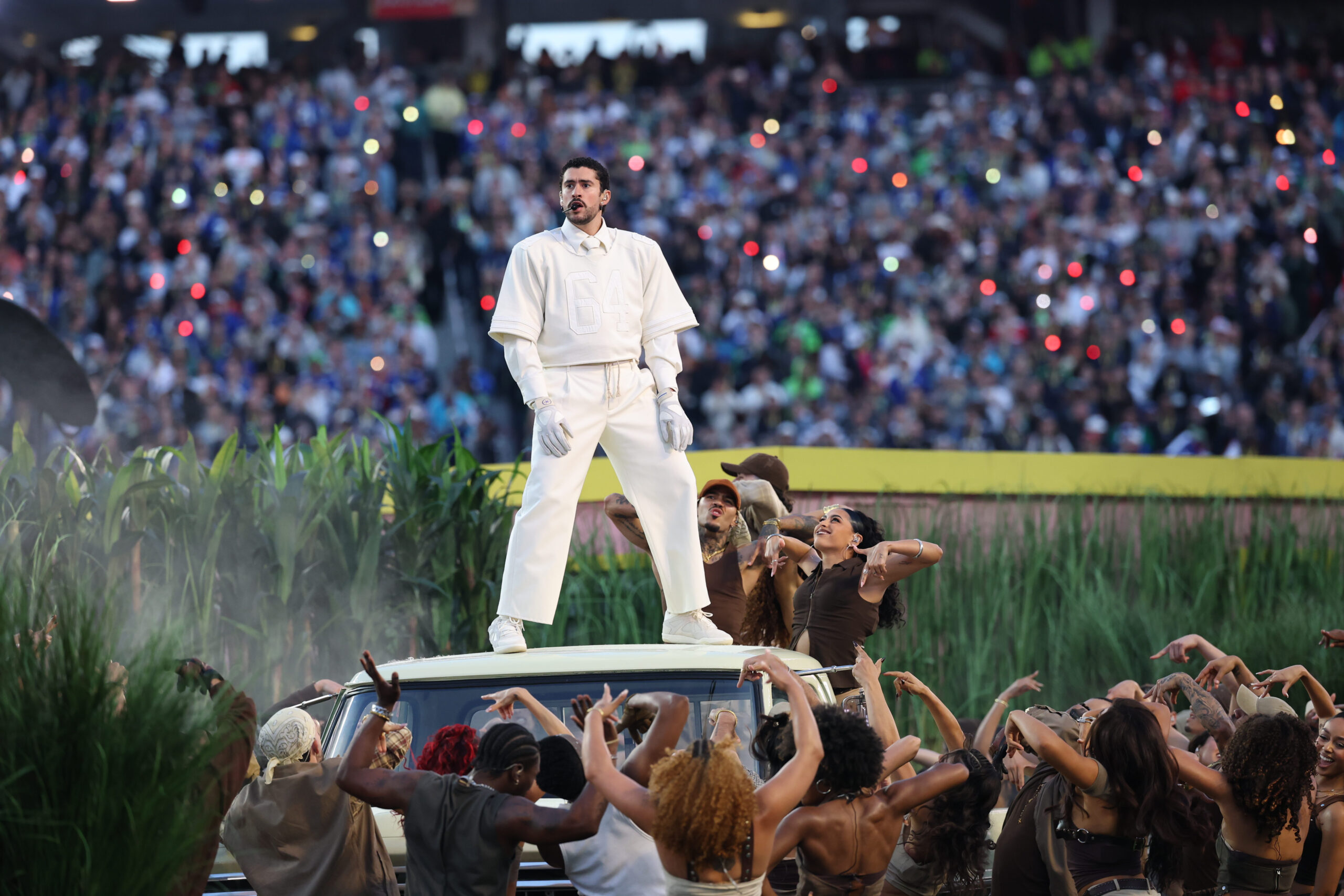
It’s been roughly 24 hours since Bad Bunny commanded the Super Bowl LX halftime stage, and we’re all still collectively reeling from the joy. With a moving meditation on heritage and unity, delivered with the effortless cool of one of the world’s most magnetic stars, the show (watch here) was as personal as it was global.
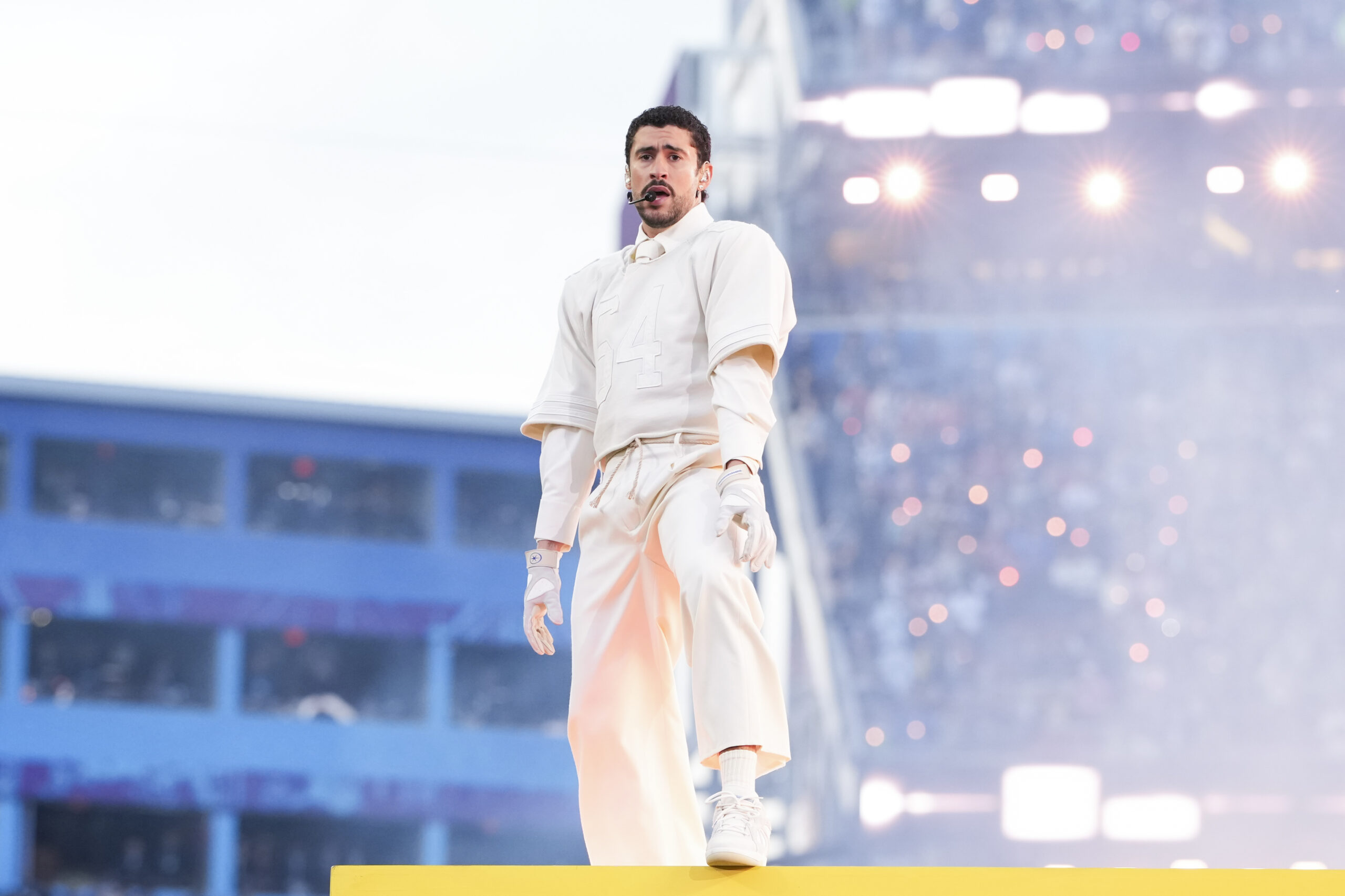
Dressed in an all-white, custom Zara look by his longtime creative director Janthony Oliveras, Benito Antonio Martínez Ocasio, 31, cut a strikingly pared-back figure. The centrepiece was a cropped football jersey stamped with “OCASIO” and the number 64. While fans scrambled to decode the significance, the meaning, it turns out, was far more intimate than any viral theory could suggest. The number nods to 1964, the birth year of his uncle, Tío Cutito, who introduced a young Bad Bunny to the NFL and whose influence shaped his childhood. Performing in the San Francisco 49ers’ home stadium, Benito carried his uncle’s name and memory with him, turning the jersey into a tribute.
That sense of personal history rippled through the show itself. Opening with the exuberant “Tití Me Preguntó,” the set moved through to “CAFé CON RON” before closing on the raw emotion of “DtMF.” Dancers in traditional Puerto Rican dress filled the field, with plenty of nostalgic references to his upbringing—including a sweet moment where the singer hands his recently-won Grammy award to his childhood self.
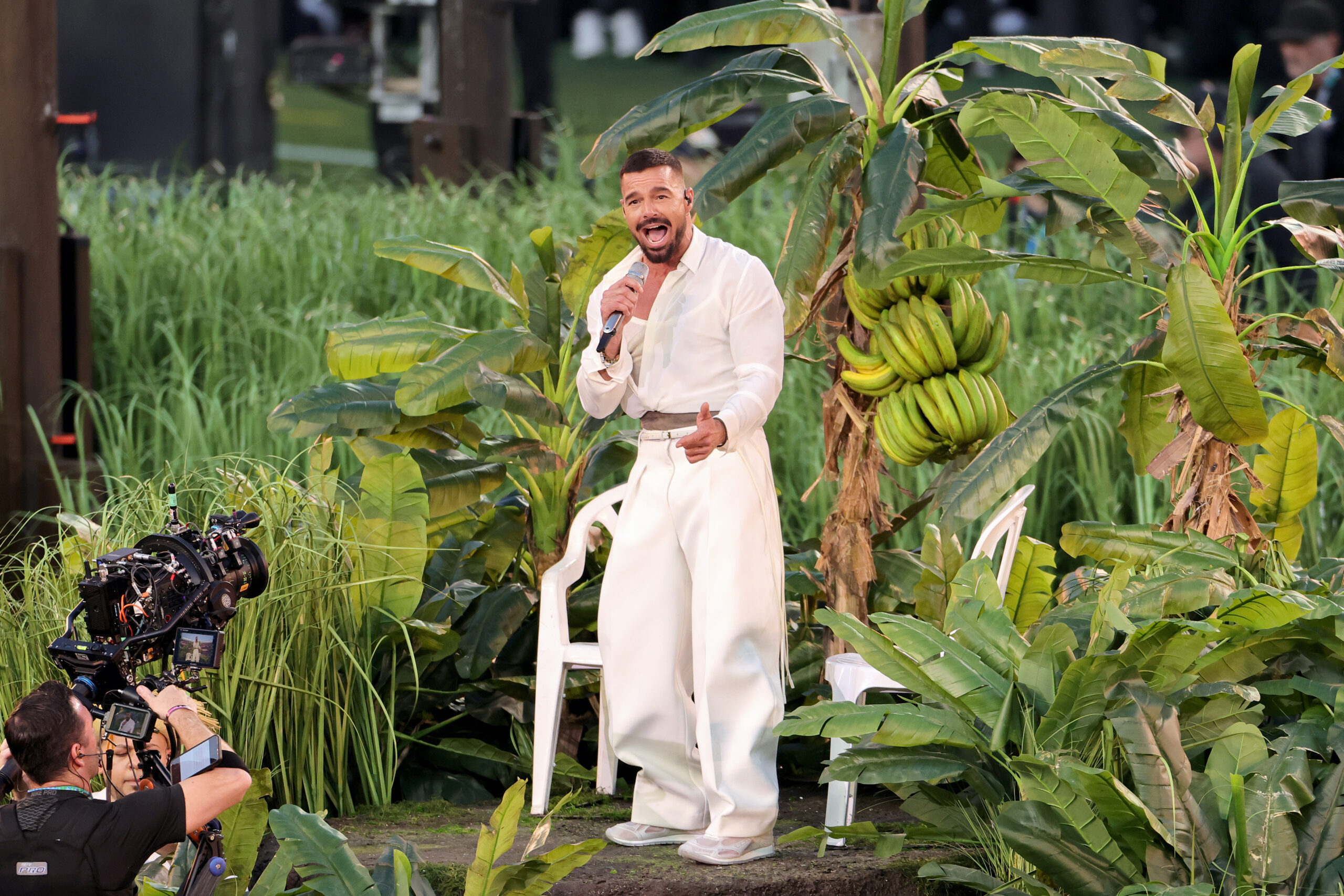
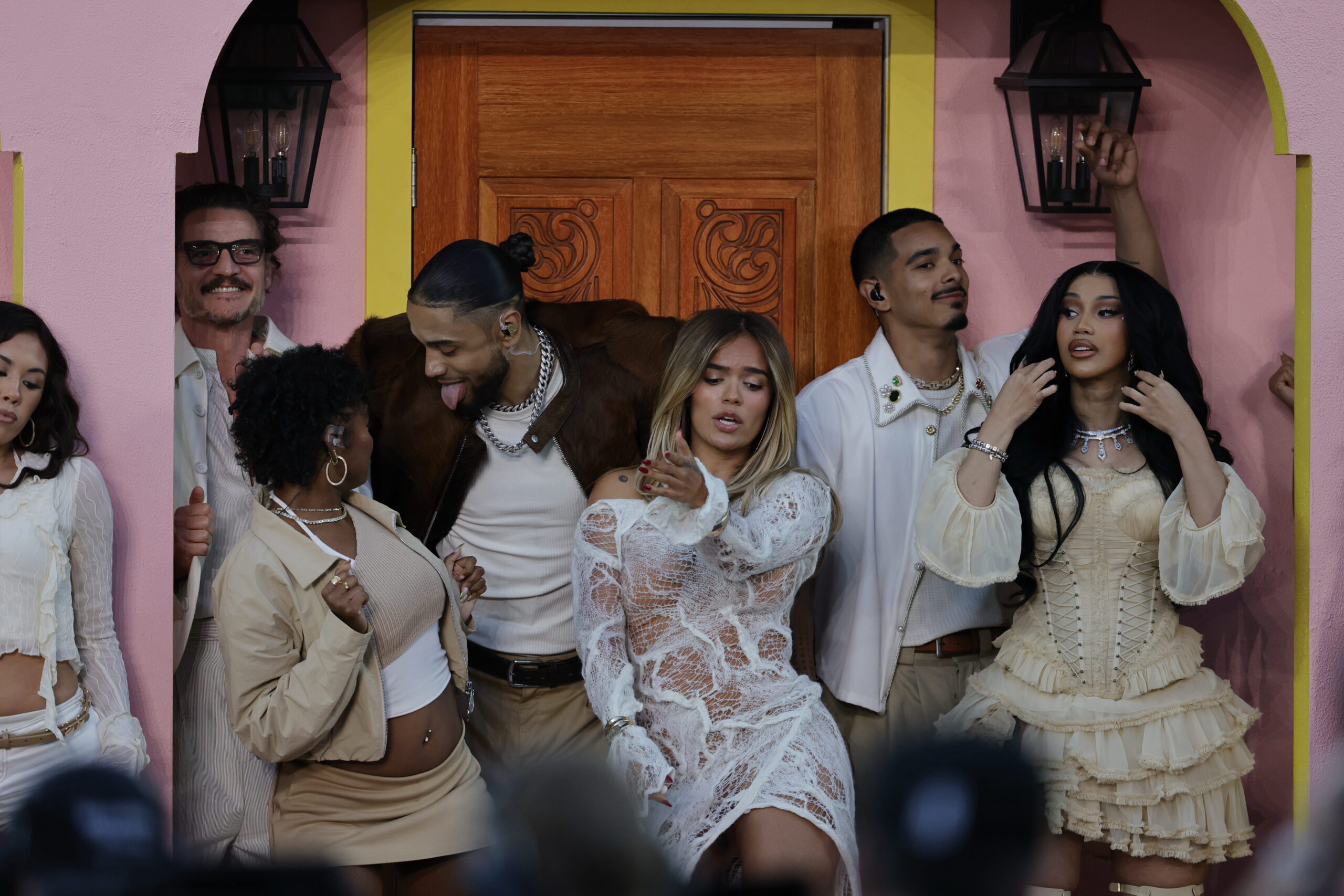
Surprise appearances—from Ricky Martin and Lady Gaga performing to cameos by Pedro Pascal, Jessica Alba, Karol G, and Cardi B—turned the stage into a communal celebration of heritage.
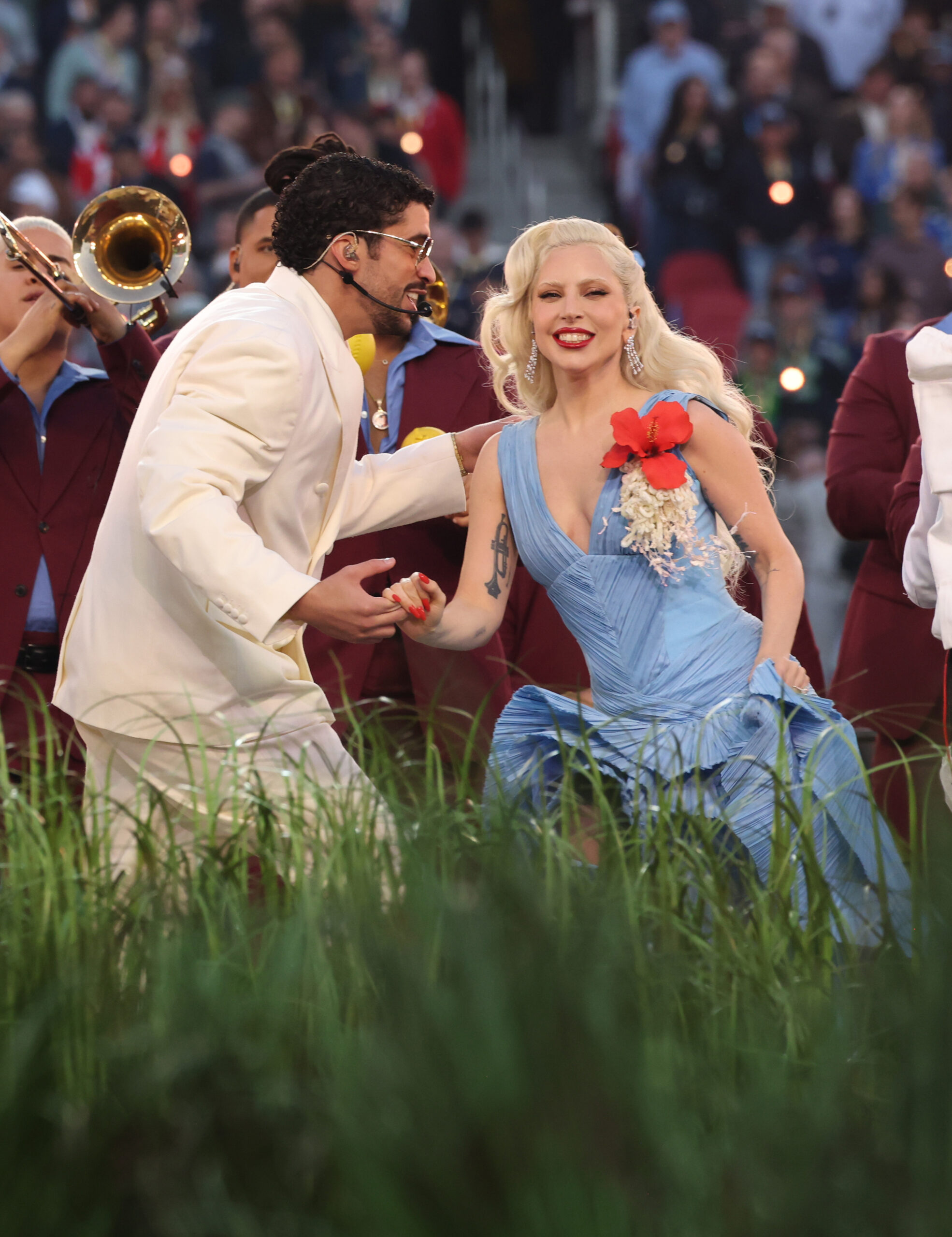
Lady Gaga’s moment, in a flamenco-style Luar dress, was particularly joyful, as the pair danced through a salsa-inflected rendition of “Die With a Smile”. Later, Gaga thanked Benito for including her in what she called a “powerful, important, and meaningful performance.”
During a pre-game press conference, Bad Bunny, who was the world’s most-played artist in 2025 according to Spotify data, summed up his ethos simply. Asked if audiences should learn Spanish to understand his lyrics, he smiled: “People only have to worry about dancing… There is no better dance than the one that comes from the heart.”
In a time marked by division and brutality, particularly regarding the horrors of U.S. politics, Bad Bunny challenged hate with a performance rooted in love, unity and joy.
“God bless America”, he concluded before listing the nations of Central, South and North America. He emphasised his motherland, Puerto Rico, as dancers carried their flags together, and then held up a football emblazoned with the words “Together, we are America.”
As the crowd roared with excitement, a billboard message overhead read, “The only thing more powerful than hate is love.”


